
Ever wondered why some athletes push through gruelling training sessions... もっと見る
 LCPE6 閲覧数·更新日 Jun 12, 2026·6 ページ
Discovering Motivation in Sports
1 / 6
1
of 6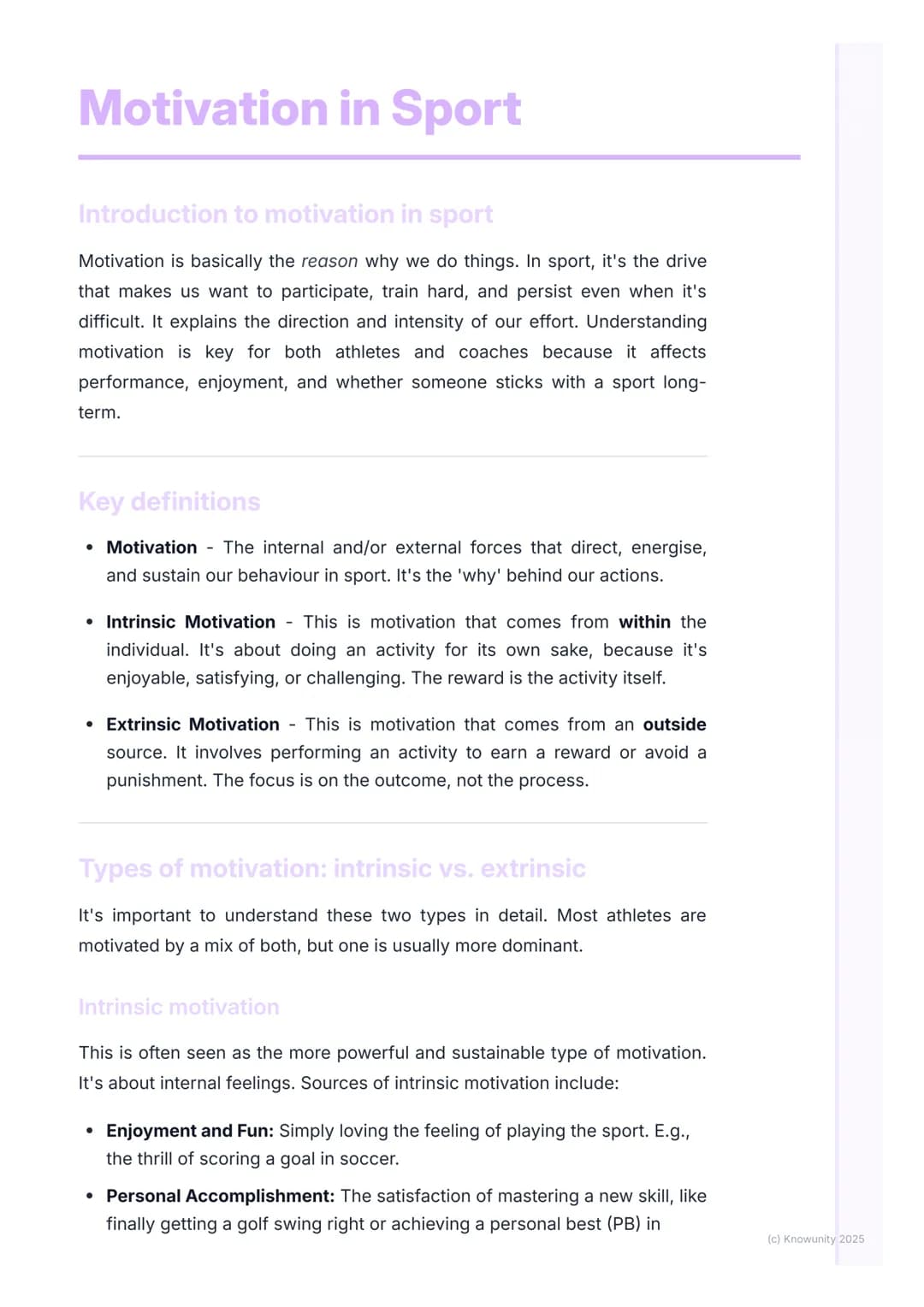
What Drives Athletes? The Basics of Sports Motivation
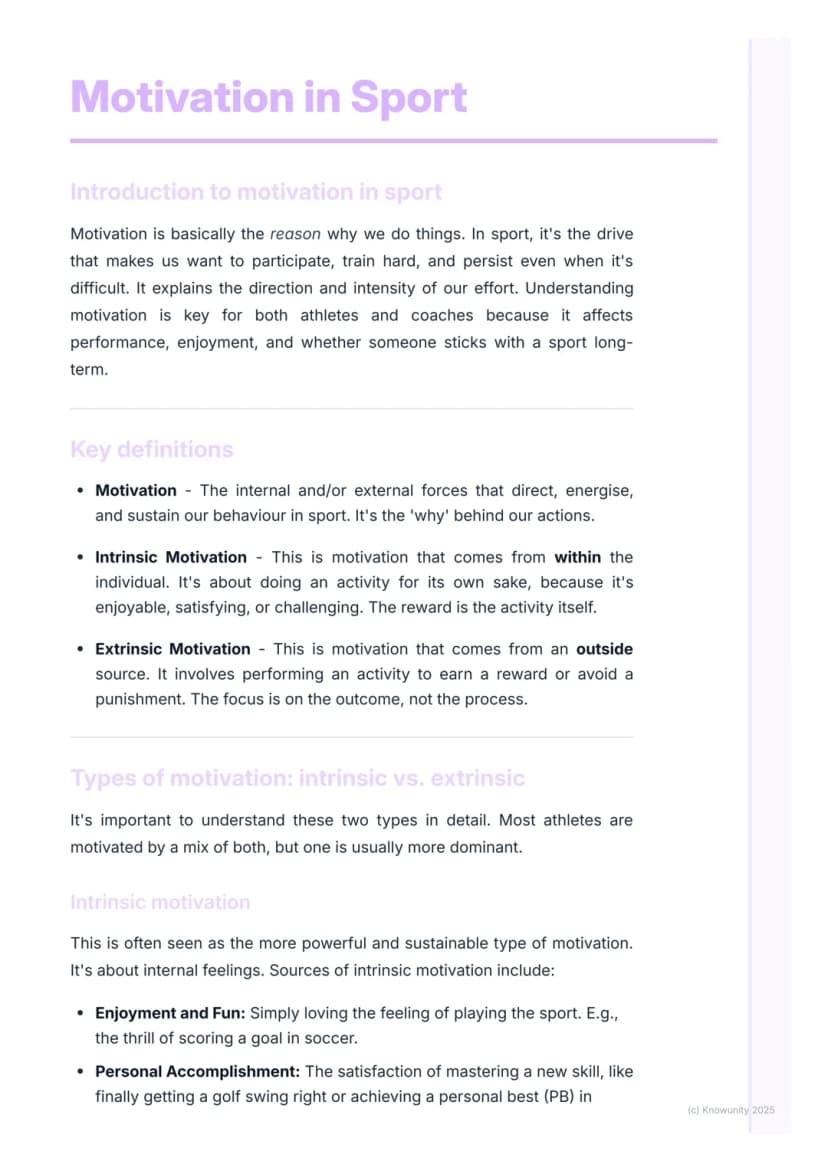
Motivation is simply the reason why we do things in sport. Think of it as your internal engine that determines how hard you'll train, whether you'll stick with your sport when things get tough, and how much effort you'll put into each session.
There are two main types that work in completely different ways. Intrinsic motivation comes from within - it's about doing something because you genuinely love it. Extrinsic motivation comes from outside sources like trophies, praise, or avoiding your coach's disapproval.
Most successful athletes have a mix of both, but understanding the difference can make or break long-term sporting success. The key is knowing which type creates lasting commitment and which one might actually harm performance if used incorrectly.
Quick Tip: Athletes with strong intrinsic motivation are far more likely to stick with their sport long-term, even when external rewards disappear.
2
of 6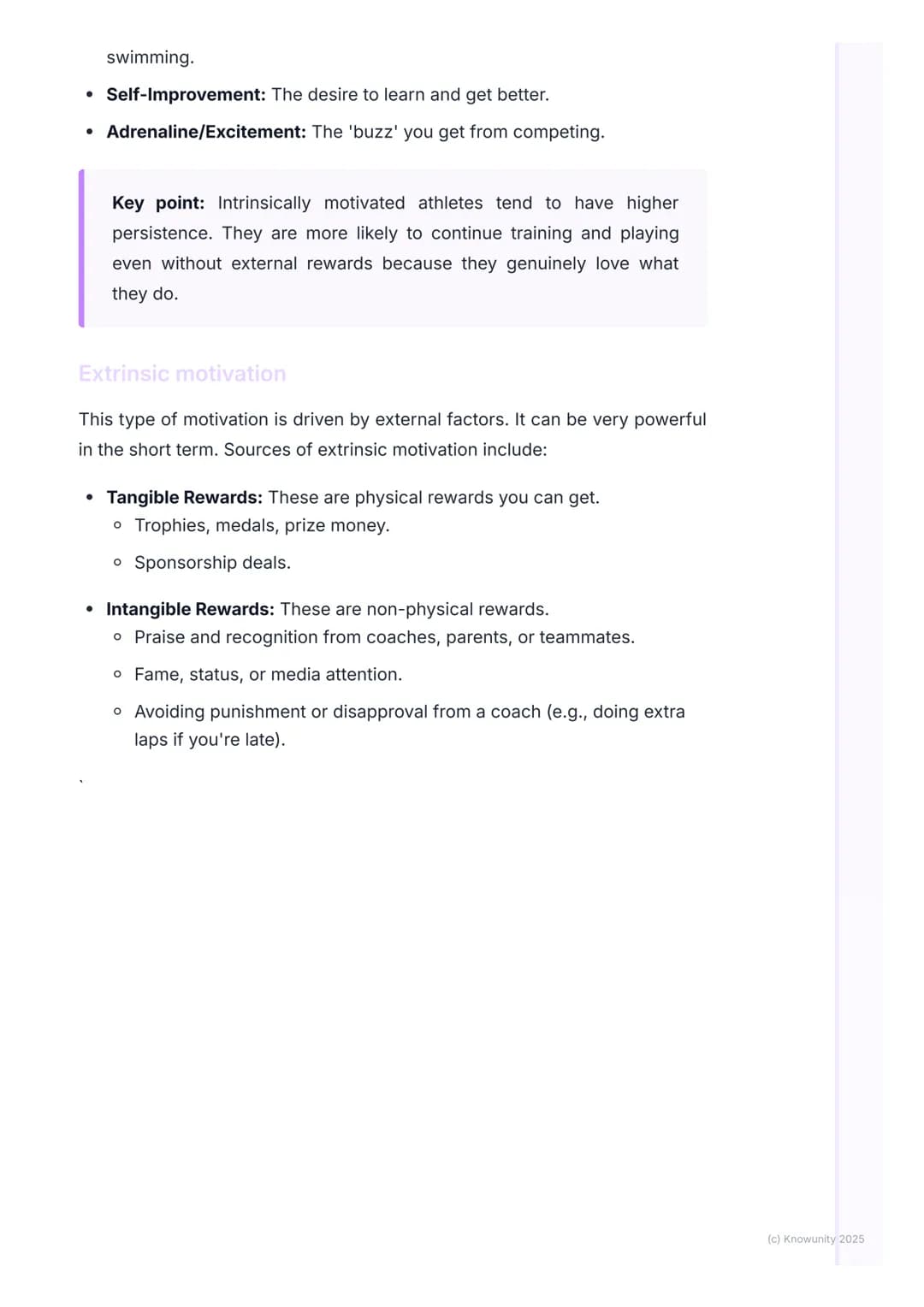
Intrinsic Motivation: The Love of the Game
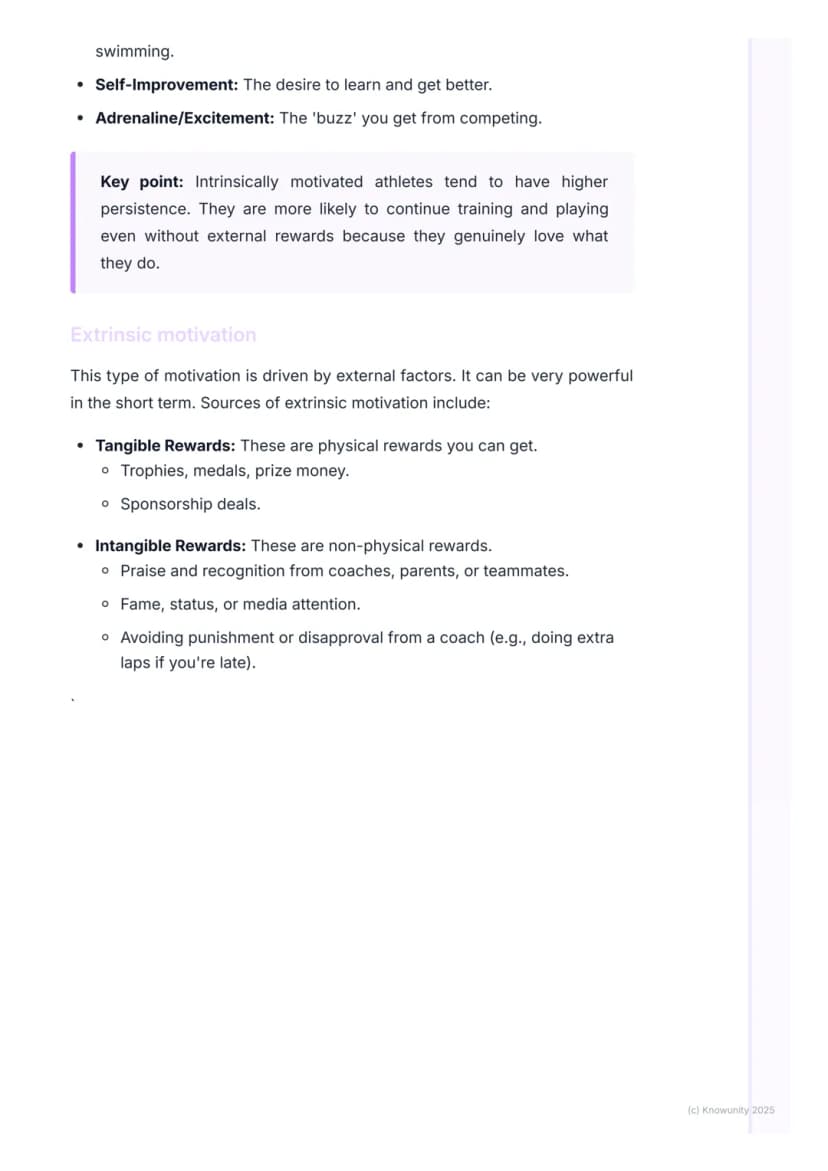
This is the gold standard of sports motivation - when athletes genuinely love what they're doing. Intrinsic motivation includes the pure enjoyment of playing, the satisfaction of mastering new skills, and that incredible buzz you get from competition.
Picture a GAA player who trains twice a week and plays every Sunday without getting paid a penny. They're there because they love the challenge, enjoy the craic with teammates, and feel pride representing their community. The feeling of perfectly striking a sliotar or scoring a point becomes its own reward.
Self-improvement is another huge intrinsic driver. Athletes who are intrinsically motivated focus on beating their personal bests, perfecting technique, and pushing their own boundaries. They don't need external pressure because the challenge itself is enough.
Remember: Intrinsically motivated athletes show much higher persistence and are more likely to continue training even without external rewards.
3
of 6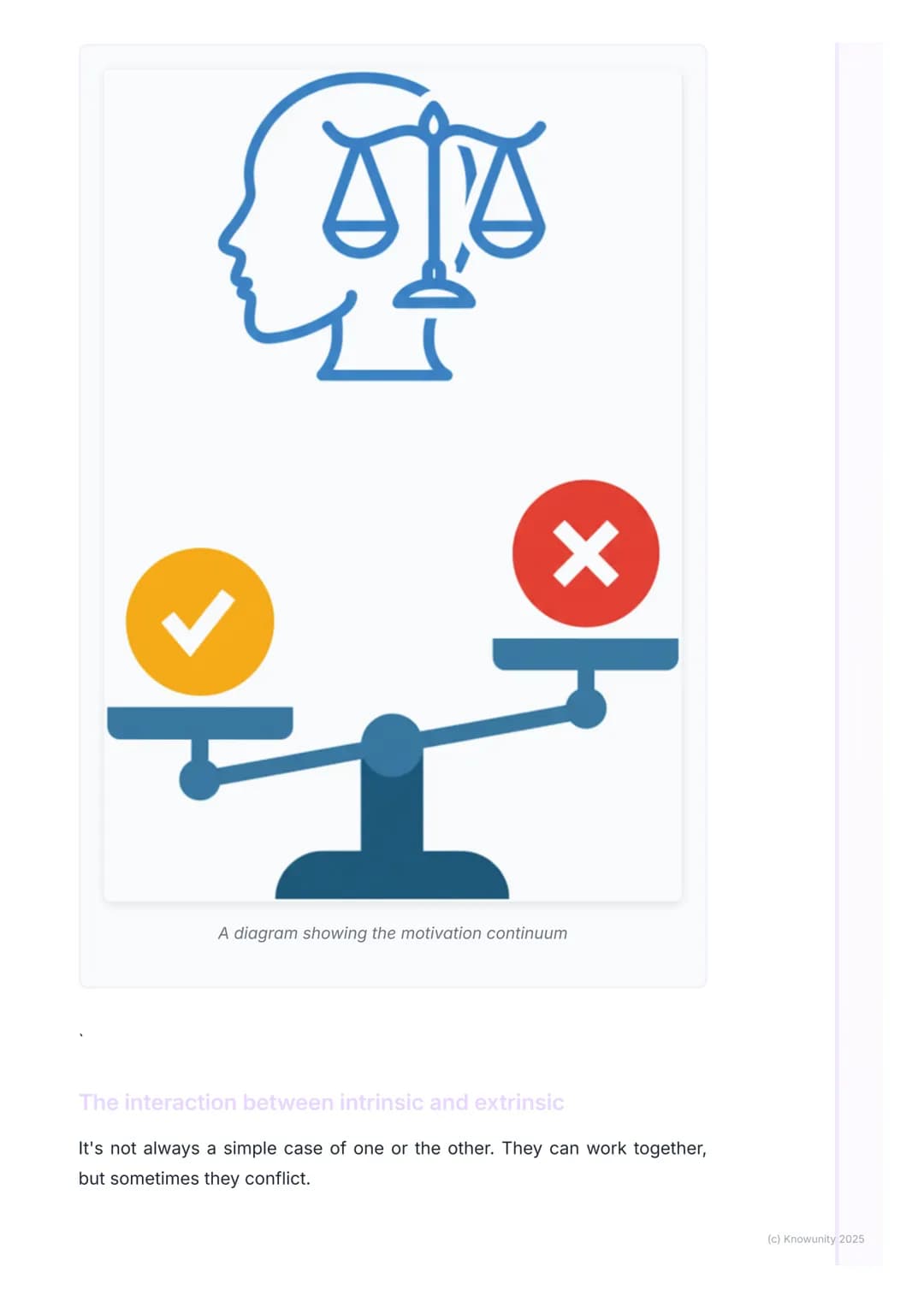
Extrinsic Motivation: External Rewards and Pressures
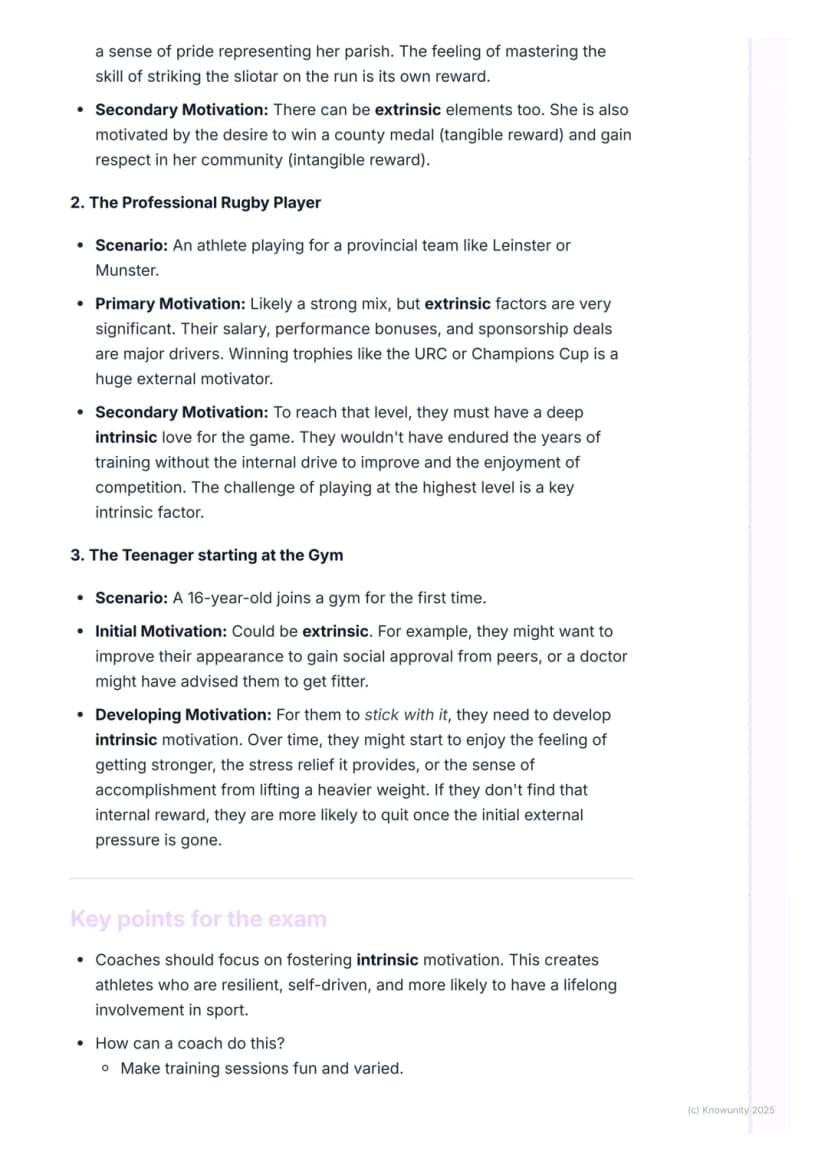
Extrinsic motivation is all about the external stuff - what you can gain or avoid by participating in sport. This includes tangible rewards like trophies, medals, prize money, and sponsorship deals, plus intangible rewards such as praise from coaches, fame, social status, or avoiding punishment.
Think about a professional rugby player for Leinster or Munster. Their salary, performance bonuses, and the prestige of winning the URC or Champions Cup are massive external motivators. These rewards can be incredibly powerful, especially in the short term.
The tricky bit? Extrinsic motivation can sometimes backfire. If someone starts playing purely for rewards and those rewards disappear, their motivation often vanishes too. It's like taking away someone's salary - suddenly the job becomes much less appealing.
Key Point: Extrinsic rewards aren't bad, but they work best when supporting, not replacing, genuine love for the sport.
4
of 6
When Motivation Types Clash: The Overjustification Effect
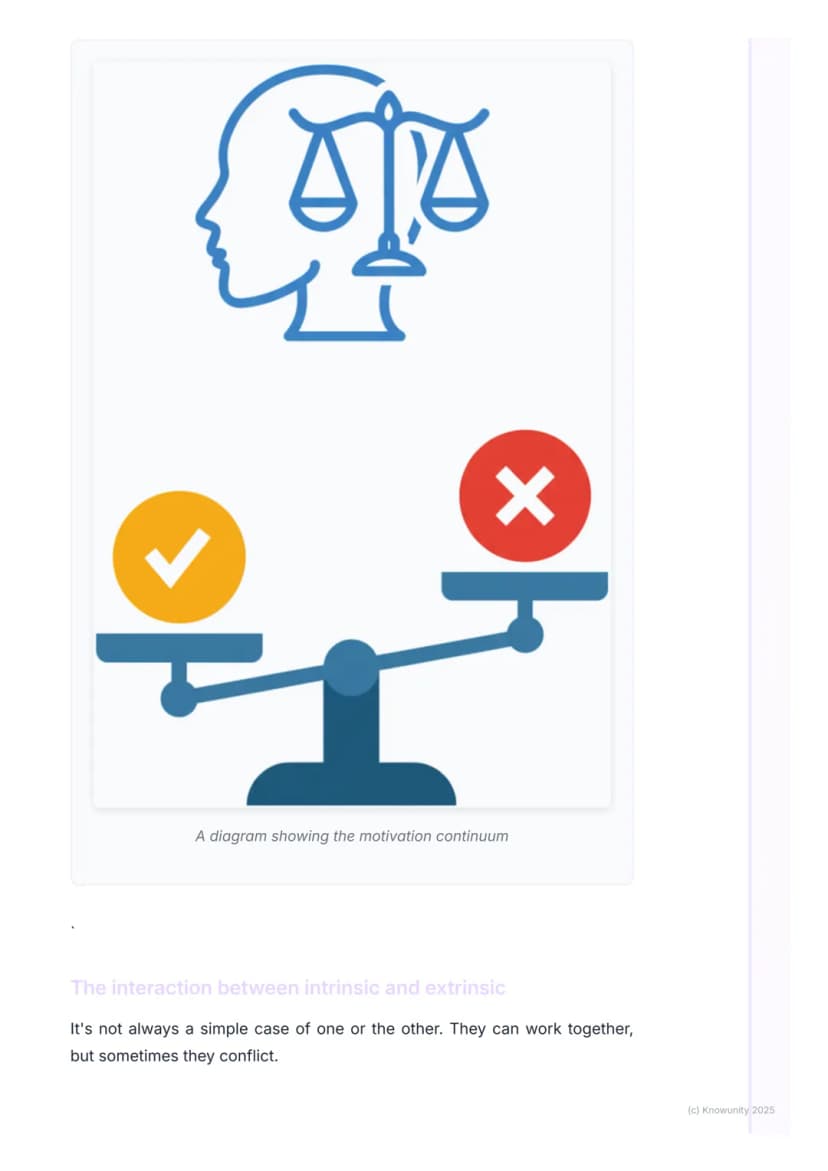
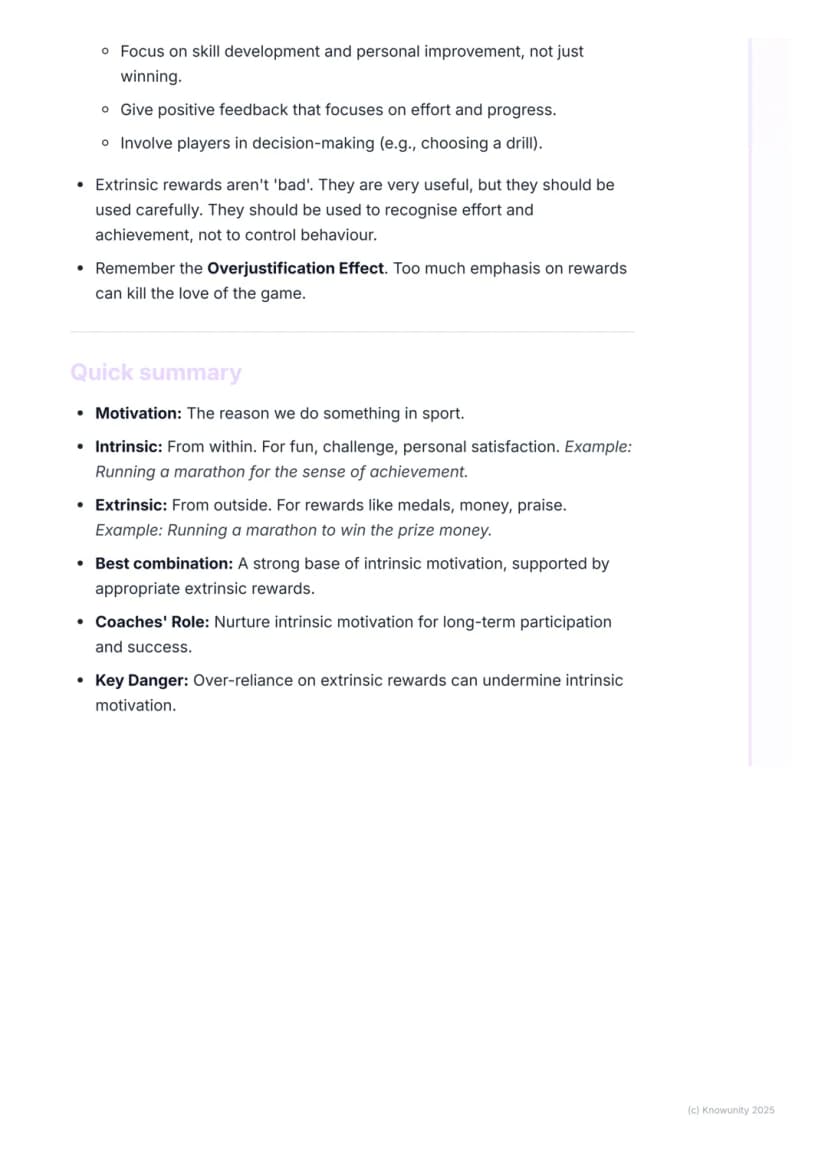
Here's where things get interesting - and where many coaches go wrong. The overjustification effect happens when external rewards actually damage internal motivation. If an athlete who loves their sport suddenly starts getting loads of external rewards, their focus can shift from enjoying the game to chasing the prizes.
Imagine a teenager who starts going to the gym because a doctor recommended it (extrinsic), but over time develops a genuine love for getting stronger and the stress relief it provides (intrinsic). That's motivation working perfectly together.
Now picture the opposite: a young footballer who adores playing suddenly gets offered money for every goal scored. Their focus might shift from the joy of playing to hitting targets for cash. Remove the money, and they might lose interest completely.
Exam Alert: The overjustification effect is a crucial concept - remember that too many external rewards can kill the love of the game.
5
of 6
Real-World Applications: From Club to Professional Level
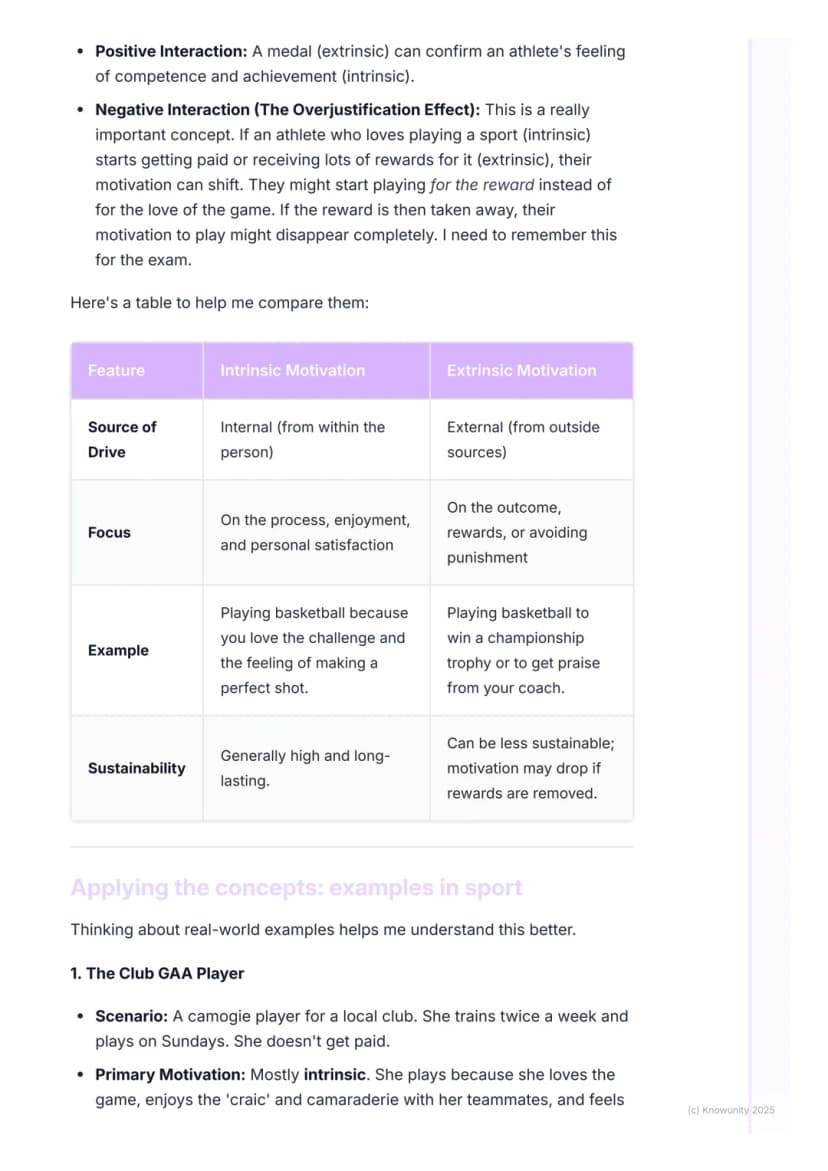
Let's look at how this works in practice. A club GAA player is primarily intrinsically motivated - they play for love of the game, community pride, and personal satisfaction. Any external rewards (like county medals) are bonuses, not the main driver.
A professional athlete needs both types working together. Yes, they're motivated by salary and trophies, but to reach that level, they must have genuine passion for their sport. You can't fake the dedication needed for elite performance without some internal drive.
Coaches should focus on building intrinsic motivation first. Make training fun and varied, celebrate personal improvements not just wins, give positive feedback about effort and progress, and involve players in decision-making. Use external rewards carefully - to recognise achievement, not control behaviour.
Coach's Corner: The best coaches create athletes who train hard because they want to, not because they have to.
6
of 6
Key Takeaways for Success
Motivation drives everything in sport - from your first training session to Olympic gold. Intrinsic motivation (internal drive) creates lasting commitment and enjoyment, whilst extrinsic motivation (external rewards) provides short-term power but can be risky if overused.
The sweet spot? A strong foundation of genuine love for your sport, supported by appropriate external recognition. Athletes who find this balance show better persistence, higher performance, and lifelong participation in physical activity.
For your exams, remember that fostering intrinsic motivation should be every coach's priority, whilst the overjustification effect shows why too many external rewards can backfire spectacularly.
Bottom Line: The athletes who last longest and perform best are those who genuinely love what they do - everything else is just the cherry on top.
そんなこと聞いてくれるのを待ってたよ...
KnowunityのAIコンパニオンとは?
KnowunityのAIコンパニオンは学生向けに設計されたAIツールで、単なる答えを提供するだけではありません。数百万のKnowunityリソースを基に構築され、関連する情報、個別の学習プラン、クイズ、コンテンツをチャット内で直接提供し、あなたの個別の学習過程に適応します。
Knowunityアプリはどこでダウンロードできますか?
Google Play StoreとApple App Storeからアプリをダウンロードできます。
Knowunityは本当に無料ですか?
その通り!学習コンテンツへの無料アクセス、仲間の学生とのつながり、そして即座のサポートを手のひらで楽しもう。
LCPEの人気コンテンツ
4LCPEHealthy Eating Guidelines
This section explores national healthy eating guidelines, such as the food pyramid or healthy eating plate, to promote balanced dietary choices.
5th Year50
LCPEBiomechanics of Movement
Applying fundamental biomechanical principles such as force, motion, levers, and stability to analyse and improve human movement efficiency and performance in sport.
6th Year200
LCPEFactors effecting sports psychology ( confidence and self efficacy)
Higher Level LCPE psychological preprration notes
5th Year230
LCPETechnology in Sport
Investigating how technology is used in areas such as performance analysis, equipment design, officiating, and athlete monitoring to enhance training and competition.
6th Year50
人気コンテンツ
9 Irish
IrishIrish oral questions and answers
Questions and answers for the leaving cert oral
5th Year4264
 English
Key Quotes : Sive
Key Quotes and explanations: Sive
6th Year2842
IrishIrish oral questions
Outline of oral questions
5th Year2055
IrishIníon- le hÁine Durkin
Aine Durkin’s poem, Iníon: Themes & summary
5th Year850
IrishIrish poetry 2027
Iníon + Dínit an Bhróin
5th Year1133
IrishLC HL notes- Iníon (poem)
Includes poem in English and Irish, theme, key words & phrases
5th Year2284
EnglishCultural Context : Shawshank Redemption : Sive : Small Things Like These
Comparative Study : Cultural Context : Shawshank Redemption, Sive and Small Things Like These
6th Year1430
IrishMo Ghrá-sa (Idir Lúibíní)
Notes on mo ghrá-sa
5th Year380
IrishAn Gaeilge Aiste
Irish Language essay
6th Year1320
探しているものが見つからない?他の教科も見てみよう。
生徒たちが愛用中 — あなたもきっと気に入るはず。
4.6/5App Store
4.7/5Google Play
このアプリはとても使いやすくて、デザインも良いです。今のところ探していたものは全て見つかったし、プレゼン資料からもたくさん学べました!絶対に課題でも使いたいと思います!もちろん、アイデアを得るのにもすごく役立ちます。
Stefan SiOSユーザー
このアプリは本当に素晴らしいです。学習ノートやサポート資料がとても豊富で[...]。例えば、私の苦手科目はフランス語なんですが、このアプリにはサポートオプションがたくさんあります。このアプリのおかげでフランス語が上達しました。誰にでもおすすめしたいです。
Samantha KlichAndroidユーザー
すごい、本当に驚いた。広告で何度も見かけたからアプリを試してみたら、めちゃくちゃ感動した。このアプリは学校で欲しかった「まさにこれ!」って感じのサポートで、特に練習問題や要点まとめみたいな機能がたくさんあって、個人的にすごく助かってる。
AnnaiOSユーザー
LCPE6 閲覧数·更新日 Jun 12, 2026·6 ページDiscovering Motivation in Sports
Ever wondered why some athletes push through gruelling training sessions whilst others give up at the first hurdle? It all comes down to motivation- the driving force behind every sprint, tackle, and victory. Understanding what motivates athletes is crucial... もっと見る
1
of 6サインアップしてコンテンツを見よう。無料だよ!
- 全ドキュメントへのアクセス
- 成績アップ
- 数百万人の学生と一緒に学習
What Drives Athletes? The Basics of Sports Motivation
Motivation is simply the reason why we do things in sport. Think of it as your internal engine that determines how hard you'll train, whether you'll stick with your sport when things get tough, and how much effort you'll put into each session.
There are two main types that work in completely different ways. Intrinsic motivation comes from within - it's about doing something because you genuinely love it. Extrinsic motivation comes from outside sources like trophies, praise, or avoiding your coach's disapproval.
Most successful athletes have a mix of both, but understanding the difference can make or break long-term sporting success. The key is knowing which type creates lasting commitment and which one might actually harm performance if used incorrectly.
Quick Tip: Athletes with strong intrinsic motivation are far more likely to stick with their sport long-term, even when external rewards disappear.
2
of 6サインアップしてコンテンツを見よう。無料だよ!
- 全ドキュメントへのアクセス
- 成績アップ
- 数百万人の学生と一緒に学習
Intrinsic Motivation: The Love of the Game
This is the gold standard of sports motivation - when athletes genuinely love what they're doing. Intrinsic motivation includes the pure enjoyment of playing, the satisfaction of mastering new skills, and that incredible buzz you get from competition.
Picture a GAA player who trains twice a week and plays every Sunday without getting paid a penny. They're there because they love the challenge, enjoy the craic with teammates, and feel pride representing their community. The feeling of perfectly striking a sliotar or scoring a point becomes its own reward.
Self-improvement is another huge intrinsic driver. Athletes who are intrinsically motivated focus on beating their personal bests, perfecting technique, and pushing their own boundaries. They don't need external pressure because the challenge itself is enough.
Remember: Intrinsically motivated athletes show much higher persistence and are more likely to continue training even without external rewards.
3
of 6サインアップしてコンテンツを見よう。無料だよ!
- 全ドキュメントへのアクセス
- 成績アップ
- 数百万人の学生と一緒に学習
Extrinsic Motivation: External Rewards and Pressures
Extrinsic motivation is all about the external stuff - what you can gain or avoid by participating in sport. This includes tangible rewards like trophies, medals, prize money, and sponsorship deals, plus intangible rewards such as praise from coaches, fame, social status, or avoiding punishment.
Think about a professional rugby player for Leinster or Munster. Their salary, performance bonuses, and the prestige of winning the URC or Champions Cup are massive external motivators. These rewards can be incredibly powerful, especially in the short term.
The tricky bit? Extrinsic motivation can sometimes backfire. If someone starts playing purely for rewards and those rewards disappear, their motivation often vanishes too. It's like taking away someone's salary - suddenly the job becomes much less appealing.
Key Point: Extrinsic rewards aren't bad, but they work best when supporting, not replacing, genuine love for the sport.
4
of 6サインアップしてコンテンツを見よう。無料だよ!
- 全ドキュメントへのアクセス
- 成績アップ
- 数百万人の学生と一緒に学習
When Motivation Types Clash: The Overjustification Effect
Here's where things get interesting - and where many coaches go wrong. The overjustification effect happens when external rewards actually damage internal motivation. If an athlete who loves their sport suddenly starts getting loads of external rewards, their focus can shift from enjoying the game to chasing the prizes.
Imagine a teenager who starts going to the gym because a doctor recommended it (extrinsic), but over time develops a genuine love for getting stronger and the stress relief it provides (intrinsic). That's motivation working perfectly together.
Now picture the opposite: a young footballer who adores playing suddenly gets offered money for every goal scored. Their focus might shift from the joy of playing to hitting targets for cash. Remove the money, and they might lose interest completely.
Exam Alert: The overjustification effect is a crucial concept - remember that too many external rewards can kill the love of the game.
5
of 6サインアップしてコンテンツを見よう。無料だよ!
- 全ドキュメントへのアクセス
- 成績アップ
- 数百万人の学生と一緒に学習
Real-World Applications: From Club to Professional Level
Let's look at how this works in practice. A club GAA player is primarily intrinsically motivated - they play for love of the game, community pride, and personal satisfaction. Any external rewards (like county medals) are bonuses, not the main driver.
A professional athlete needs both types working together. Yes, they're motivated by salary and trophies, but to reach that level, they must have genuine passion for their sport. You can't fake the dedication needed for elite performance without some internal drive.
Coaches should focus on building intrinsic motivation first. Make training fun and varied, celebrate personal improvements not just wins, give positive feedback about effort and progress, and involve players in decision-making. Use external rewards carefully - to recognise achievement, not control behaviour.
Coach's Corner: The best coaches create athletes who train hard because they want to, not because they have to.
6
of 6サインアップしてコンテンツを見よう。無料だよ!
- 全ドキュメントへのアクセス
- 成績アップ
- 数百万人の学生と一緒に学習
Key Takeaways for Success
Motivation drives everything in sport - from your first training session to Olympic gold. Intrinsic motivation (internal drive) creates lasting commitment and enjoyment, whilst extrinsic motivation (external rewards) provides short-term power but can be risky if overused.
The sweet spot? A strong foundation of genuine love for your sport, supported by appropriate external recognition. Athletes who find this balance show better persistence, higher performance, and lifelong participation in physical activity.
For your exams, remember that fostering intrinsic motivation should be every coach's priority, whilst the overjustification effect shows why too many external rewards can backfire spectacularly.
Bottom Line: The athletes who last longest and perform best are those who genuinely love what they do - everything else is just the cherry on top.
そんなこと聞いてくれるのを待ってたよ...
KnowunityのAIコンパニオンとは?
KnowunityのAIコンパニオンは学生向けに設計されたAIツールで、単なる答えを提供するだけではありません。数百万のKnowunityリソースを基に構築され、関連する情報、個別の学習プラン、クイズ、コンテンツをチャット内で直接提供し、あなたの個別の学習過程に適応します。
Knowunityアプリはどこでダウンロードできますか?
Google Play StoreとApple App Storeからアプリをダウンロードできます。
Knowunityは本当に無料ですか?
その通り!学習コンテンツへの無料アクセス、仲間の学生とのつながり、そして即座のサポートを手のひらで楽しもう。
LCPEの人気コンテンツ
4LCPEHealthy Eating Guidelines
This section explores national healthy eating guidelines, such as the food pyramid or healthy eating plate, to promote balanced dietary choices.
5th Year50
LCPEBiomechanics of Movement
Applying fundamental biomechanical principles such as force, motion, levers, and stability to analyse and improve human movement efficiency and performance in sport.
6th Year200
LCPEFactors effecting sports psychology ( confidence and self efficacy)
Higher Level LCPE psychological preprration notes
5th Year230
LCPETechnology in Sport
Investigating how technology is used in areas such as performance analysis, equipment design, officiating, and athlete monitoring to enhance training and competition.
6th Year50
人気コンテンツ
9IrishIrish oral questions and answers
Questions and answers for the leaving cert oral
5th Year4264
EnglishKey Quotes : Sive
Key Quotes and explanations: Sive
6th Year2842
IrishIrish oral questions
Outline of oral questions
5th Year2055
IrishIníon- le hÁine Durkin
Aine Durkin’s poem, Iníon: Themes & summary
5th Year850
IrishIrish poetry 2027
Iníon + Dínit an Bhróin
5th Year1133
IrishLC HL notes- Iníon (poem)
Includes poem in English and Irish, theme, key words & phrases
5th Year2284
EnglishCultural Context : Shawshank Redemption : Sive : Small Things Like These
Comparative Study : Cultural Context : Shawshank Redemption, Sive and Small Things Like These
6th Year1430
IrishMo Ghrá-sa (Idir Lúibíní)
Notes on mo ghrá-sa
5th Year380
IrishAn Gaeilge Aiste
Irish Language essay
6th Year1320
探しているものが見つからない?他の教科も見てみよう。
生徒たちが愛用中 — あなたもきっと気に入るはず。
4.6/5App Store
4.7/5Google Play
このアプリはとても使いやすくて、デザインも良いです。今のところ探していたものは全て見つかったし、プレゼン資料からもたくさん学べました!絶対に課題でも使いたいと思います!もちろん、アイデアを得るのにもすごく役立ちます。
Stefan SiOSユーザー
このアプリは本当に素晴らしいです。学習ノートやサポート資料がとても豊富で[...]。例えば、私の苦手科目はフランス語なんですが、このアプリにはサポートオプションがたくさんあります。このアプリのおかげでフランス語が上達しました。誰にでもおすすめしたいです。
Samantha KlichAndroidユーザー
すごい、本当に驚いた。広告で何度も見かけたからアプリを試してみたら、めちゃくちゃ感動した。このアプリは学校で欲しかった「まさにこれ!」って感じのサポートで、特に練習問題や要点まとめみたいな機能がたくさんあって、個人的にすごく助かってる。
AnnaiOSユーザー