
Ever wonder why you can sprint for only a few...
 LCPE6 閲覧数·更新日 Jun 8, 2026·5 ページ
Introduction to the Body's Energy Systems
1 / 5
1
of 5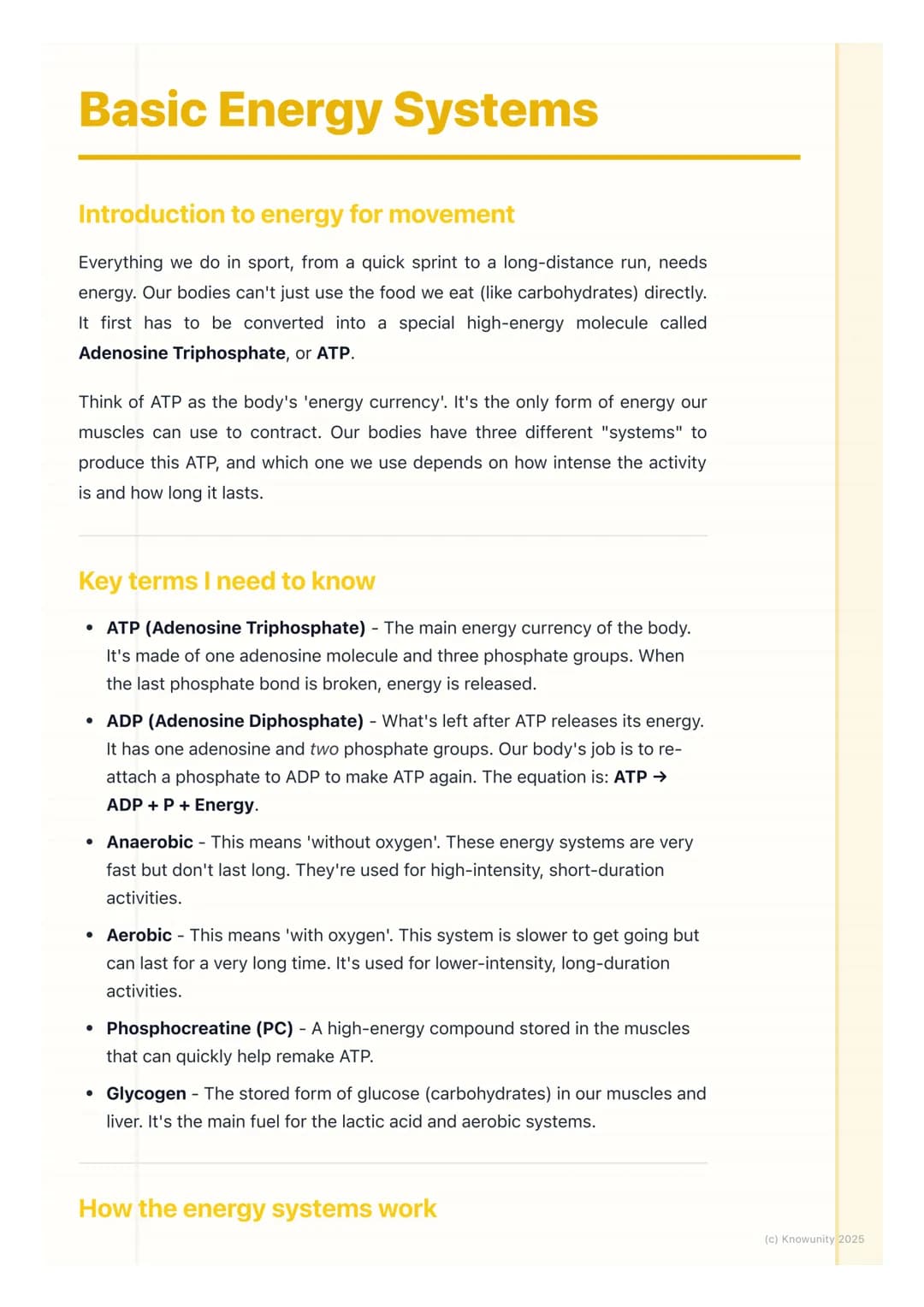
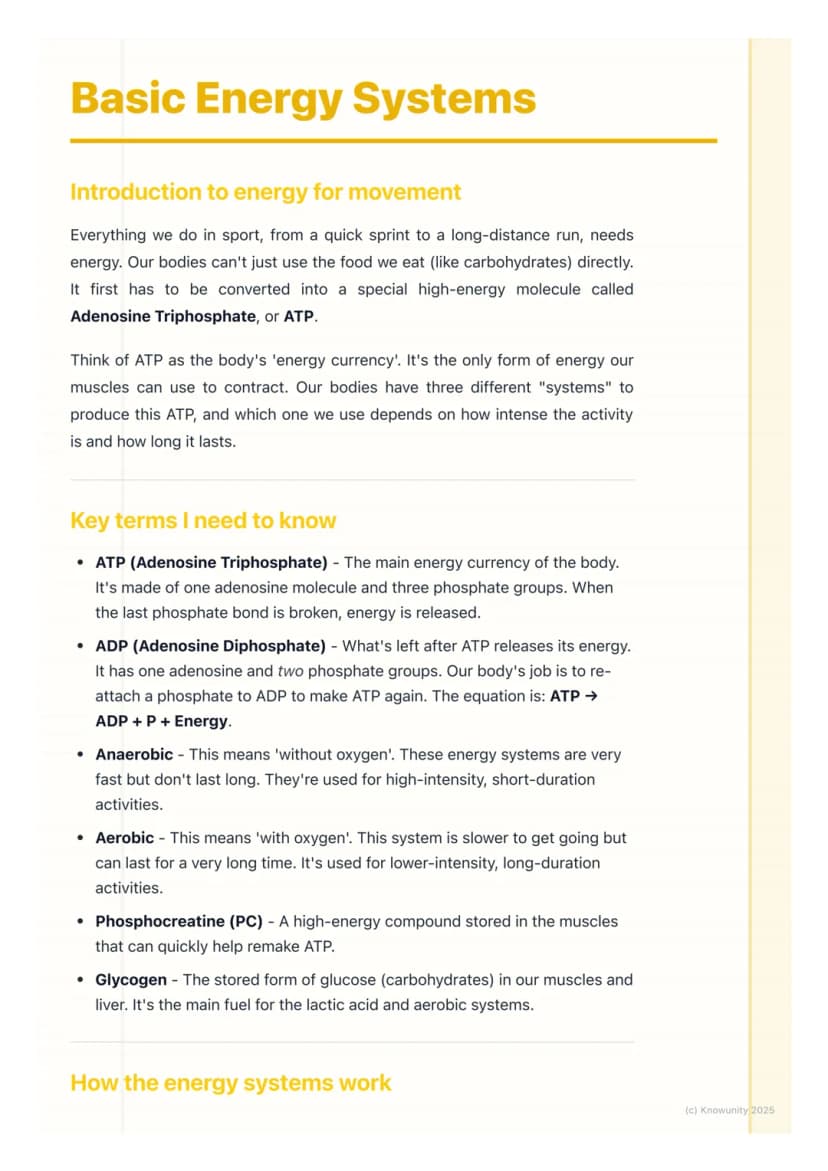
Basic Energy Systems
Your muscles are basically really picky eaters - they can only use one type of fuel called ATP (Adenosine Triphosphate). Think of ATP as your body's energy currency, like coins in an arcade machine.
Here's the thing though: your body only stores enough ATP for about 2-3 seconds of movement. After that, it needs to quickly make more using three different systems. The cool part is that these systems work together on what's called the energy continuum - it's not like flicking a switch, but more like a sliding scale where one system takes the lead.
The key difference between these systems is whether they need oxygen (aerobic) or can work without oxygen (anaerobic). Anaerobic systems are lightning fast but burn out quickly, whilst aerobic systems are like marathon runners - slower to start but can keep going for hours.
Quick Tip: Remember the equation ATP → ADP + P + Energy. Your body's job is constantly sticking that phosphate back on to remake ATP!
2
of 5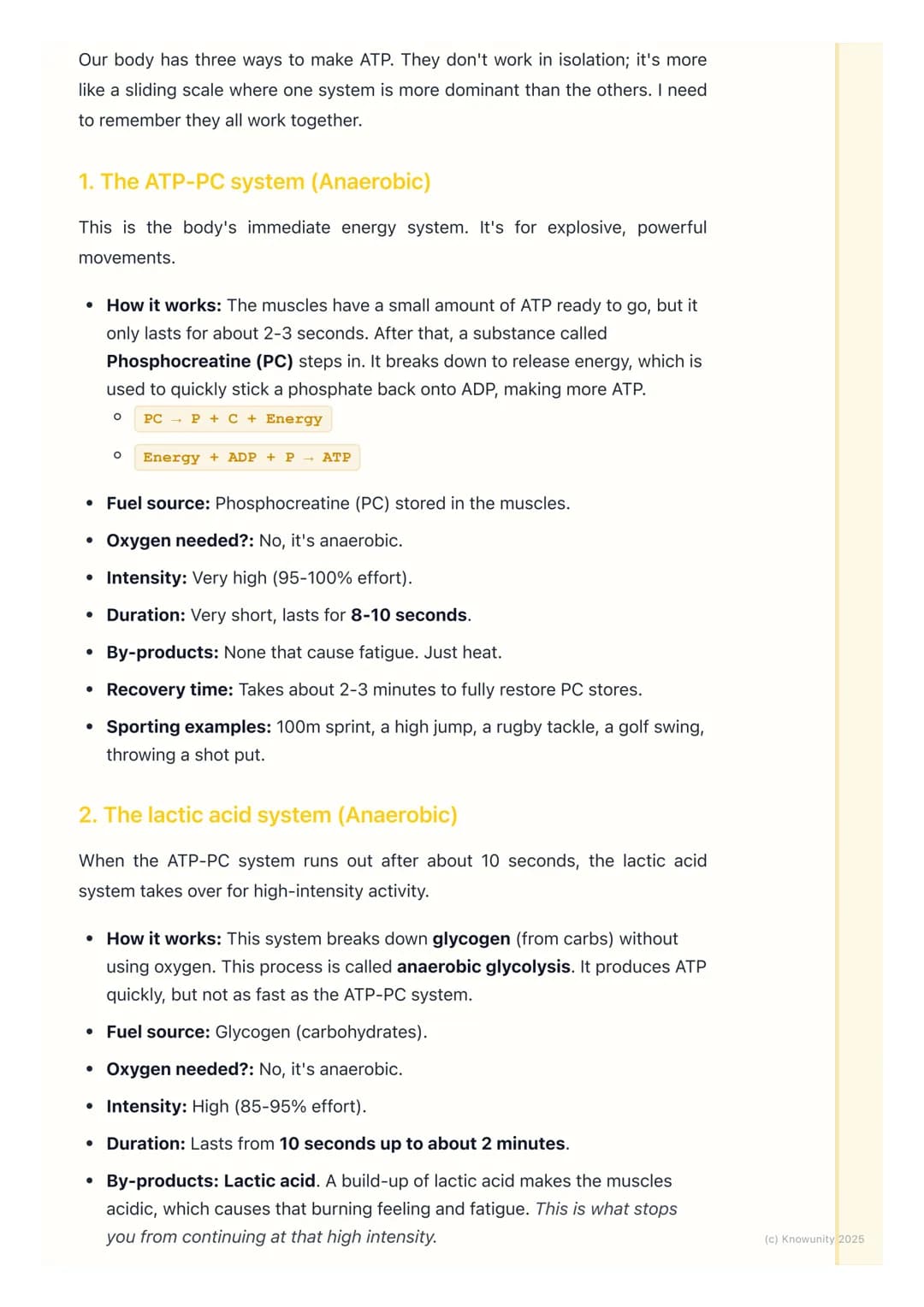
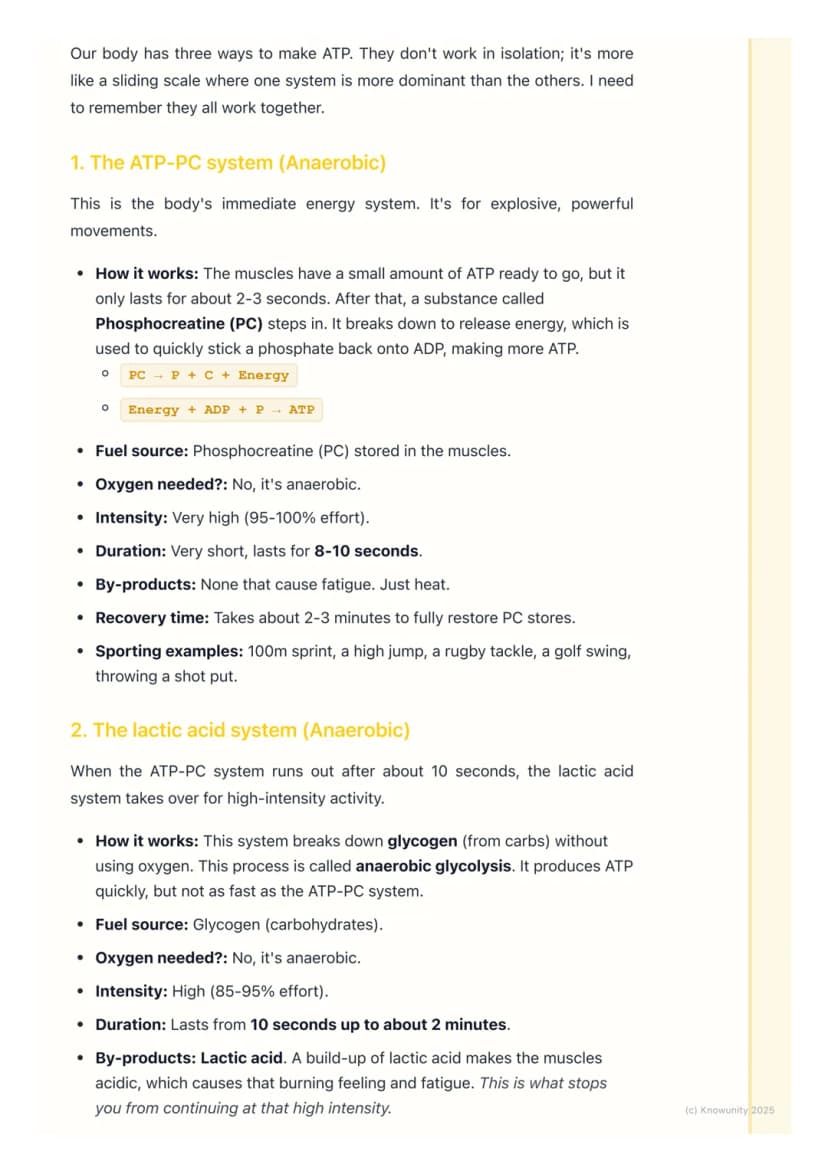
The Three Energy Systems
The ATP-PC System is your body's emergency energy supply. It's pure explosive power for about 8-10 seconds using phosphocreatine (PC) stored in your muscles. Think 100m sprint start or a rugby tackle - maximum effort, no oxygen needed, no nasty side effects.
The Lactic Acid System takes over when you're still going hard after 10 seconds. It breaks down glycogen (stored carbs) without oxygen, but here's the catch - it produces lactic acid that makes your muscles burn and forces you to slow down after about 2 minutes.
The Aerobic System is your endurance powerhouse. It uses oxygen to efficiently burn glycogen and fats, producing only harmless water and carbon dioxide. This system can literally keep you going for hours, but it can't produce energy fast enough for high-intensity work.
Remember: These systems don't work in isolation - they're all contributing at the same time, with one being dominant depending on what you're doing.
3
of 5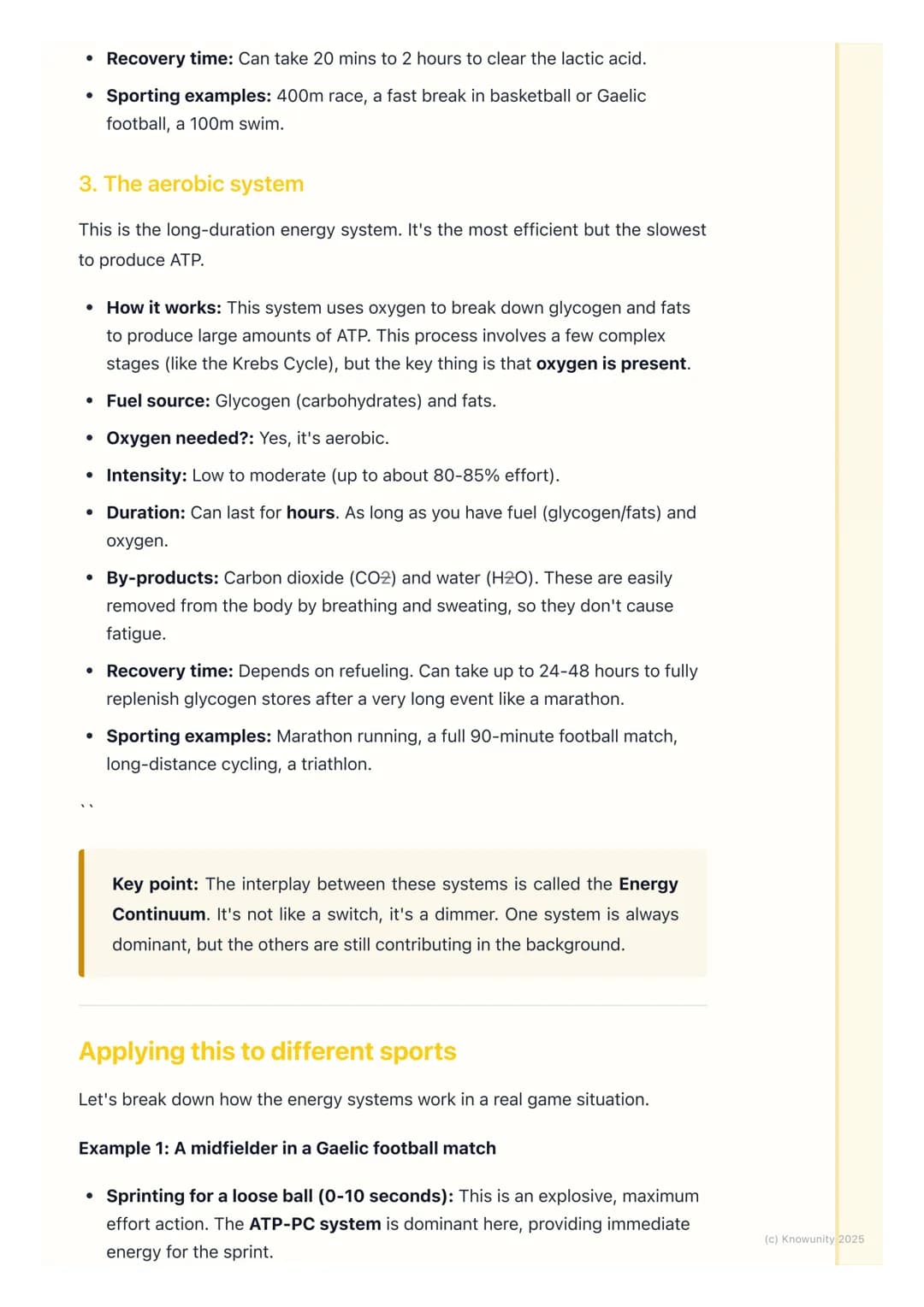
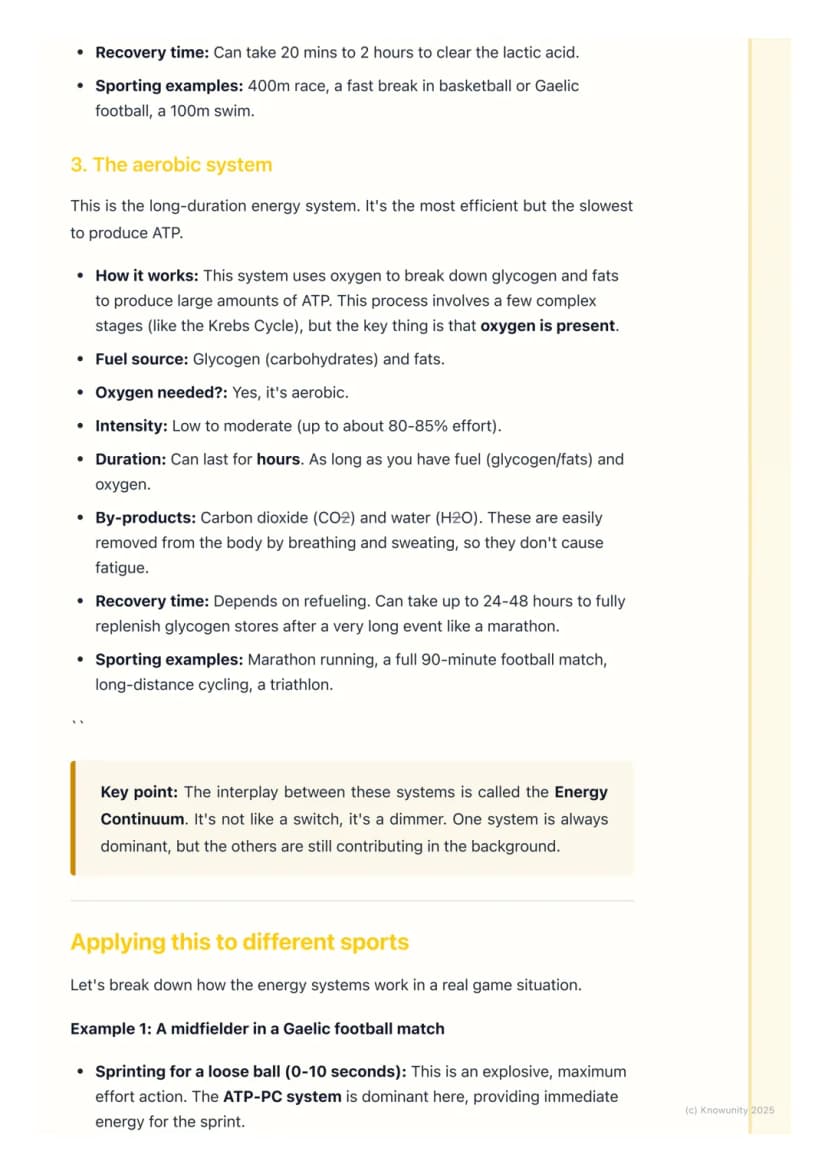
Real Sport Applications
Let's look at a Gaelic football midfielder during a match. When they sprint for a loose ball , the ATP-PC system dominates, giving that explosive burst. During a gut-busting run up the pitch , the lactic acid system takes over - that's why their legs start burning.
For the rest of the 70-minute match, the aerobic system is doing most of the work during jogging and recovery periods. It's also busy helping to clear lactic acid and restock the anaerobic systems during breaks in play.
A 400m sprinter is the perfect example of lactic acid system dominance. The first 50m uses ATP-PC for that explosive start, then lactic acid takes over for the brutal middle section. By the final 100m, lactic acid buildup is causing that wall of pain every 400m runner knows too well.
Exam Gold: Never say the systems work "one at a time" - always mention the dominant system and how they work together on the energy continuum.
4
of 5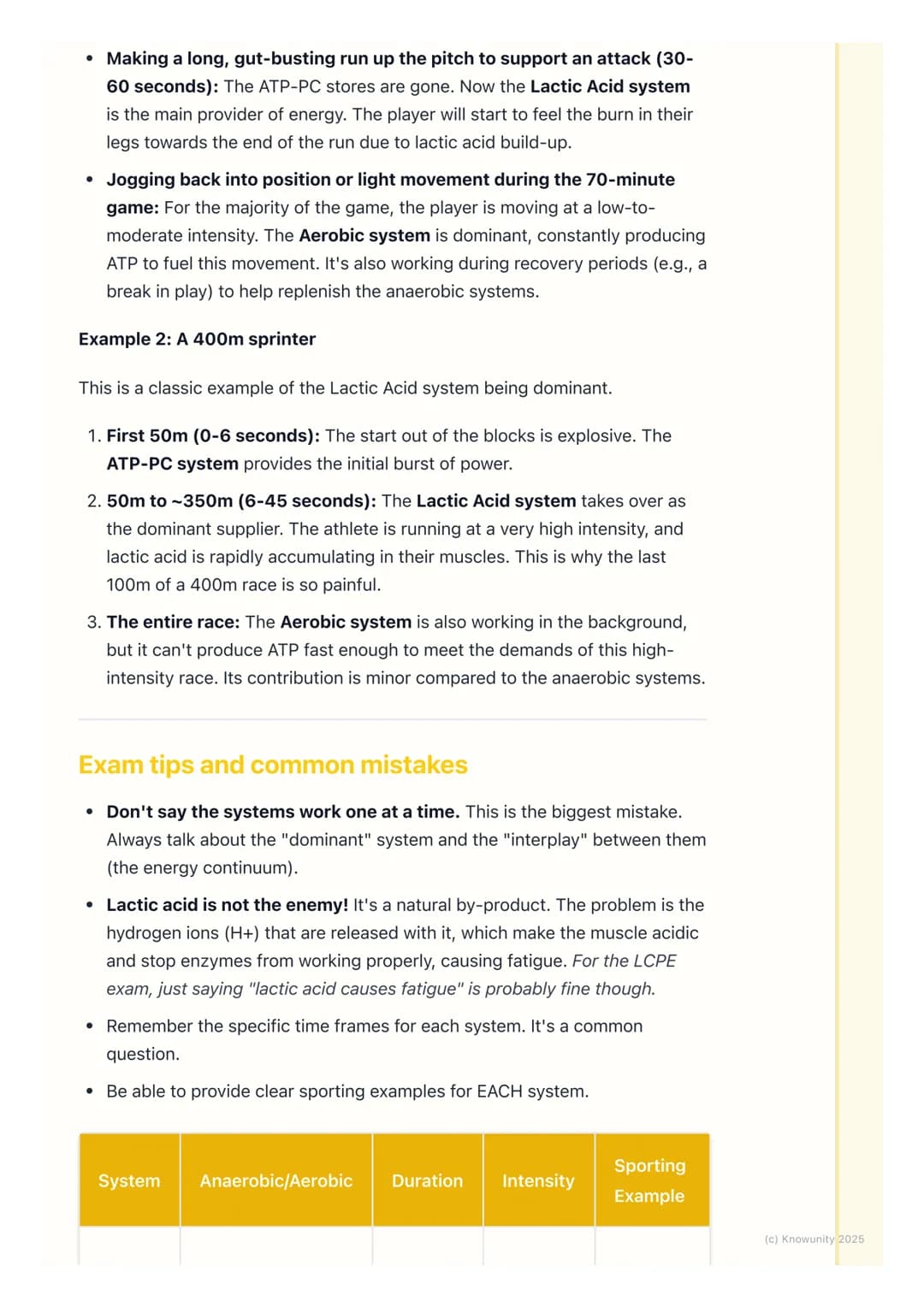
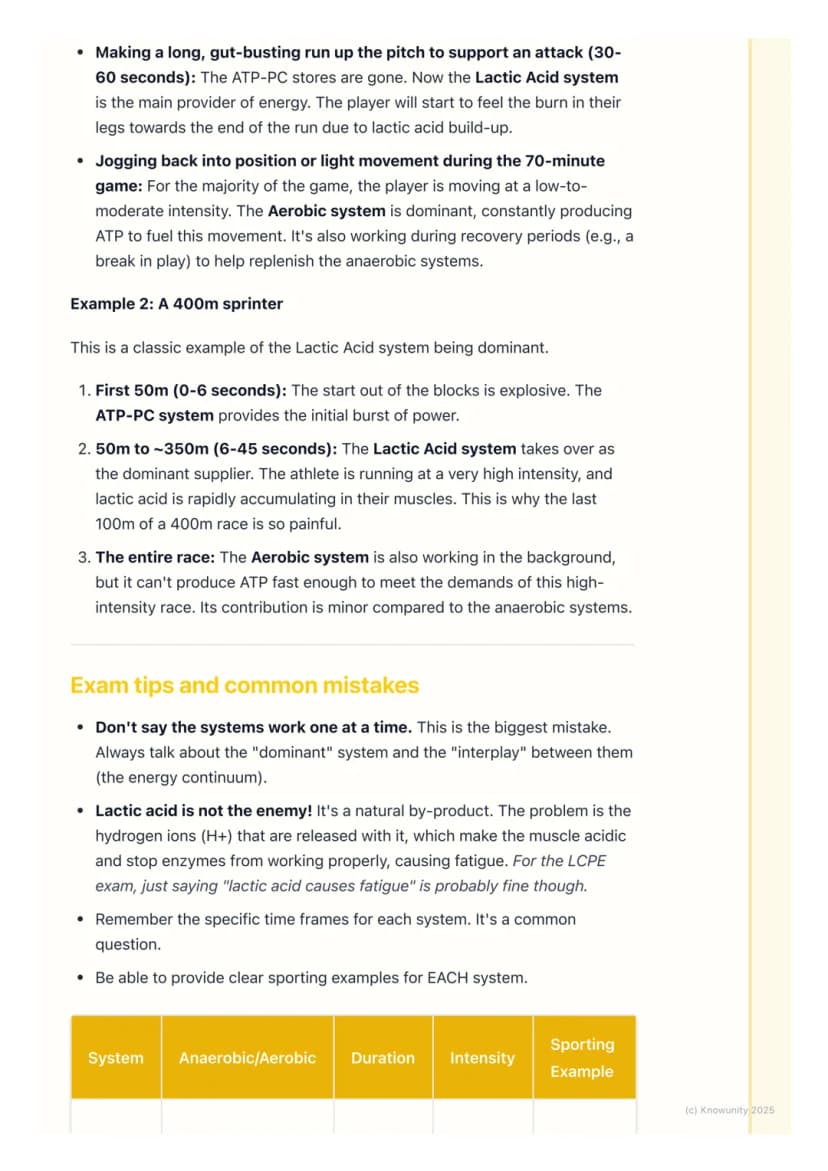
Key Details and Exam Tips
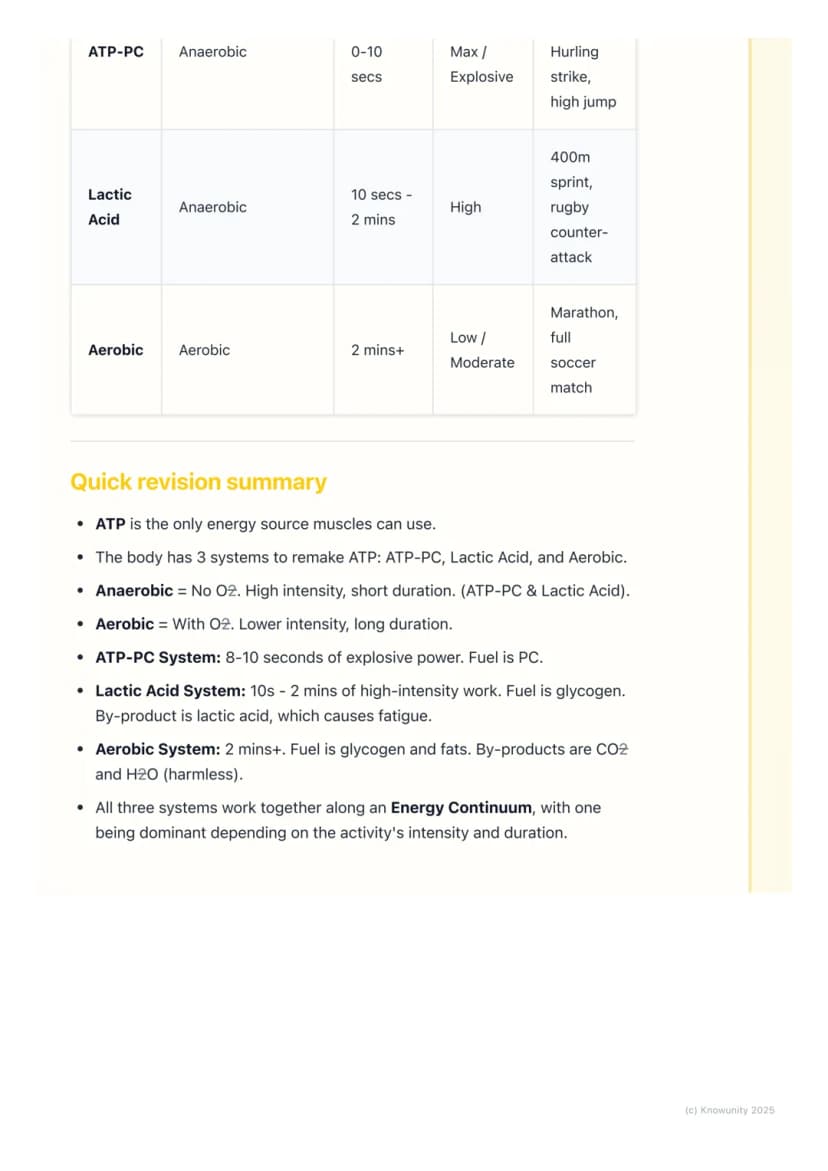
Here's what you absolutely need to know for exams: ATP-PC lasts 8-10 seconds at maximum intensity using PC as fuel. Lactic acid system goes from 10 seconds to 2 minutes at high intensity using glycogen, producing that burning sensation. Aerobic system kicks in properly after 2 minutes, using glycogen and fats with oxygen for sustained activity.
The recovery times are crucial too. ATP-PC stores refill in 2-3 minutes, lactic acid takes 20 minutes to 2 hours to clear, and full glycogen restoration can take up to 48 hours after really long events.
Common exam mistakes include saying systems work separately (they don't), forgetting that all systems contribute simultaneously, and mixing up the time frames. Also remember - it's not actually the lactic acid that causes fatigue, but the hydrogen ions that make muscles acidic.
Pro Tip: Learn one clear sporting example for each system - shot put , 400m sprint (lactic acid), and marathon (aerobic). You'll definitely need these in exams.
5
of 5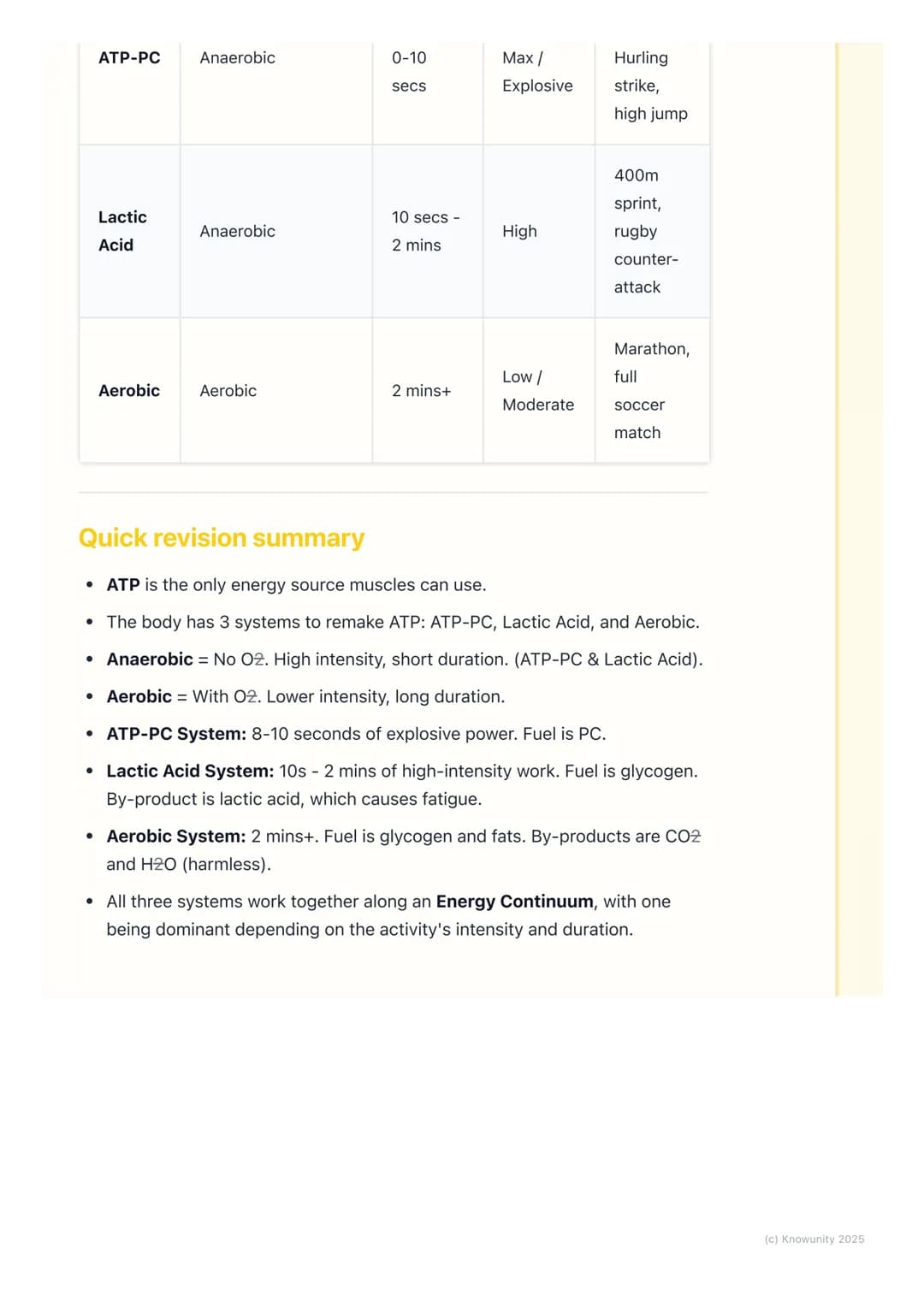
Quick Revision Summary
Your body's energy systems work like a perfectly coordinated team. The ATP-PC system handles explosive movements up to 10 seconds. The lactic acid system powers high-intensity work for 10 seconds to 2 minutes but comes with that burning penalty. The aerobic system is your long-distance champion, efficiently fueling moderate activity for hours.
Remember the energy continuum concept - these systems blend into each other rather than switching on and off. Which system dominates depends entirely on how intense your activity is and how long you're doing it for.
Master the time frames, fuel sources, and sporting examples for each system. Understanding when each system kicks in will help you make sense of training programs, why different sports feel so different, and how to pace yourself in everything from a 100m sprint to a long bike ride.
Final Check: Can you explain why a footballer can jog for 90 minutes but only sprint flat-out for 10 seconds? If yes, you've got this!
そんなこと聞いてくれるのを待ってたよ...
KnowunityのAIコンパニオンとは?
KnowunityのAIコンパニオンは学生向けに設計されたAIツールで、単なる答えを提供するだけではありません。数百万のKnowunityリソースを基に構築され、関連する情報、個別の学習プラン、クイズ、コンテンツをチャット内で直接提供し、あなたの個別の学習過程に適応します。
Knowunityアプリはどこでダウンロードできますか?
Google Play StoreとApple App Storeからアプリをダウンロードできます。
Knowunityは本当に無料ですか?
その通り!学習コンテンツへの無料アクセス、仲間の学生とのつながり、そして即座のサポートを手のひらで楽しもう。
LCPEの人気コンテンツ
4人気コンテンツ
9探しているものが見つからない?他の教科も見てみよう。
生徒たちが愛用中 — あなたもきっと気に入るはず。
4.6/5App Store
4.7/5Google Play
このアプリはとても使いやすくて、デザインも良いです。今のところ探していたものは全て見つかったし、プレゼン資料からもたくさん学べました!絶対に課題でも使いたいと思います!もちろん、アイデアを得るのにもすごく役立ちます。
Stefan SiOSユーザー
このアプリは本当に素晴らしいです。学習ノートやサポート資料がとても豊富で[...]。例えば、私の苦手科目はフランス語なんですが、このアプリにはサポートオプションがたくさんあります。このアプリのおかげでフランス語が上達しました。誰にでもおすすめしたいです。
Samantha KlichAndroidユーザー
すごい、本当に驚いた。広告で何度も見かけたからアプリを試してみたら、めちゃくちゃ感動した。このアプリは学校で欲しかった「まさにこれ!」って感じのサポートで、特に練習問題や要点まとめみたいな機能がたくさんあって、個人的にすごく助かってる。
AnnaiOSユーザー
LCPE6 閲覧数·更新日 Jun 8, 2026·5 ページIntroduction to the Body's Energy Systems
Ever wonder why you can sprint for only a few seconds but jog for ages? Your body has three different energy systems that kick in depending on what you're doing. Understanding these systems will help you make sense of why...
1
of 5
サインアップしてコンテンツを見よう。無料だよ!
- 全ドキュメントへのアクセス
- 成績アップ
- 数百万人の学生と一緒に学習
Basic Energy Systems
Your muscles are basically really picky eaters - they can only use one type of fuel called ATP (Adenosine Triphosphate). Think of ATP as your body's energy currency, like coins in an arcade machine.
Here's the thing though: your body only stores enough ATP for about 2-3 seconds of movement. After that, it needs to quickly make more using three different systems. The cool part is that these systems work together on what's called the energy continuum - it's not like flicking a switch, but more like a sliding scale where one system takes the lead.
The key difference between these systems is whether they need oxygen (aerobic) or can work without oxygen (anaerobic). Anaerobic systems are lightning fast but burn out quickly, whilst aerobic systems are like marathon runners - slower to start but can keep going for hours.
Quick Tip: Remember the equation ATP → ADP + P + Energy. Your body's job is constantly sticking that phosphate back on to remake ATP!
2
of 5サインアップしてコンテンツを見よう。無料だよ!
- 全ドキュメントへのアクセス
- 成績アップ
- 数百万人の学生と一緒に学習
The Three Energy Systems
The ATP-PC System is your body's emergency energy supply. It's pure explosive power for about 8-10 seconds using phosphocreatine (PC) stored in your muscles. Think 100m sprint start or a rugby tackle - maximum effort, no oxygen needed, no nasty side effects.
The Lactic Acid System takes over when you're still going hard after 10 seconds. It breaks down glycogen (stored carbs) without oxygen, but here's the catch - it produces lactic acid that makes your muscles burn and forces you to slow down after about 2 minutes.
The Aerobic System is your endurance powerhouse. It uses oxygen to efficiently burn glycogen and fats, producing only harmless water and carbon dioxide. This system can literally keep you going for hours, but it can't produce energy fast enough for high-intensity work.
Remember: These systems don't work in isolation - they're all contributing at the same time, with one being dominant depending on what you're doing.
3
of 5サインアップしてコンテンツを見よう。無料だよ!
- 全ドキュメントへのアクセス
- 成績アップ
- 数百万人の学生と一緒に学習
Real Sport Applications
Let's look at a Gaelic football midfielder during a match. When they sprint for a loose ball , the ATP-PC system dominates, giving that explosive burst. During a gut-busting run up the pitch , the lactic acid system takes over - that's why their legs start burning.
For the rest of the 70-minute match, the aerobic system is doing most of the work during jogging and recovery periods. It's also busy helping to clear lactic acid and restock the anaerobic systems during breaks in play.
A 400m sprinter is the perfect example of lactic acid system dominance. The first 50m uses ATP-PC for that explosive start, then lactic acid takes over for the brutal middle section. By the final 100m, lactic acid buildup is causing that wall of pain every 400m runner knows too well.
Exam Gold: Never say the systems work "one at a time" - always mention the dominant system and how they work together on the energy continuum.
4
of 5サインアップしてコンテンツを見よう。無料だよ!
- 全ドキュメントへのアクセス
- 成績アップ
- 数百万人の学生と一緒に学習
Key Details and Exam Tips
Here's what you absolutely need to know for exams: ATP-PC lasts 8-10 seconds at maximum intensity using PC as fuel. Lactic acid system goes from 10 seconds to 2 minutes at high intensity using glycogen, producing that burning sensation. Aerobic system kicks in properly after 2 minutes, using glycogen and fats with oxygen for sustained activity.
The recovery times are crucial too. ATP-PC stores refill in 2-3 minutes, lactic acid takes 20 minutes to 2 hours to clear, and full glycogen restoration can take up to 48 hours after really long events.
Common exam mistakes include saying systems work separately (they don't), forgetting that all systems contribute simultaneously, and mixing up the time frames. Also remember - it's not actually the lactic acid that causes fatigue, but the hydrogen ions that make muscles acidic.
Pro Tip: Learn one clear sporting example for each system - shot put , 400m sprint (lactic acid), and marathon (aerobic). You'll definitely need these in exams.
5
of 5サインアップしてコンテンツを見よう。無料だよ!
- 全ドキュメントへのアクセス
- 成績アップ
- 数百万人の学生と一緒に学習
Quick Revision Summary
Your body's energy systems work like a perfectly coordinated team. The ATP-PC system handles explosive movements up to 10 seconds. The lactic acid system powers high-intensity work for 10 seconds to 2 minutes but comes with that burning penalty. The aerobic system is your long-distance champion, efficiently fueling moderate activity for hours.
Remember the energy continuum concept - these systems blend into each other rather than switching on and off. Which system dominates depends entirely on how intense your activity is and how long you're doing it for.
Master the time frames, fuel sources, and sporting examples for each system. Understanding when each system kicks in will help you make sense of training programs, why different sports feel so different, and how to pace yourself in everything from a 100m sprint to a long bike ride.
Final Check: Can you explain why a footballer can jog for 90 minutes but only sprint flat-out for 10 seconds? If yes, you've got this!
そんなこと聞いてくれるのを待ってたよ...
KnowunityのAIコンパニオンとは?
KnowunityのAIコンパニオンは学生向けに設計されたAIツールで、単なる答えを提供するだけではありません。数百万のKnowunityリソースを基に構築され、関連する情報、個別の学習プラン、クイズ、コンテンツをチャット内で直接提供し、あなたの個別の学習過程に適応します。
Knowunityアプリはどこでダウンロードできますか?
Google Play StoreとApple App Storeからアプリをダウンロードできます。
Knowunityは本当に無料ですか?
その通り!学習コンテンツへの無料アクセス、仲間の学生とのつながり、そして即座のサポートを手のひらで楽しもう。
LCPEの人気コンテンツ
4人気コンテンツ
9探しているものが見つからない?他の教科も見てみよう。
生徒たちが愛用中 — あなたもきっと気に入るはず。
4.6/5App Store
4.7/5Google Play
このアプリはとても使いやすくて、デザインも良いです。今のところ探していたものは全て見つかったし、プレゼン資料からもたくさん学べました!絶対に課題でも使いたいと思います!もちろん、アイデアを得るのにもすごく役立ちます。
Stefan SiOSユーザー
このアプリは本当に素晴らしいです。学習ノートやサポート資料がとても豊富で[...]。例えば、私の苦手科目はフランス語なんですが、このアプリにはサポートオプションがたくさんあります。このアプリのおかげでフランス語が上達しました。誰にでもおすすめしたいです。
Samantha KlichAndroidユーザー
すごい、本当に驚いた。広告で何度も見かけたからアプリを試してみたら、めちゃくちゃ感動した。このアプリは学校で欲しかった「まさにこれ!」って感じのサポートで、特に練習問題や要点まとめみたいな機能がたくさんあって、個人的にすごく助かってる。
AnnaiOSユーザー