
Ever wonder how a small Italian city became one of... もっと見る
 History21 閲覧数·更新日 Jun 6, 2026·6 ページ
The Fascinating World of Ancient Rome
1 / 6
1
of 6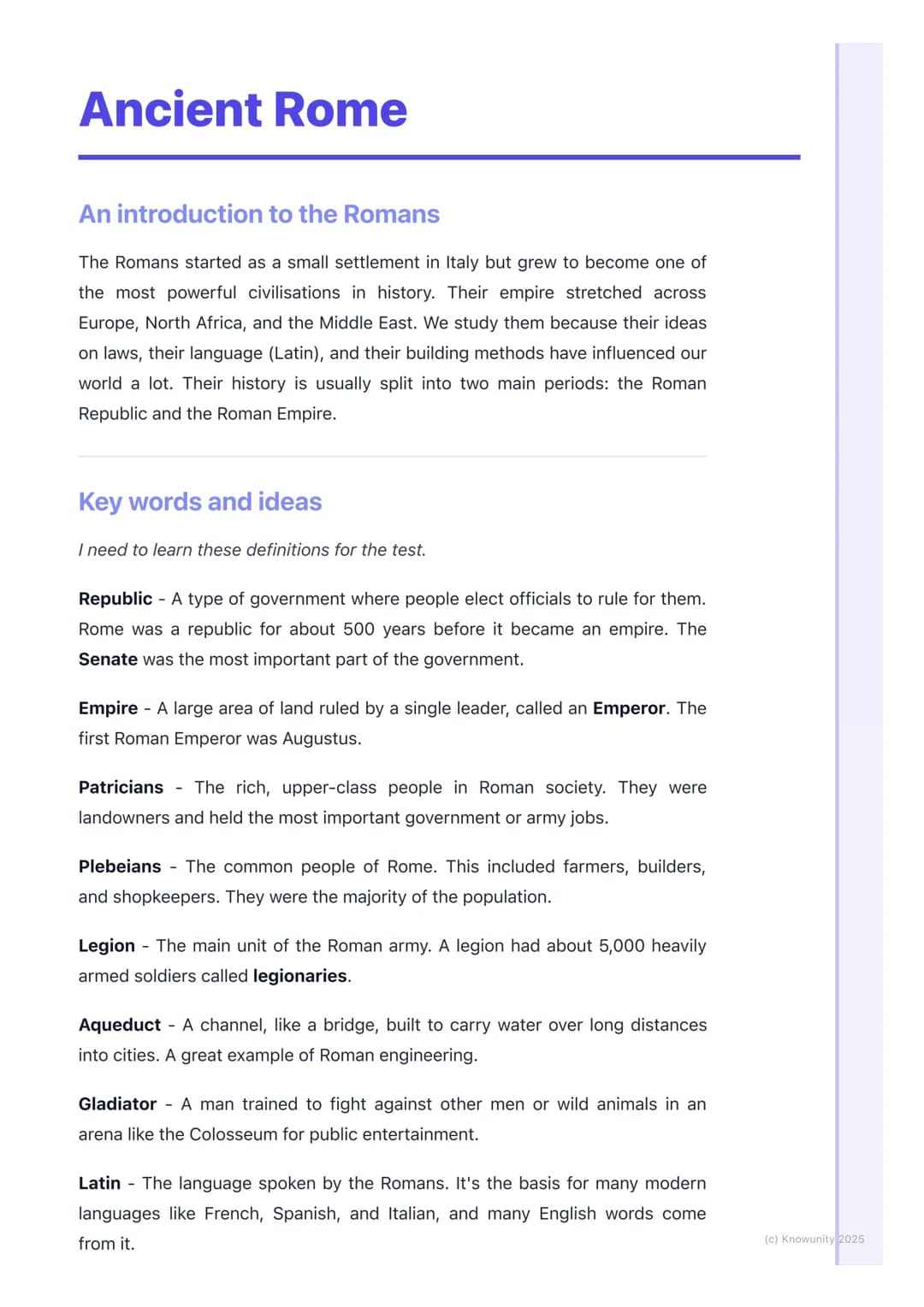
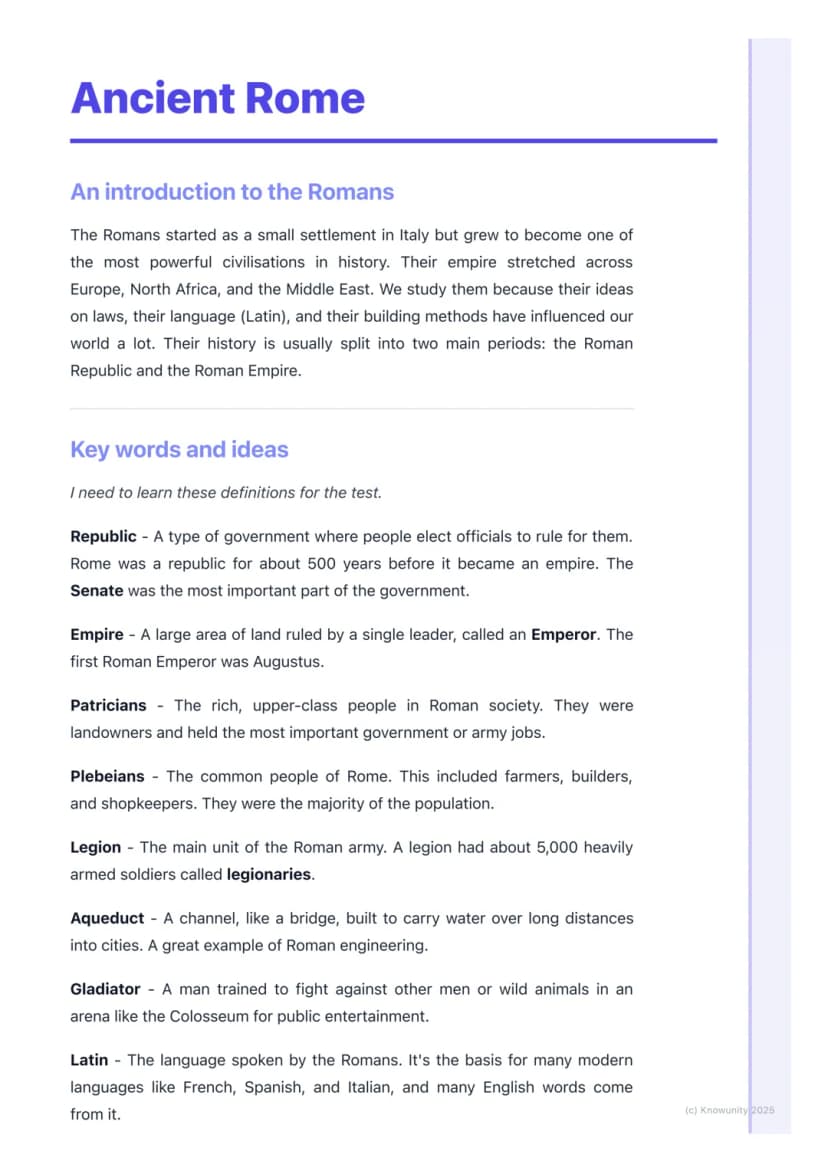
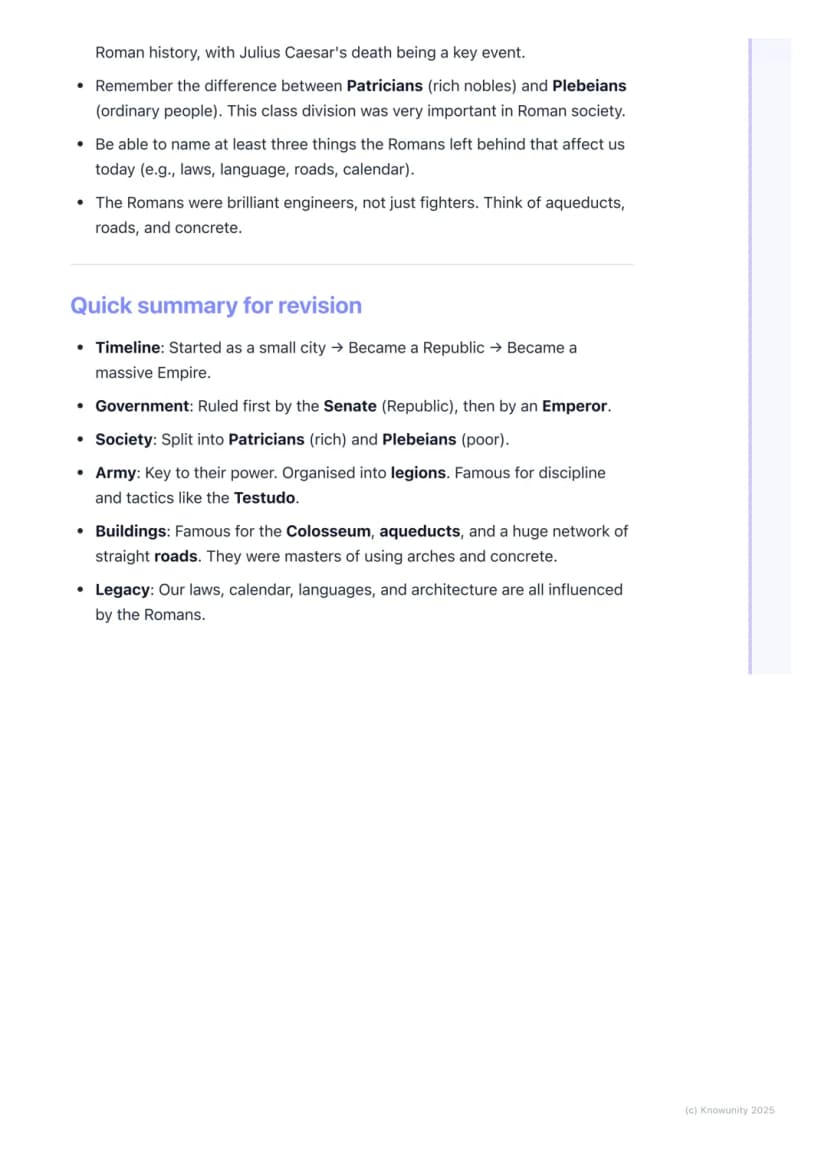
An Introduction to the Romans
Think about this: almost every major European language, our legal system, and even our calendar all have Roman roots! The Romans weren't just ancient people from history books - they're the reason our world works the way it does today.
The Roman civilisation went through two major phases that you need to know. First came the Roman Republic, where elected officials and the Senate ran things for about 500 years. Then it transformed into the Roman Empire, ruled by powerful emperors like Augustus.
Roman society was divided into two main groups. The Patricians were the wealthy upper class who owned land and held important government positions. Meanwhile, the Plebeians made up most of the population - farmers, builders, shopkeepers, and ordinary working people. This class system shaped everything about Roman life.
Quick Test Tip: Remember that Latin, the Roman language, is why French, Spanish, and Italian sound similar - they all developed from it!
2
of 6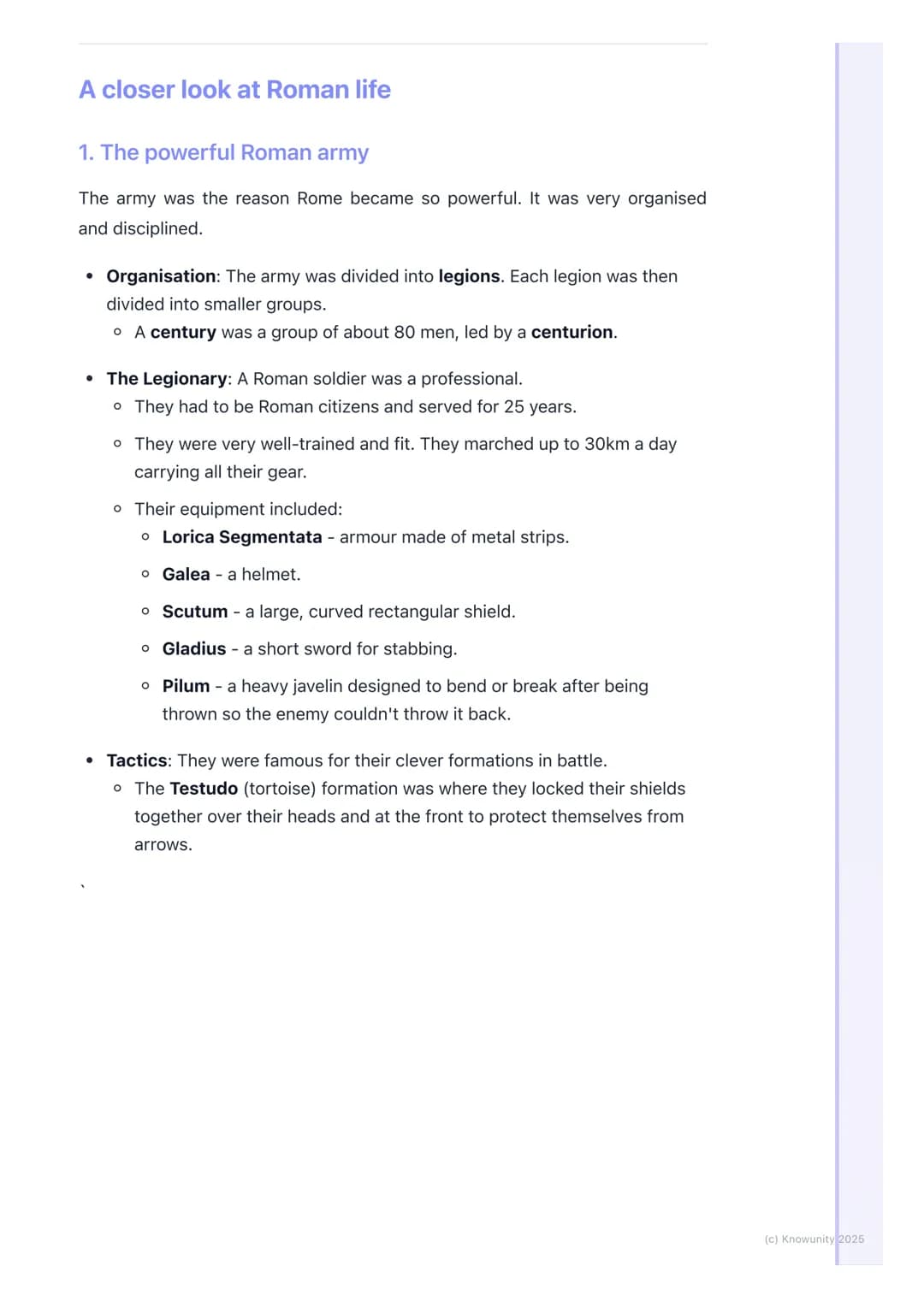
The Powerful Roman Army
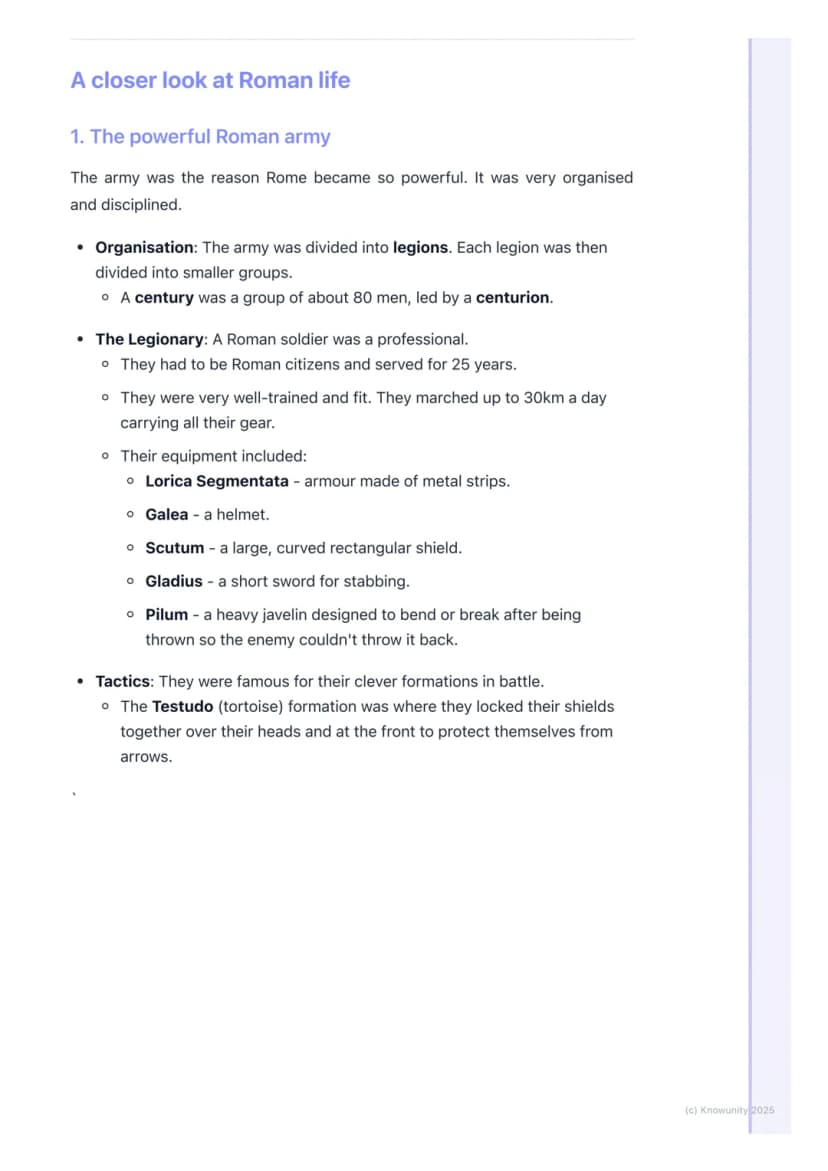
Here's what made Rome unstoppable: their army was like a perfectly organised machine. Every Roman legion contained about 5,000 heavily armed professional soldiers called legionaries.
These weren't just random fighters thrown together. Roman soldiers had to be citizens and served for 25 years! They marched up to 30km daily carrying all their gear, including their lorica segmentata (metal strip armour), gladius (short stabbing sword), and scutum (large curved shield).
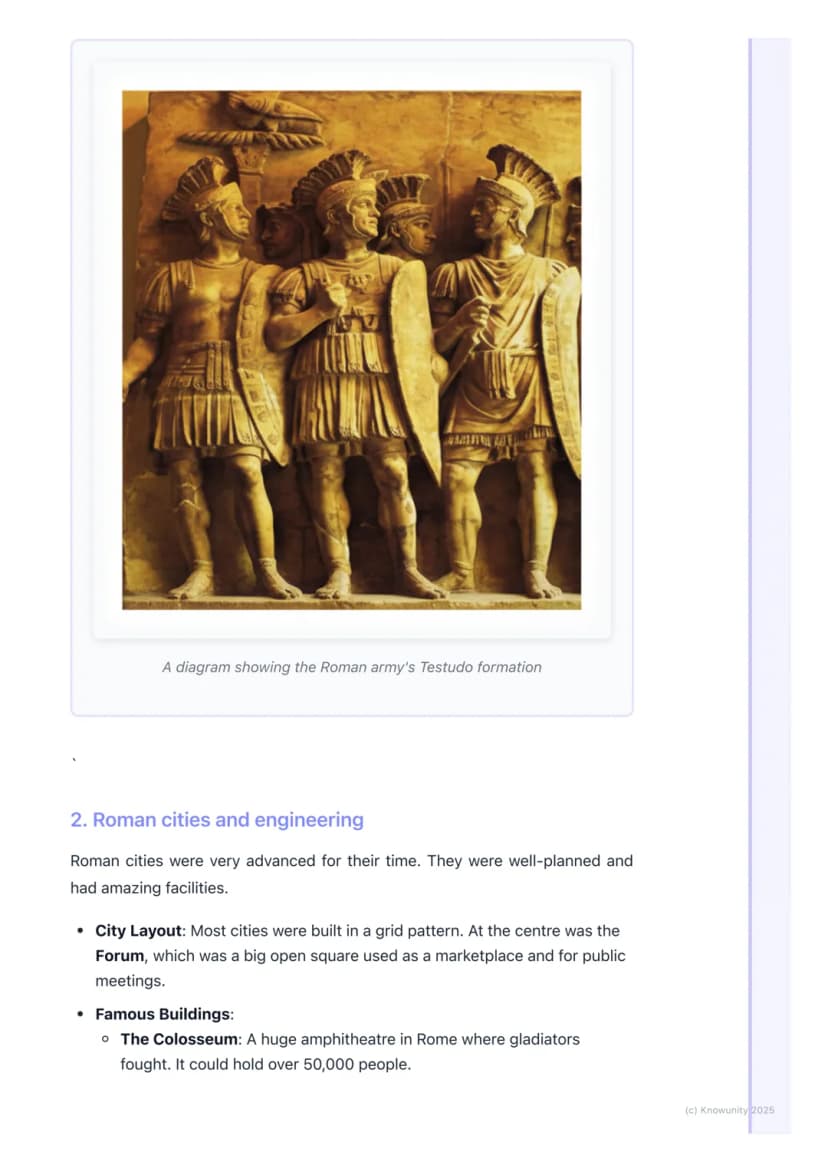
The army's secret weapon was organisation and tactics. Each legion split into smaller groups called centuries, led by tough officers called centurions. Their most famous battle formation was the testudo (tortoise), where soldiers locked shields above their heads and in front to create an armoured shell that arrows couldn't penetrate.
Roman soldiers also used a clever weapon called the pilum - a heavy javelin designed to bend after hitting something, so enemies couldn't throw it back at them.
Remember: The Roman army wasn't just about fighting - they built roads, forts, and aqueducts wherever they went!
3
of 6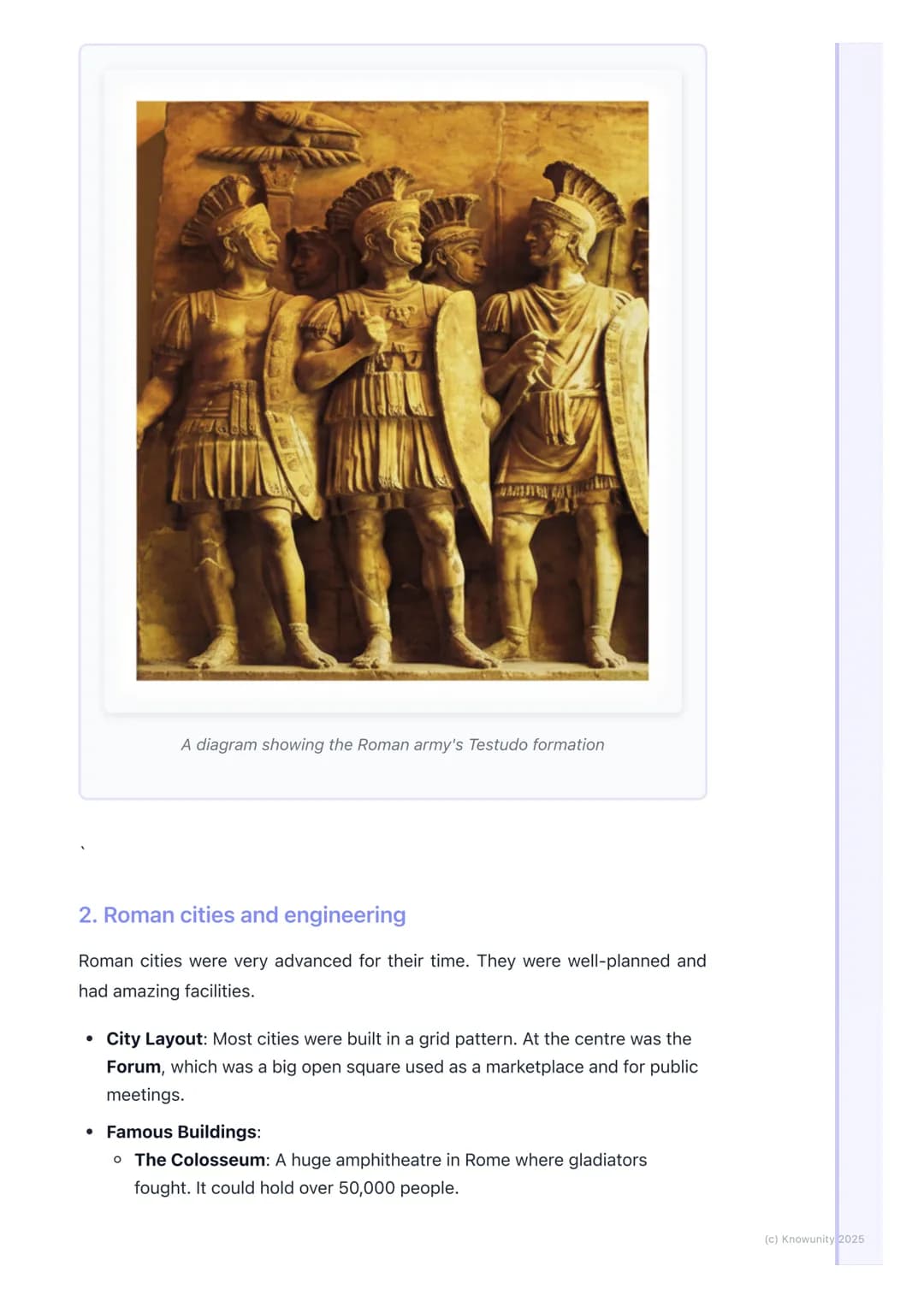
Roman Cities and Engineering
Roman cities weren't chaotic medieval towns - they were planned like modern cities with proper sewers, running water, and organised layouts! Most followed a grid pattern with the Forum (a large marketplace and meeting area) right at the centre.
The Romans created some of history's most impressive buildings. The Colosseum could pack in over 50,000 spectators to watch gladiator fights and animal hunts. The Pantheon, a temple for all Roman gods, still amazes engineers today with its massive concrete dome.
But their real genius showed in practical engineering. Roman aqueducts carried fresh water across huge distances using gravity - no pumps needed! They built over 80,000km of straight, paved roads that helped their army move quickly. That's where "all roads lead to Rome" comes from.
Public baths weren't just for washing - they were like ancient community centres where Romans exercised, socialised, and did business. These facilities show how advanced Roman cities were compared to anywhere else in the world at that time.
Cool Fact: Roman concrete was so good that many of their buildings are still standing 2,000 years later!
4
of 6
What the Romans Left Behind
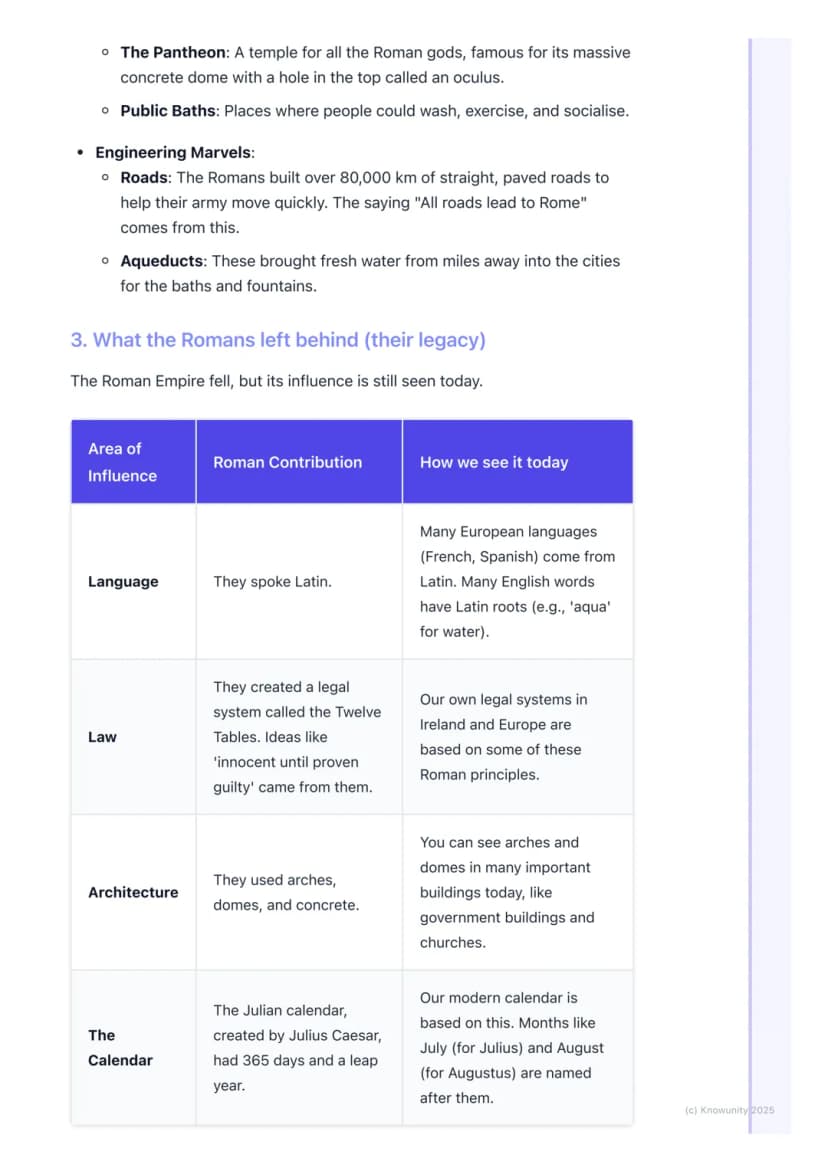
Even though the Roman Empire collapsed over 1,500 years ago, you encounter Roman influence almost every day without realising it! Our legal systems still use Roman principles like "innocent until proven guilty."
Your calendar is basically Roman too. Julius Caesar created the Julian calendar with 365 days and leap years - sound familiar? July and August are named after Julius Caesar and Emperor Augustus. Many English words come from Latin: "aqua" (water), "terra" (earth), "audio" (hear).
Roman architecture shapes our important buildings today. Government buildings, churches, and monuments use Roman arches, domes, and columns. The dome on many capitol buildings? That's inspired by the Pantheon.
Roman law created the Twelve Tables - written laws that applied to everyone. This idea of written, fair laws that protect citizens became the foundation for legal systems across Europe and Ireland. Before Romans, most places just had whatever the local ruler decided on the spot!
Exam Tip: Be ready to name at least three Roman contributions that affect us today - language, laws, architecture, and calendar are the big ones!
5
of 6
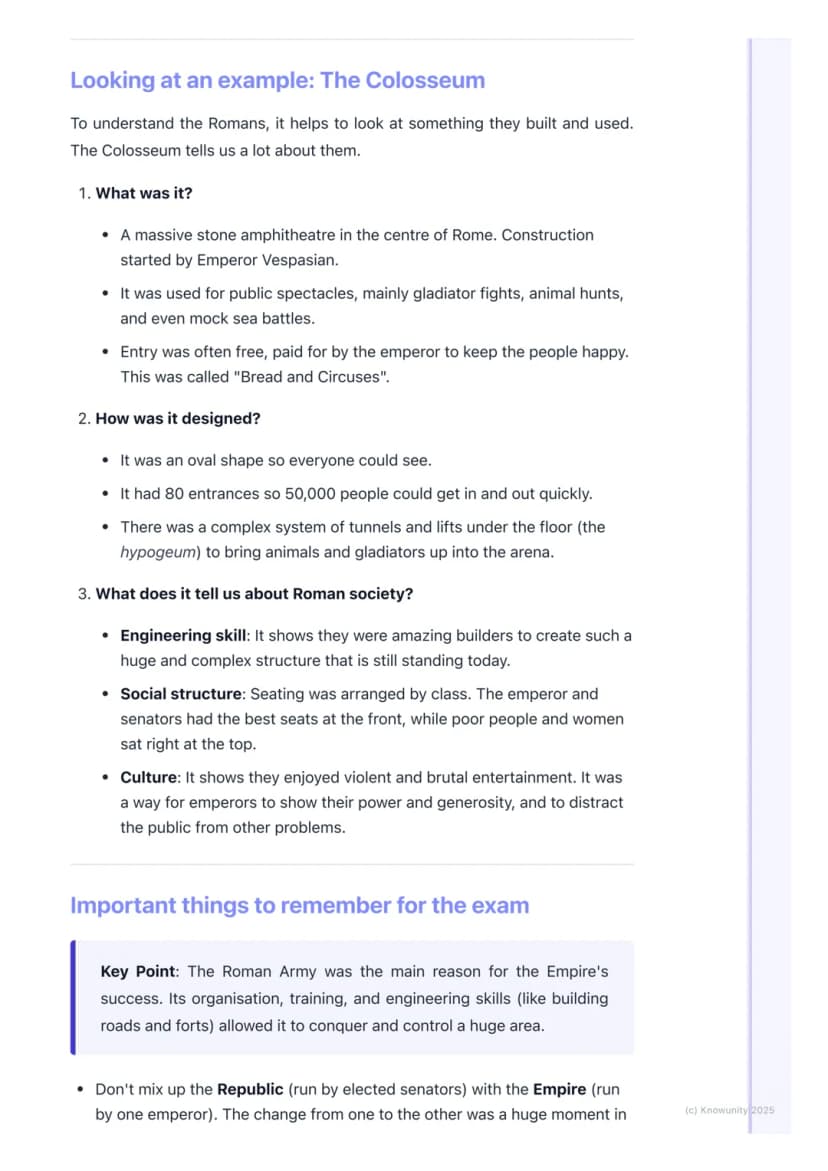
The Colosseum: A Window into Roman Life
The Colosseum is like a time machine that shows us exactly what Romans valued. This massive stone amphitheatre wasn't just entertainment - it was politics, engineering, and social control all rolled into one.
Emperors used "Bread and Circuses" - free food and spectacular shows - to keep ordinary Romans happy and distracted from problems. The Colosseum could hold 50,000 people and had 80 entrances so crowds could get in and out safely. Underneath the arena floor, the hypogeum was a complex system of tunnels, lifts, and cages that brought animals and gladiators up into the arena.
The seating arrangement told you everything about Roman society. The emperor and senators sat ringside with the best views. Patricians got good middle seats. Plebeians and women were stuck at the very top. Your seat literally showed your place in society.
What happened in the arena was brutal - gladiator fights, animal hunts, and even mock naval battles with real ships! This shows Romans enjoyed violent spectacles, but it also demonstrates how emperors used entertainment to display their power and wealth.
Think About It: The Colosseum still influences us - modern stadiums use similar designs for crowd flow and seating!
6
of 6
Key Points for Your Exam
Don't confuse the Republic (elected Senate) with the Empire (ruled by emperors) - this transition was massive in Roman history, especially around Julius Caesar's assassination. Understanding this change shows you grasp how Roman government evolved.
Remember that Roman success came from their army's organisation and discipline, plus their incredible engineering skills. They didn't just conquer places - they built roads, aqueducts, and cities that made their empire work efficiently.
The Patrician-Plebeian class system affected everything in Roman society, from where you sat in the Colosseum to what jobs you could have. This wasn't just rich versus poor - it was a legal and social framework that defined Roman life.
Roman legacy surrounds you daily. When you use words with Latin roots, follow our calendar, see government buildings with columns and domes, or rely on written laws that protect your rights - that's all Roman influence still working today.
Revision Reminder: Timeline = Small city → Republic → Massive Empire. Government = Senate → Emperor. Army = Legions with brilliant tactics. Buildings = Colosseum, aqueducts, roads everywhere!
そんなこと聞いてくれるのを待ってたよ...
KnowunityのAIコンパニオンとは?
KnowunityのAIコンパニオンは学生向けに設計されたAIツールで、単なる答えを提供するだけではありません。数百万のKnowunityリソースを基に構築され、関連する情報、個別の学習プラン、クイズ、コンテンツをチャット内で直接提供し、あなたの個別の学習過程に適応します。
Knowunityアプリはどこでダウンロードできますか?
Google Play StoreとApple App Storeからアプリをダウンロードできます。
Knowunityは本当に無料ですか?
その通り!学習コンテンツへの無料アクセス、仲間の学生とのつながり、そして即座のサポートを手のひらで楽しもう。
Historyの人気コンテンツ
9人気コンテンツ
9探しているものが見つからない?他の教科も見てみよう。
生徒たちが愛用中 — あなたもきっと気に入るはず。
4.6/5App Store
4.7/5Google Play
このアプリはとても使いやすくて、デザインも良いです。今のところ探していたものは全て見つかったし、プレゼン資料からもたくさん学べました!絶対に課題でも使いたいと思います!もちろん、アイデアを得るのにもすごく役立ちます。
Stefan SiOSユーザー
このアプリは本当に素晴らしいです。学習ノートやサポート資料がとても豊富で[...]。例えば、私の苦手科目はフランス語なんですが、このアプリにはサポートオプションがたくさんあります。このアプリのおかげでフランス語が上達しました。誰にでもおすすめしたいです。
Samantha KlichAndroidユーザー
すごい、本当に驚いた。広告で何度も見かけたからアプリを試してみたら、めちゃくちゃ感動した。このアプリは学校で欲しかった「まさにこれ!」って感じのサポートで、特に練習問題や要点まとめみたいな機能がたくさんあって、個人的にすごく助かってる。
AnnaiOSユーザー
History21 閲覧数·更新日 Jun 6, 2026·6 ページThe Fascinating World of Ancient Rome
Ever wonder how a small Italian city became one of history's most powerful civilisations? The Romans started as just another settlement but ended up ruling most of the known world for centuries. Their incredible army, amazing engineering skills, and clever... もっと見る
1
of 6サインアップしてコンテンツを見よう。無料だよ!
- 全ドキュメントへのアクセス
- 成績アップ
- 数百万人の学生と一緒に学習
An Introduction to the Romans
Think about this: almost every major European language, our legal system, and even our calendar all have Roman roots! The Romans weren't just ancient people from history books - they're the reason our world works the way it does today.
The Roman civilisation went through two major phases that you need to know. First came the Roman Republic, where elected officials and the Senate ran things for about 500 years. Then it transformed into the Roman Empire, ruled by powerful emperors like Augustus.
Roman society was divided into two main groups. The Patricians were the wealthy upper class who owned land and held important government positions. Meanwhile, the Plebeians made up most of the population - farmers, builders, shopkeepers, and ordinary working people. This class system shaped everything about Roman life.
Quick Test Tip: Remember that Latin, the Roman language, is why French, Spanish, and Italian sound similar - they all developed from it!
2
of 6サインアップしてコンテンツを見よう。無料だよ!
- 全ドキュメントへのアクセス
- 成績アップ
- 数百万人の学生と一緒に学習
The Powerful Roman Army
Here's what made Rome unstoppable: their army was like a perfectly organised machine. Every Roman legion contained about 5,000 heavily armed professional soldiers called legionaries.
These weren't just random fighters thrown together. Roman soldiers had to be citizens and served for 25 years! They marched up to 30km daily carrying all their gear, including their lorica segmentata (metal strip armour), gladius (short stabbing sword), and scutum (large curved shield).
The army's secret weapon was organisation and tactics. Each legion split into smaller groups called centuries, led by tough officers called centurions. Their most famous battle formation was the testudo (tortoise), where soldiers locked shields above their heads and in front to create an armoured shell that arrows couldn't penetrate.
Roman soldiers also used a clever weapon called the pilum - a heavy javelin designed to bend after hitting something, so enemies couldn't throw it back at them.
Remember: The Roman army wasn't just about fighting - they built roads, forts, and aqueducts wherever they went!
3
of 6サインアップしてコンテンツを見よう。無料だよ!
- 全ドキュメントへのアクセス
- 成績アップ
- 数百万人の学生と一緒に学習
Roman Cities and Engineering
Roman cities weren't chaotic medieval towns - they were planned like modern cities with proper sewers, running water, and organised layouts! Most followed a grid pattern with the Forum (a large marketplace and meeting area) right at the centre.
The Romans created some of history's most impressive buildings. The Colosseum could pack in over 50,000 spectators to watch gladiator fights and animal hunts. The Pantheon, a temple for all Roman gods, still amazes engineers today with its massive concrete dome.
But their real genius showed in practical engineering. Roman aqueducts carried fresh water across huge distances using gravity - no pumps needed! They built over 80,000km of straight, paved roads that helped their army move quickly. That's where "all roads lead to Rome" comes from.
Public baths weren't just for washing - they were like ancient community centres where Romans exercised, socialised, and did business. These facilities show how advanced Roman cities were compared to anywhere else in the world at that time.
Cool Fact: Roman concrete was so good that many of their buildings are still standing 2,000 years later!
4
of 6サインアップしてコンテンツを見よう。無料だよ!
- 全ドキュメントへのアクセス
- 成績アップ
- 数百万人の学生と一緒に学習
What the Romans Left Behind
Even though the Roman Empire collapsed over 1,500 years ago, you encounter Roman influence almost every day without realising it! Our legal systems still use Roman principles like "innocent until proven guilty."
Your calendar is basically Roman too. Julius Caesar created the Julian calendar with 365 days and leap years - sound familiar? July and August are named after Julius Caesar and Emperor Augustus. Many English words come from Latin: "aqua" (water), "terra" (earth), "audio" (hear).
Roman architecture shapes our important buildings today. Government buildings, churches, and monuments use Roman arches, domes, and columns. The dome on many capitol buildings? That's inspired by the Pantheon.
Roman law created the Twelve Tables - written laws that applied to everyone. This idea of written, fair laws that protect citizens became the foundation for legal systems across Europe and Ireland. Before Romans, most places just had whatever the local ruler decided on the spot!
Exam Tip: Be ready to name at least three Roman contributions that affect us today - language, laws, architecture, and calendar are the big ones!
5
of 6サインアップしてコンテンツを見よう。無料だよ!
- 全ドキュメントへのアクセス
- 成績アップ
- 数百万人の学生と一緒に学習
The Colosseum: A Window into Roman Life
The Colosseum is like a time machine that shows us exactly what Romans valued. This massive stone amphitheatre wasn't just entertainment - it was politics, engineering, and social control all rolled into one.
Emperors used "Bread and Circuses" - free food and spectacular shows - to keep ordinary Romans happy and distracted from problems. The Colosseum could hold 50,000 people and had 80 entrances so crowds could get in and out safely. Underneath the arena floor, the hypogeum was a complex system of tunnels, lifts, and cages that brought animals and gladiators up into the arena.
The seating arrangement told you everything about Roman society. The emperor and senators sat ringside with the best views. Patricians got good middle seats. Plebeians and women were stuck at the very top. Your seat literally showed your place in society.
What happened in the arena was brutal - gladiator fights, animal hunts, and even mock naval battles with real ships! This shows Romans enjoyed violent spectacles, but it also demonstrates how emperors used entertainment to display their power and wealth.
Think About It: The Colosseum still influences us - modern stadiums use similar designs for crowd flow and seating!
6
of 6サインアップしてコンテンツを見よう。無料だよ!
- 全ドキュメントへのアクセス
- 成績アップ
- 数百万人の学生と一緒に学習
Key Points for Your Exam
Don't confuse the Republic (elected Senate) with the Empire (ruled by emperors) - this transition was massive in Roman history, especially around Julius Caesar's assassination. Understanding this change shows you grasp how Roman government evolved.
Remember that Roman success came from their army's organisation and discipline, plus their incredible engineering skills. They didn't just conquer places - they built roads, aqueducts, and cities that made their empire work efficiently.
The Patrician-Plebeian class system affected everything in Roman society, from where you sat in the Colosseum to what jobs you could have. This wasn't just rich versus poor - it was a legal and social framework that defined Roman life.
Roman legacy surrounds you daily. When you use words with Latin roots, follow our calendar, see government buildings with columns and domes, or rely on written laws that protect your rights - that's all Roman influence still working today.
Revision Reminder: Timeline = Small city → Republic → Massive Empire. Government = Senate → Emperor. Army = Legions with brilliant tactics. Buildings = Colosseum, aqueducts, roads everywhere!
そんなこと聞いてくれるのを待ってたよ...
KnowunityのAIコンパニオンとは?
KnowunityのAIコンパニオンは学生向けに設計されたAIツールで、単なる答えを提供するだけではありません。数百万のKnowunityリソースを基に構築され、関連する情報、個別の学習プラン、クイズ、コンテンツをチャット内で直接提供し、あなたの個別の学習過程に適応します。
Knowunityアプリはどこでダウンロードできますか?
Google Play StoreとApple App Storeからアプリをダウンロードできます。
Knowunityは本当に無料ですか?
その通り!学習コンテンツへの無料アクセス、仲間の学生とのつながり、そして即座のサポートを手のひらで楽しもう。
Historyの人気コンテンツ
9人気コンテンツ
9探しているものが見つからない?他の教科も見てみよう。
生徒たちが愛用中 — あなたもきっと気に入るはず。
4.6/5App Store
4.7/5Google Play
このアプリはとても使いやすくて、デザインも良いです。今のところ探していたものは全て見つかったし、プレゼン資料からもたくさん学べました!絶対に課題でも使いたいと思います!もちろん、アイデアを得るのにもすごく役立ちます。
Stefan SiOSユーザー
このアプリは本当に素晴らしいです。学習ノートやサポート資料がとても豊富で[...]。例えば、私の苦手科目はフランス語なんですが、このアプリにはサポートオプションがたくさんあります。このアプリのおかげでフランス語が上達しました。誰にでもおすすめしたいです。
Samantha KlichAndroidユーザー
すごい、本当に驚いた。広告で何度も見かけたからアプリを試してみたら、めちゃくちゃ感動した。このアプリは学校で欲しかった「まさにこれ!」って感じのサポートで、特に練習問題や要点まとめみたいな機能がたくさんあって、個人的にすごく助かってる。
AnnaiOSユーザー