
Ever wondered how to order food in a German restaurant...
 German1 閲覧数·更新日 Jun 14, 2026·5 ページ
Essential Phrases for Dining in a German Restaurant
1 / 5
1
of 5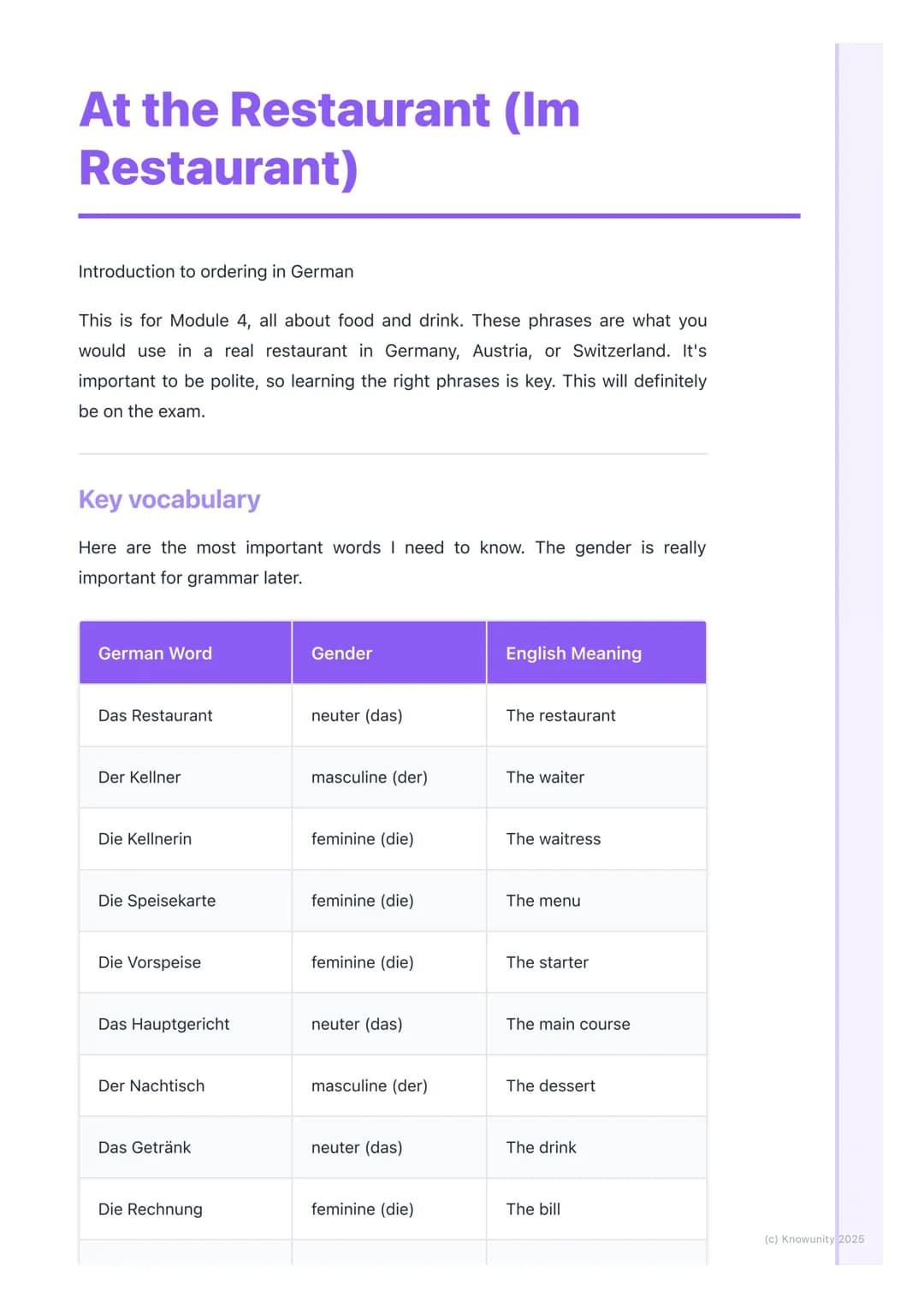
Restaurant Vocabulary Essentials
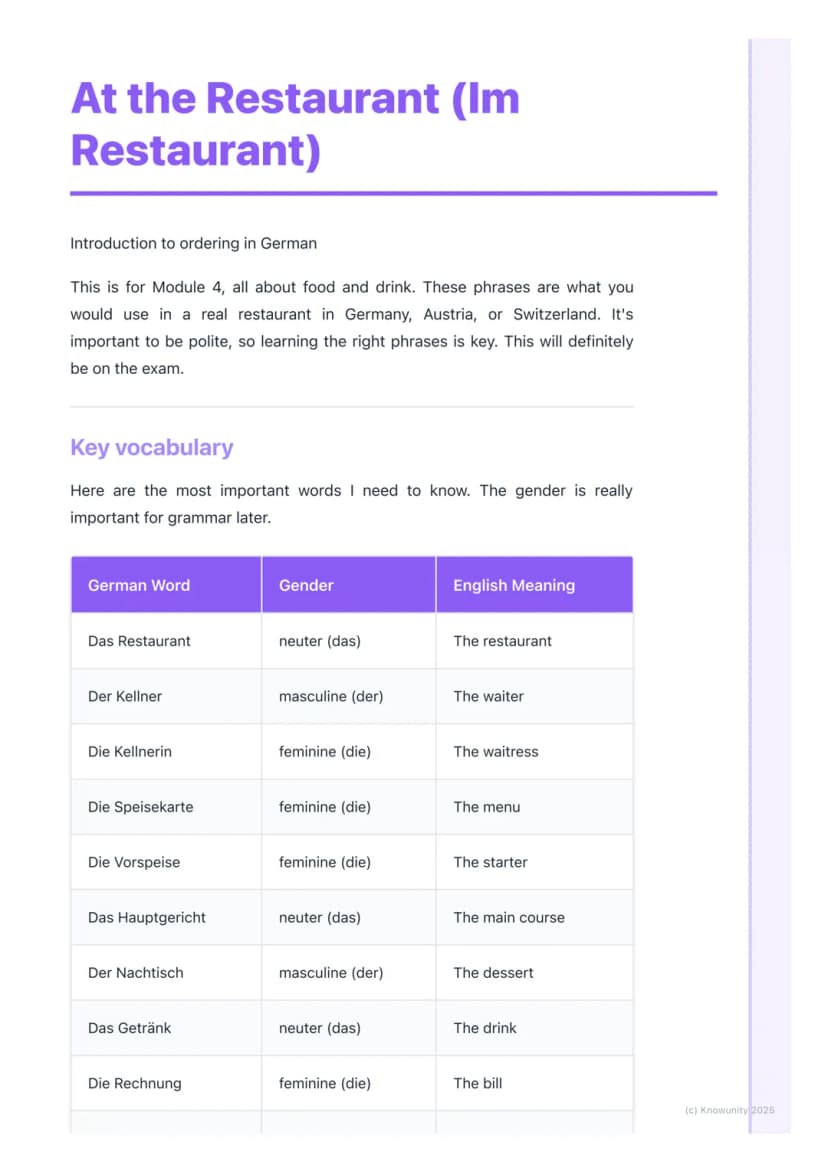
Learning restaurant vocabulary is like having a secret weapon for your German speaking tests. The most important thing to remember is that every German noun has a gender - der (masculine), die (feminine), or das (neuter).
Here are the words you absolutely need to know: das Restaurant (restaurant), der Kellner/die Kellnerin , die Speisekarte (menu), and die Rechnung (bill). Don't forget das Hauptgericht (main course) and der Nachtisch (dessert) - these will definitely appear in your exams.
The key verbs that'll save your life include bestellen (to order), möchten (would like), and bezahlen (to pay). Master these and you're halfway there!
Top Tip: Always learn German nouns with their gender articles - it makes ordering food much easier later on!
2
of 5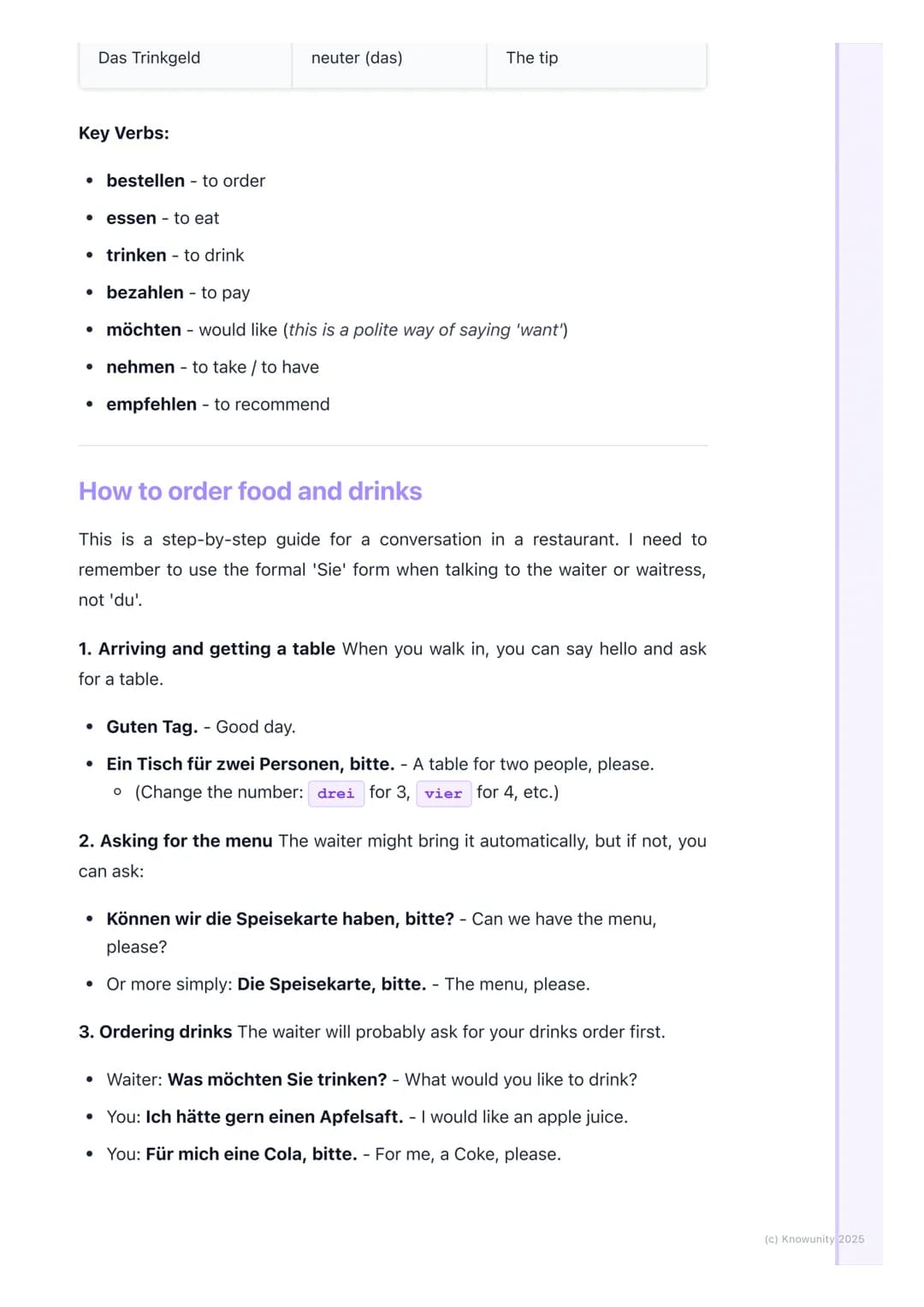
Getting Started: Arriving and Ordering
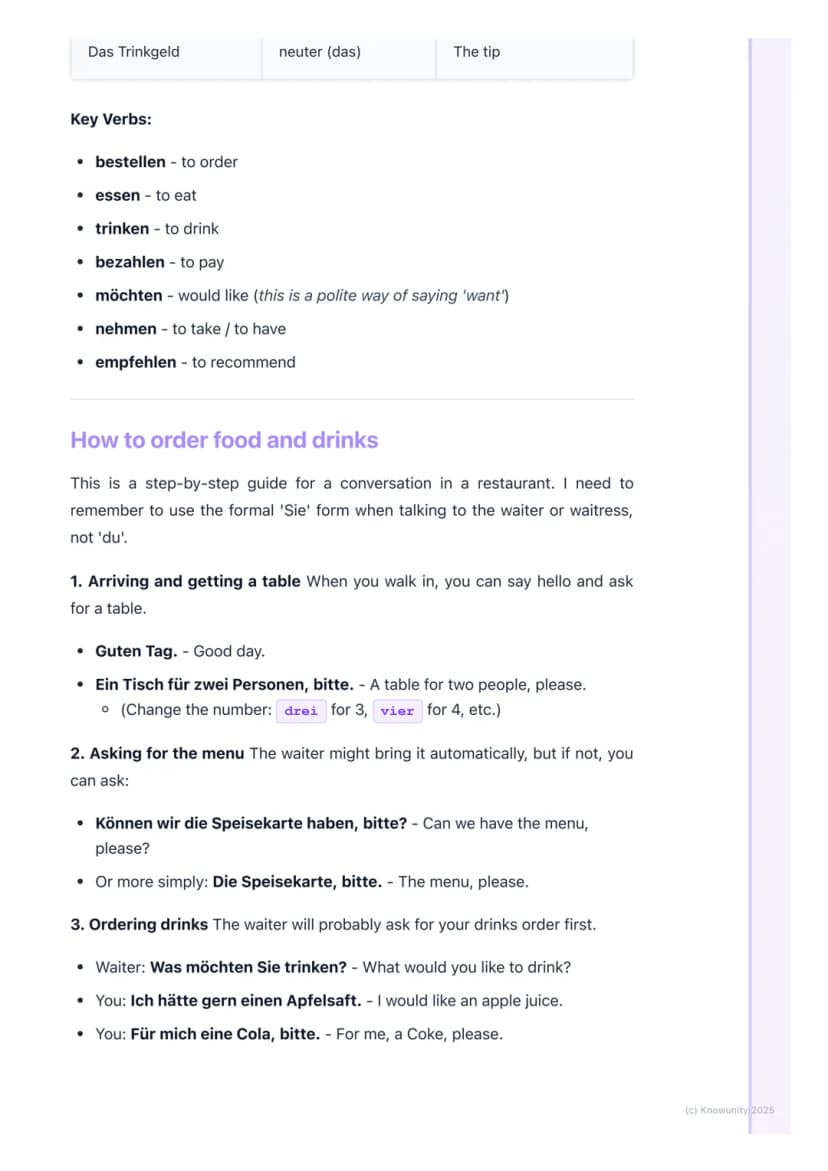
Walking into a German restaurant doesn't have to be scary - just remember a few key phrases and you'll sound like a pro. Start with "Guten Tag" (good day) and ask for "Ein Tisch für zwei Personen, bitte" (a table for two people, please).
When you're ready to see what's on offer, simply say "Die Speisekarte, bitte" (the menu, please). The waiter will usually ask "Was möchten Sie trinken?" (what would you like to drink?) first, so be ready with your drink order.
The magic phrase for polite ordering is "Ich hätte gern..." (I would like to have...). This sounds much more polite than saying "Ich will" (I want), which can come across as rude. You can also use "Ich nehme..." (I'll take...) which is perfectly acceptable.
Remember: Always use the formal "Sie" when speaking to restaurant staff - never use "du"!
3
of 5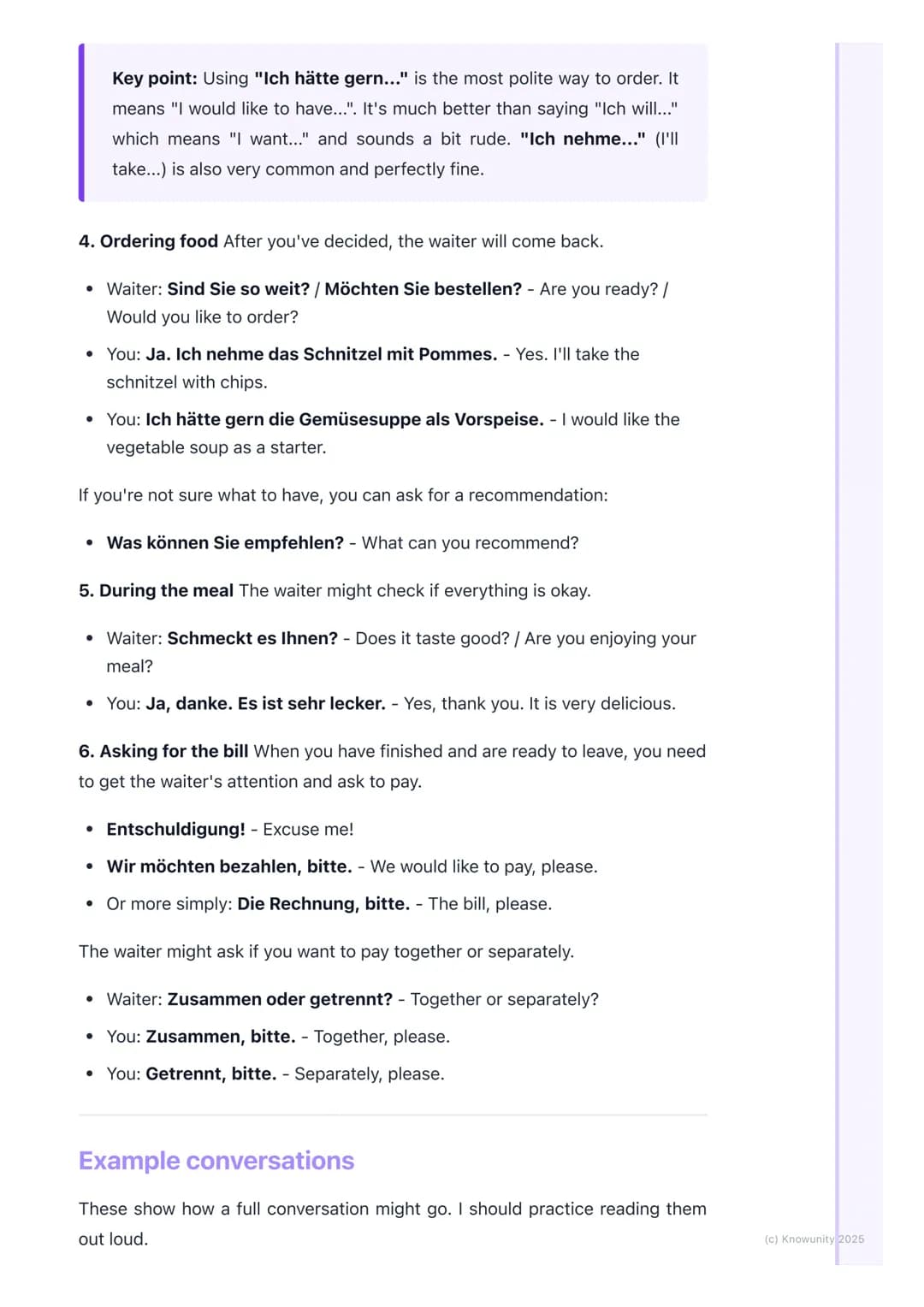
Ordering Food and Handling the Meal
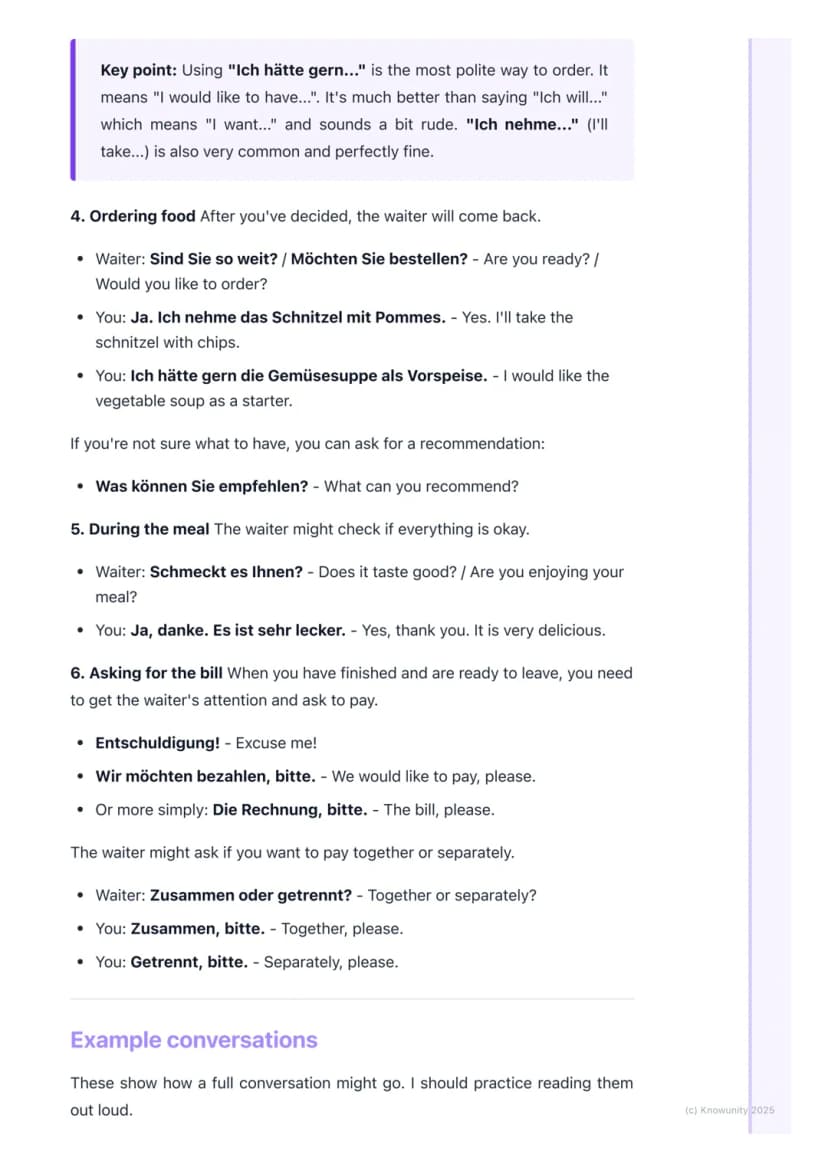
When the waiter asks "Sind Sie so weit?" (are you ready?), you can confidently say "Ja. Ich nehme das Schnitzel mit Pommes" (Yes, I'll take the schnitzel with chips). If you're feeling adventurous but unsure, ask "Was können Sie empfehlen?" (what can you recommend?).
During your meal, the waiter might check on you with "Schmeckt es Ihnen?" (does it taste good?). A simple "Ja, danke. Es ist sehr lecker" (yes, thank you, it's very delicious) will do the trick.
Getting the bill is straightforward - just catch the waiter's attention with "Entschuldigung!" (excuse me!) and say "Die Rechnung, bitte" (the bill, please). They might ask if you want to pay "zusammen oder getrennt?" (together or separately?).
Cultural Note: In Germany, you usually pay at your table, not at a till like in some other countries!
4
of 5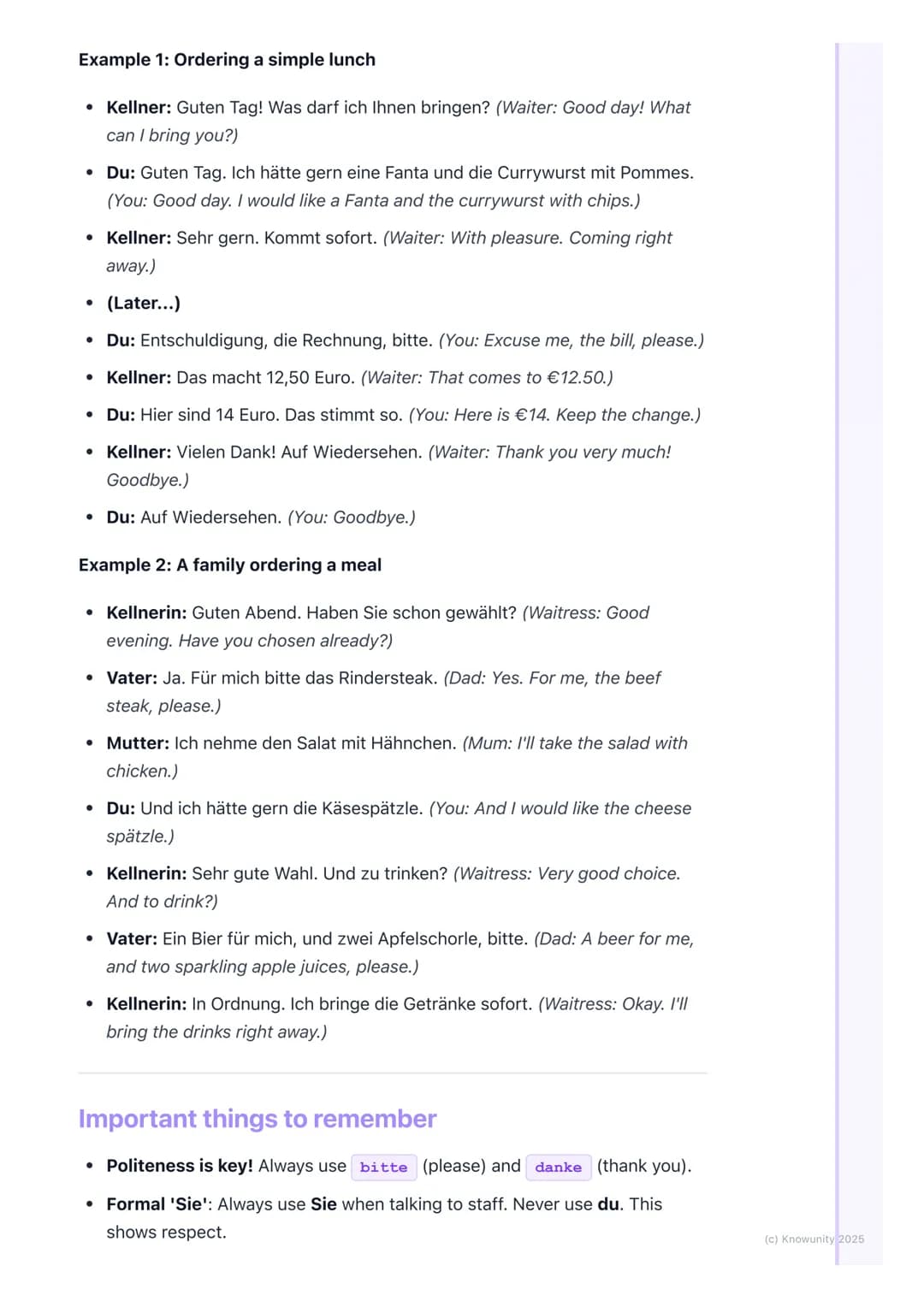
Real Conversation Examples
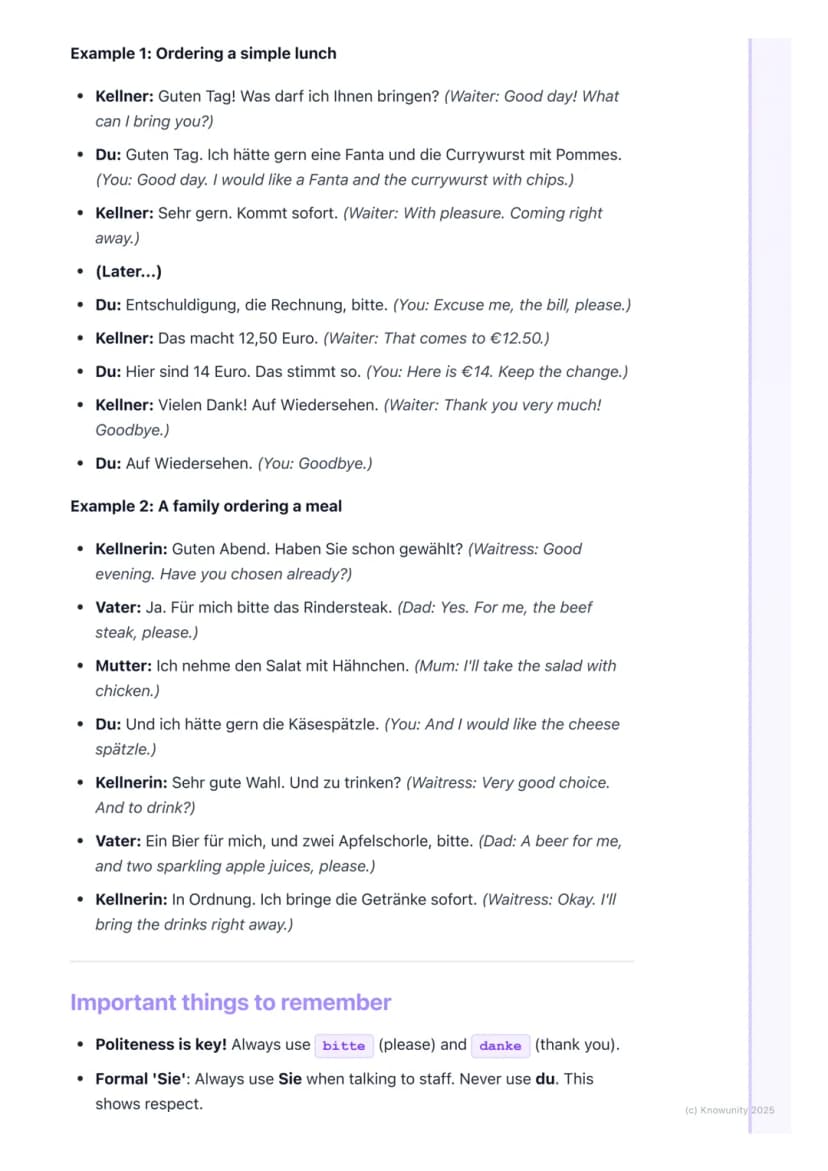
Let's see how these phrases work in real situations. A typical lunch order might go: "Guten Tag. Ich hätte gern eine Fanta und die Currywurst mit Pommes" followed by "Die Rechnung, bitte" when you're finished.
For family meals, each person can order using the same polite phrases. Dad might say "Für mich bitte das Rindersteak" (for me, the beef steak please), while you could say "Ich hätte gern die Käsespätzle" (I'd like the cheese spätzle).
The key is staying polite throughout the entire interaction. Always use "bitte" (please) and "danke" (thank you), and remember that "Sie" form shows proper respect to the staff.
Pro Tip: Practice these conversations out loud - it'll boost your confidence when speaking German in real situations!
5
of 5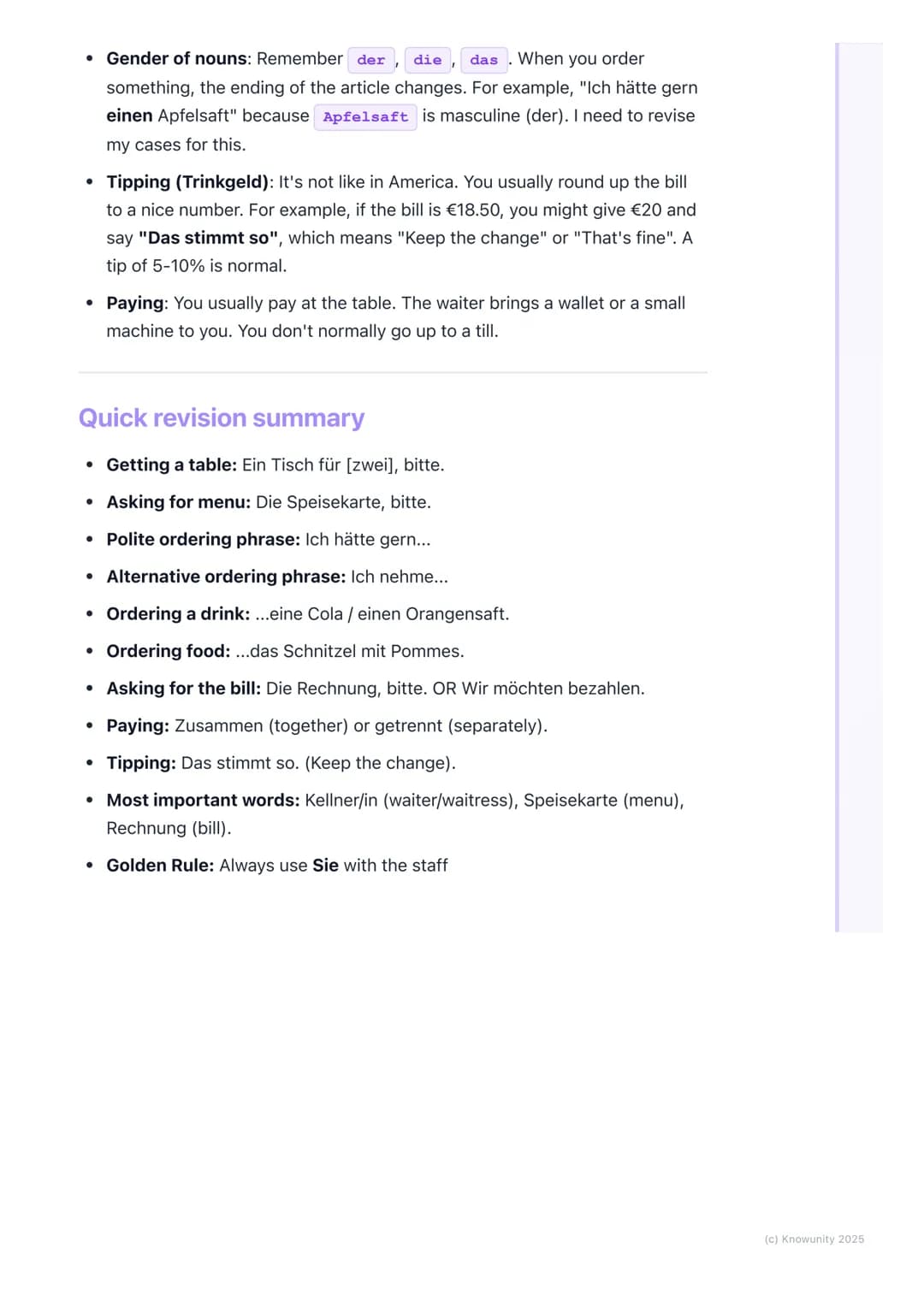
Important Details and Quick Revision
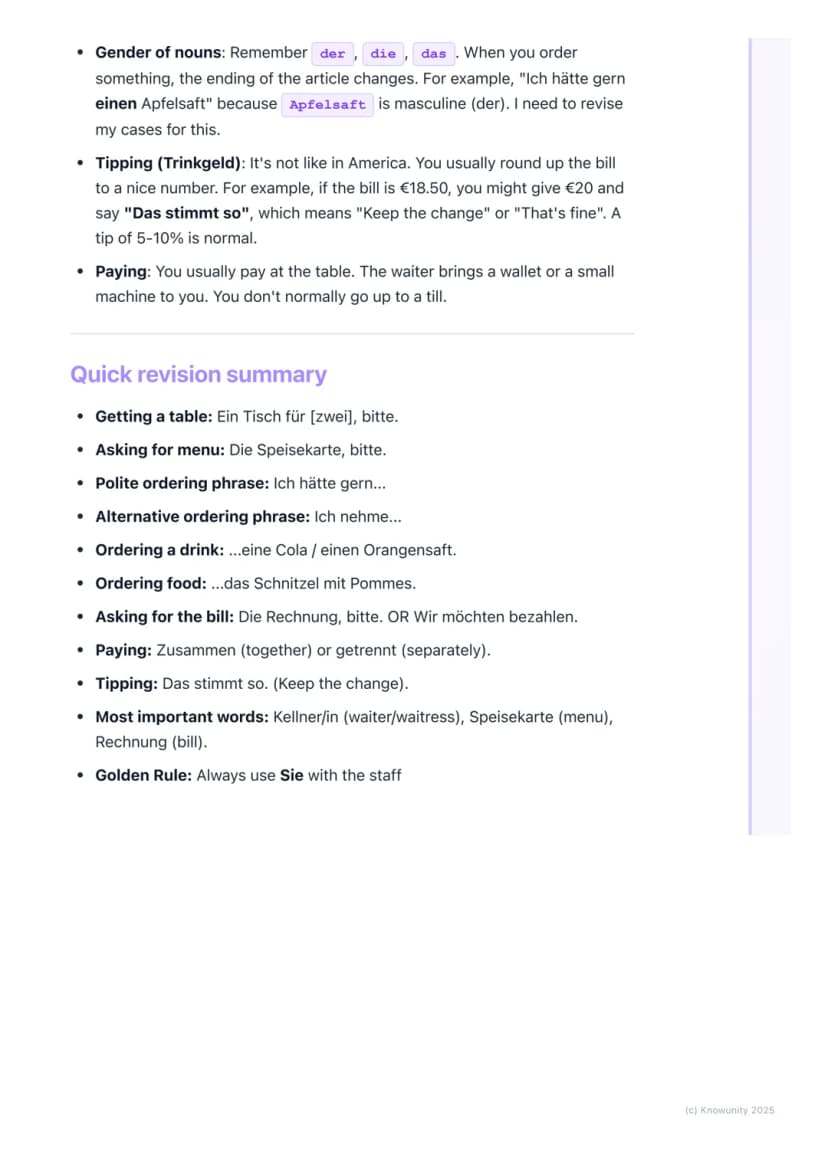
German restaurant etiquette has some quirks you need to know. Tipping isn't like in America - just round up to a nice number and say "Das stimmt so" (keep the change). A 5-10% tip is perfectly normal.
Don't forget about noun genders when ordering! You'll say "einen Apfelsaft" (an apple juice) because Apfelsaft is masculine, but "eine Cola" because Cola is feminine. This is where learning those articles really pays off.
Your exam essentials are: "Ein Tisch für [number], bitte" (getting a table), "Ich hätte gern..." (polite ordering), "Die Rechnung, bitte" (asking for the bill), and always using "Sie" with staff.
Golden Rule: Politeness opens doors in German-speaking countries - master these respectful phrases and you'll impress everyone!
そんなこと聞いてくれるのを待ってたよ...
KnowunityのAIコンパニオンとは?
KnowunityのAIコンパニオンは学生向けに設計されたAIツールで、単なる答えを提供するだけではありません。数百万のKnowunityリソースを基に構築され、関連する情報、個別の学習プラン、クイズ、コンテンツをチャット内で直接提供し、あなたの個別の学習過程に適応します。
Knowunityアプリはどこでダウンロードできますか?
Google Play StoreとApple App Storeからアプリをダウンロードできます。
Knowunityは本当に無料ですか?
その通り!学習コンテンツへの無料アクセス、仲間の学生とのつながり、そして即座のサポートを手のひらで楽しもう。
Germanの人気コンテンツ
2人気コンテンツ
9 Irish
IrishIrish oral questions and answers
Questions and answers for the leaving cert oral
5th Year4264
 English
Key Quotes : Sive
Key Quotes and explanations: Sive
6th Year2842
IrishIrish oral questions
Outline of oral questions
5th Year2055
IrishIníon- le hÁine Durkin
Aine Durkin’s poem, Iníon: Themes & summary
5th Year850
IrishIrish poetry 2027
Iníon + Dínit an Bhróin
5th Year1133
IrishLC HL notes- Iníon (poem)
Includes poem in English and Irish, theme, key words & phrases
5th Year2284
EnglishCultural Context : Shawshank Redemption : Sive : Small Things Like These
Comparative Study : Cultural Context : Shawshank Redemption, Sive and Small Things Like These
6th Year1430
IrishMo Ghrá-sa (Idir Lúibíní)
Notes on mo ghrá-sa
5th Year380
IrishAn Gaeilge Aiste
Irish Language essay
6th Year1320
探しているものが見つからない?他の教科も見てみよう。
生徒たちが愛用中 — あなたもきっと気に入るはず。
4.6/5App Store
4.7/5Google Play
このアプリはとても使いやすくて、デザインも良いです。今のところ探していたものは全て見つかったし、プレゼン資料からもたくさん学べました!絶対に課題でも使いたいと思います!もちろん、アイデアを得るのにもすごく役立ちます。
Stefan SiOSユーザー
このアプリは本当に素晴らしいです。学習ノートやサポート資料がとても豊富で[...]。例えば、私の苦手科目はフランス語なんですが、このアプリにはサポートオプションがたくさんあります。このアプリのおかげでフランス語が上達しました。誰にでもおすすめしたいです。
Samantha KlichAndroidユーザー
すごい、本当に驚いた。広告で何度も見かけたからアプリを試してみたら、めちゃくちゃ感動した。このアプリは学校で欲しかった「まさにこれ!」って感じのサポートで、特に練習問題や要点まとめみたいな機能がたくさんあって、個人的にすごく助かってる。
AnnaiOSユーザー
German1 閲覧数·更新日 Jun 14, 2026·5 ページEssential Phrases for Dining in a German Restaurant
Ever wondered how to order food in a German restaurant without looking like a complete tourist? This guide covers all the essential phrases and polite expressions you'll need for dining out in Germany, Austria, or Switzerland - and it's definitely...
1
of 5
サインアップしてコンテンツを見よう。無料だよ!
- 全ドキュメントへのアクセス
- 成績アップ
- 数百万人の学生と一緒に学習
Restaurant Vocabulary Essentials
Learning restaurant vocabulary is like having a secret weapon for your German speaking tests. The most important thing to remember is that every German noun has a gender - der (masculine), die (feminine), or das (neuter).
Here are the words you absolutely need to know: das Restaurant (restaurant), der Kellner/die Kellnerin , die Speisekarte (menu), and die Rechnung (bill). Don't forget das Hauptgericht (main course) and der Nachtisch (dessert) - these will definitely appear in your exams.
The key verbs that'll save your life include bestellen (to order), möchten (would like), and bezahlen (to pay). Master these and you're halfway there!
Top Tip: Always learn German nouns with their gender articles - it makes ordering food much easier later on!
2
of 5サインアップしてコンテンツを見よう。無料だよ!
- 全ドキュメントへのアクセス
- 成績アップ
- 数百万人の学生と一緒に学習
Getting Started: Arriving and Ordering
Walking into a German restaurant doesn't have to be scary - just remember a few key phrases and you'll sound like a pro. Start with "Guten Tag" (good day) and ask for "Ein Tisch für zwei Personen, bitte" (a table for two people, please).
When you're ready to see what's on offer, simply say "Die Speisekarte, bitte" (the menu, please). The waiter will usually ask "Was möchten Sie trinken?" (what would you like to drink?) first, so be ready with your drink order.
The magic phrase for polite ordering is "Ich hätte gern..." (I would like to have...). This sounds much more polite than saying "Ich will" (I want), which can come across as rude. You can also use "Ich nehme..." (I'll take...) which is perfectly acceptable.
Remember: Always use the formal "Sie" when speaking to restaurant staff - never use "du"!
3
of 5サインアップしてコンテンツを見よう。無料だよ!
- 全ドキュメントへのアクセス
- 成績アップ
- 数百万人の学生と一緒に学習
Ordering Food and Handling the Meal
When the waiter asks "Sind Sie so weit?" (are you ready?), you can confidently say "Ja. Ich nehme das Schnitzel mit Pommes" (Yes, I'll take the schnitzel with chips). If you're feeling adventurous but unsure, ask "Was können Sie empfehlen?" (what can you recommend?).
During your meal, the waiter might check on you with "Schmeckt es Ihnen?" (does it taste good?). A simple "Ja, danke. Es ist sehr lecker" (yes, thank you, it's very delicious) will do the trick.
Getting the bill is straightforward - just catch the waiter's attention with "Entschuldigung!" (excuse me!) and say "Die Rechnung, bitte" (the bill, please). They might ask if you want to pay "zusammen oder getrennt?" (together or separately?).
Cultural Note: In Germany, you usually pay at your table, not at a till like in some other countries!
4
of 5サインアップしてコンテンツを見よう。無料だよ!
- 全ドキュメントへのアクセス
- 成績アップ
- 数百万人の学生と一緒に学習
Real Conversation Examples
Let's see how these phrases work in real situations. A typical lunch order might go: "Guten Tag. Ich hätte gern eine Fanta und die Currywurst mit Pommes" followed by "Die Rechnung, bitte" when you're finished.
For family meals, each person can order using the same polite phrases. Dad might say "Für mich bitte das Rindersteak" (for me, the beef steak please), while you could say "Ich hätte gern die Käsespätzle" (I'd like the cheese spätzle).
The key is staying polite throughout the entire interaction. Always use "bitte" (please) and "danke" (thank you), and remember that "Sie" form shows proper respect to the staff.
Pro Tip: Practice these conversations out loud - it'll boost your confidence when speaking German in real situations!
5
of 5サインアップしてコンテンツを見よう。無料だよ!
- 全ドキュメントへのアクセス
- 成績アップ
- 数百万人の学生と一緒に学習
Important Details and Quick Revision
German restaurant etiquette has some quirks you need to know. Tipping isn't like in America - just round up to a nice number and say "Das stimmt so" (keep the change). A 5-10% tip is perfectly normal.
Don't forget about noun genders when ordering! You'll say "einen Apfelsaft" (an apple juice) because Apfelsaft is masculine, but "eine Cola" because Cola is feminine. This is where learning those articles really pays off.
Your exam essentials are: "Ein Tisch für [number], bitte" (getting a table), "Ich hätte gern..." (polite ordering), "Die Rechnung, bitte" (asking for the bill), and always using "Sie" with staff.
Golden Rule: Politeness opens doors in German-speaking countries - master these respectful phrases and you'll impress everyone!
そんなこと聞いてくれるのを待ってたよ...
KnowunityのAIコンパニオンとは?
KnowunityのAIコンパニオンは学生向けに設計されたAIツールで、単なる答えを提供するだけではありません。数百万のKnowunityリソースを基に構築され、関連する情報、個別の学習プラン、クイズ、コンテンツをチャット内で直接提供し、あなたの個別の学習過程に適応します。
Knowunityアプリはどこでダウンロードできますか?
Google Play StoreとApple App Storeからアプリをダウンロードできます。
Knowunityは本当に無料ですか?
その通り!学習コンテンツへの無料アクセス、仲間の学生とのつながり、そして即座のサポートを手のひらで楽しもう。
Germanの人気コンテンツ
2人気コンテンツ
9IrishIrish oral questions and answers
Questions and answers for the leaving cert oral
5th Year4264
EnglishKey Quotes : Sive
Key Quotes and explanations: Sive
6th Year2842
IrishIrish oral questions
Outline of oral questions
5th Year2055
IrishIníon- le hÁine Durkin
Aine Durkin’s poem, Iníon: Themes & summary
5th Year850
IrishIrish poetry 2027
Iníon + Dínit an Bhróin
5th Year1133
IrishLC HL notes- Iníon (poem)
Includes poem in English and Irish, theme, key words & phrases
5th Year2284
EnglishCultural Context : Shawshank Redemption : Sive : Small Things Like These
Comparative Study : Cultural Context : Shawshank Redemption, Sive and Small Things Like These
6th Year1430
IrishMo Ghrá-sa (Idir Lúibíní)
Notes on mo ghrá-sa
5th Year380
IrishAn Gaeilge Aiste
Irish Language essay
6th Year1320
探しているものが見つからない?他の教科も見てみよう。
生徒たちが愛用中 — あなたもきっと気に入るはず。
4.6/5App Store
4.7/5Google Play
このアプリはとても使いやすくて、デザインも良いです。今のところ探していたものは全て見つかったし、プレゼン資料からもたくさん学べました!絶対に課題でも使いたいと思います!もちろん、アイデアを得るのにもすごく役立ちます。
Stefan SiOSユーザー
このアプリは本当に素晴らしいです。学習ノートやサポート資料がとても豊富で[...]。例えば、私の苦手科目はフランス語なんですが、このアプリにはサポートオプションがたくさんあります。このアプリのおかげでフランス語が上達しました。誰にでもおすすめしたいです。
Samantha KlichAndroidユーザー
すごい、本当に驚いた。広告で何度も見かけたからアプリを試してみたら、めちゃくちゃ感動した。このアプリは学校で欲しかった「まさにこれ!」って感じのサポートで、特に練習問題や要点まとめみたいな機能がたくさんあって、個人的にすごく助かってる。
AnnaiOSユーザー