
Ever wonder how your iPhone gets from raw materials to... もっと見る
 Business Studies7 閲覧数·更新日 Jun 3, 2026·5 ページ
Exploring the Sectors of Economic Activity
1 / 5
1
of 5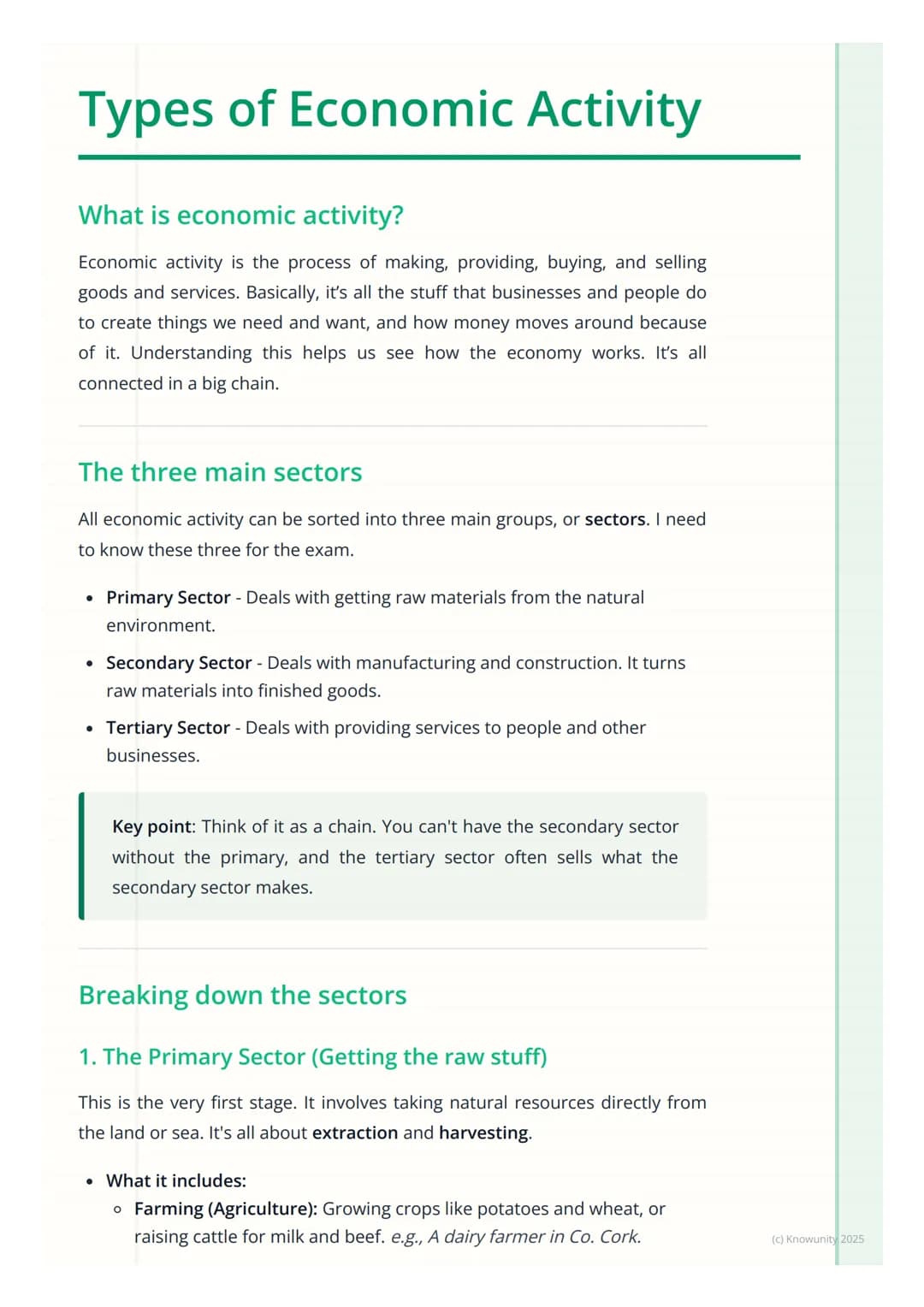
What is Economic Activity?
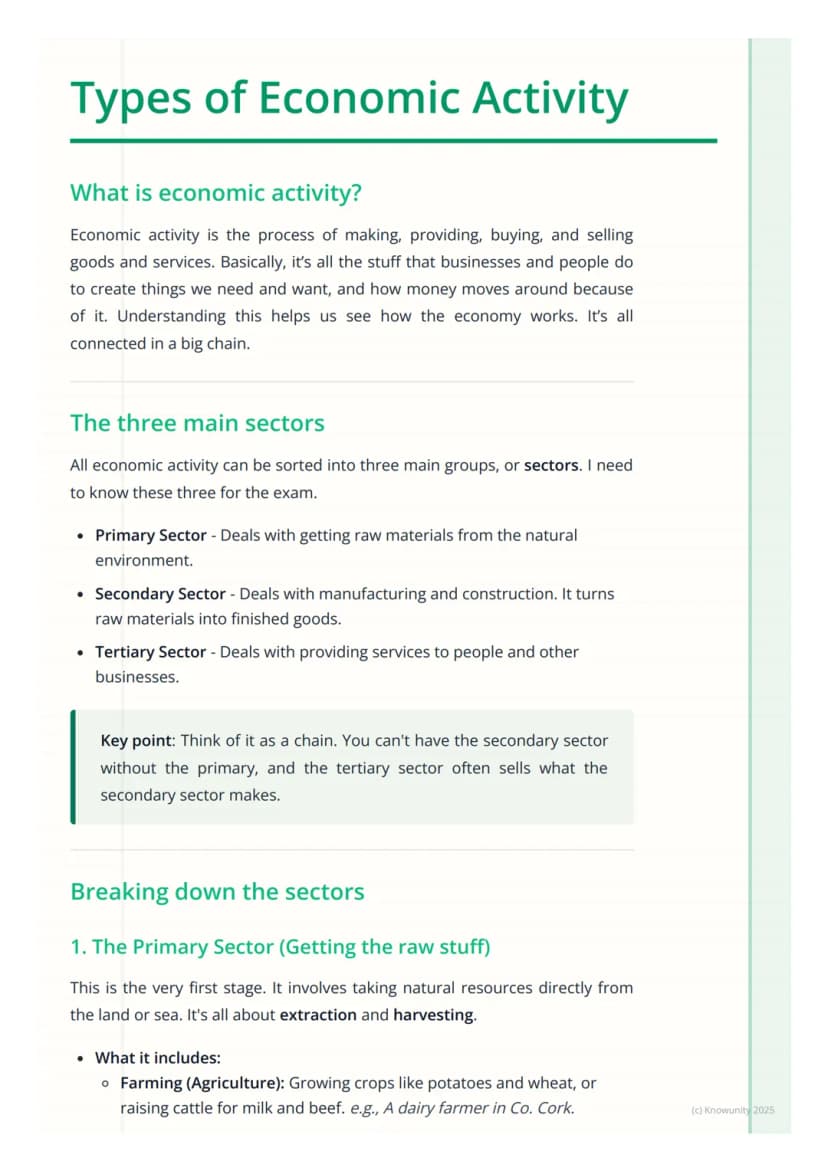
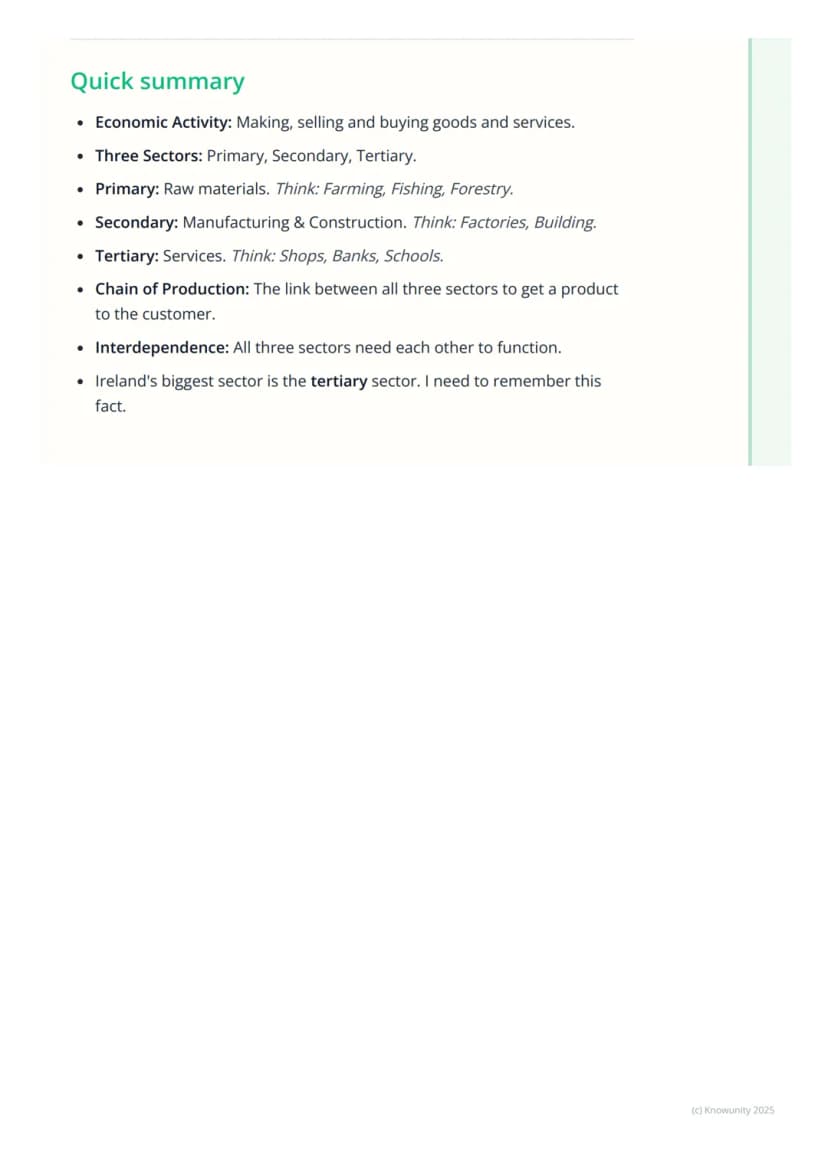
Think of economic activity as everything people and businesses do to create stuff we need and want - from growing food to building houses to running shops. It's basically how money moves around the economy and how we get all the things that make our lives work.
All this activity gets sorted into three main sectors: Primary, Secondary, and Tertiary. Here's the thing - they're all connected like links in a chain. You literally can't have one without the others.
Primary Sector deals with getting raw materials straight from nature. Secondary Sector takes those materials and turns them into finished products. Tertiary Sector provides services to people and businesses.
Key Point: Ireland's economy relies heavily on all three sectors working together - no single sector can survive on its own!
2
of 5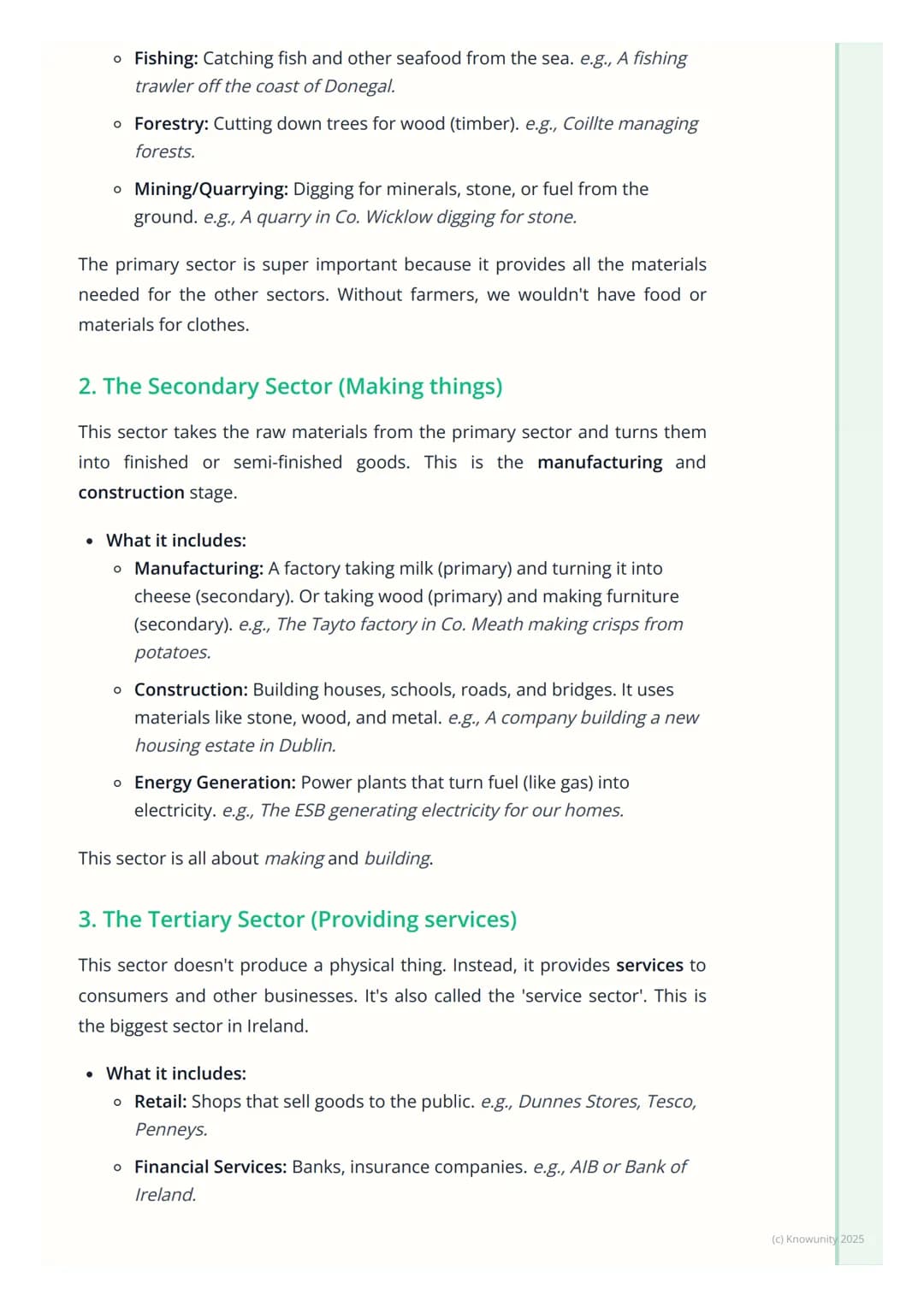
Primary Sector - Getting the Raw Stuff
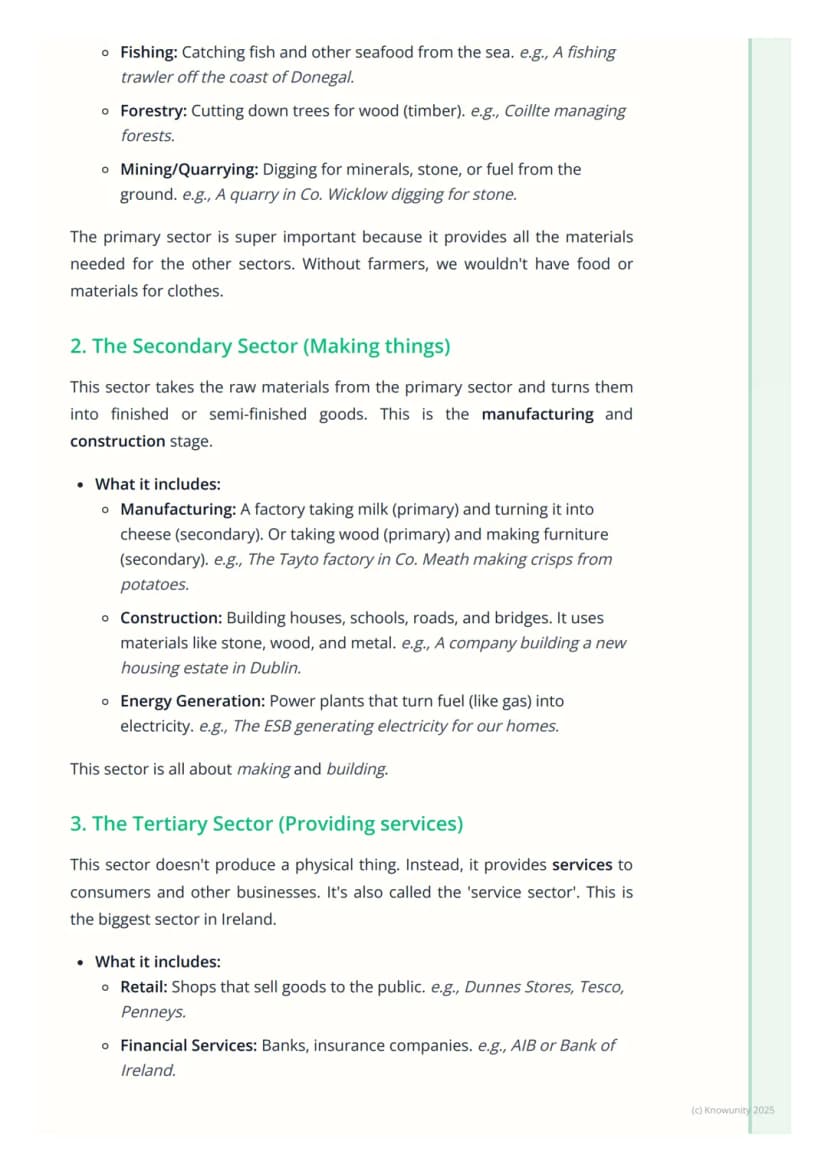
The Primary Sector is where it all begins - extracting natural resources directly from the land or sea. Think farmers, fishers, and anyone who digs stuff up from the ground.
This includes farming (like dairy farmers in Cork growing crops or raising cattle), fishing (trawlers off Donegal's coast), forestry (Coillte managing Ireland's forests), and mining/quarrying (stone quarries in Wicklow).
Without the primary sector, literally nothing else would exist. No food, no materials for clothes, no wood for furniture - you get the idea.
Remember: Primary = getting stuff straight from nature, no processing involved yet!
3
of 5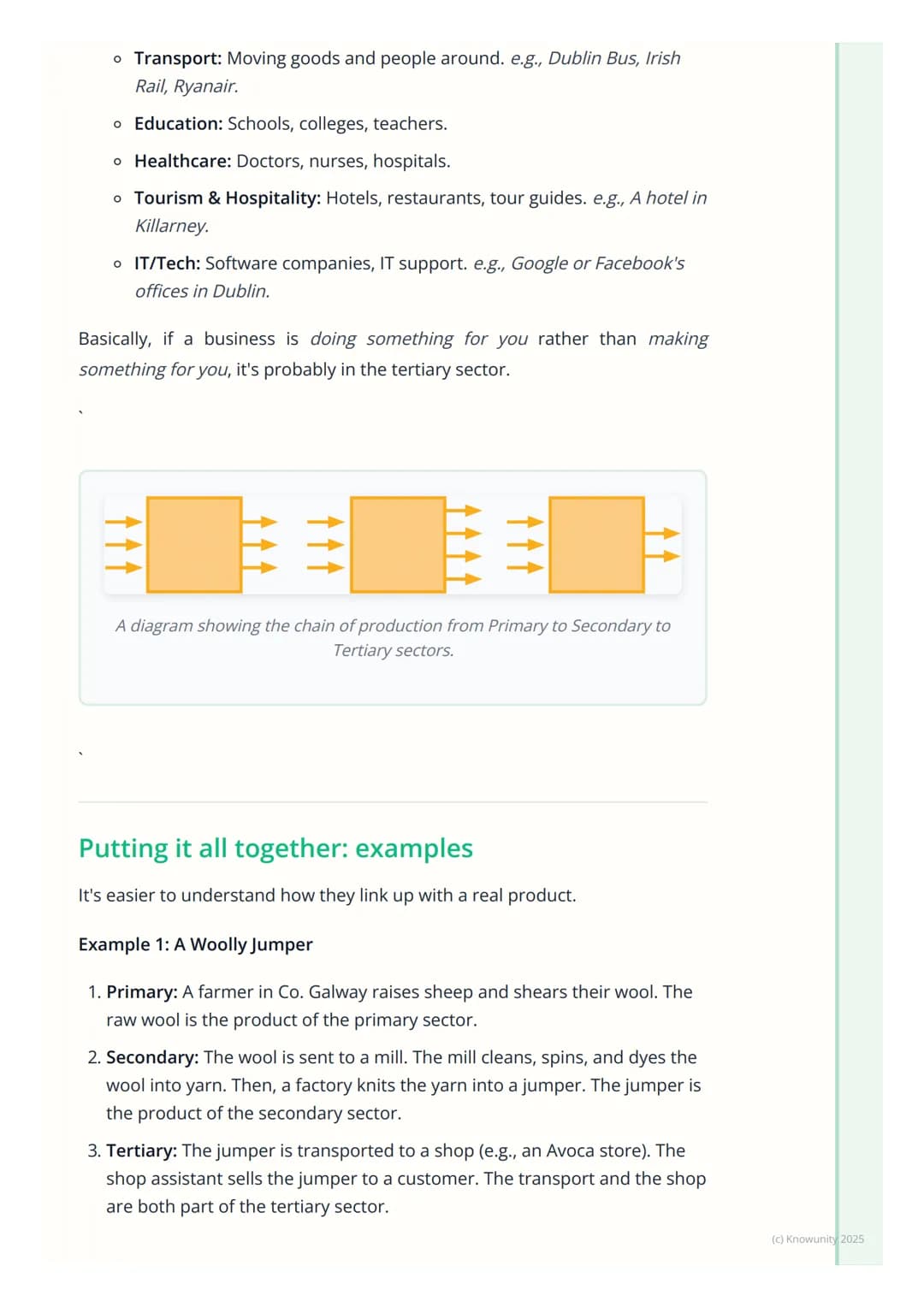
Secondary Sector - Making Things
The Secondary Sector takes those raw materials and transforms them into actual products people can use. This is all about manufacturing and construction.
Manufacturing means factories turning milk into cheese, wood into furniture, or potatoes into Tayto crisps in Meath. Construction covers building houses, schools, and roads using materials like stone and timber.
Energy generation also fits here - power plants turning fuel into electricity for your home. Basically, if someone's making or building something physical, it's secondary sector.
Quick Check: Secondary = turning raw materials into finished products that people actually want to buy!
4
of 5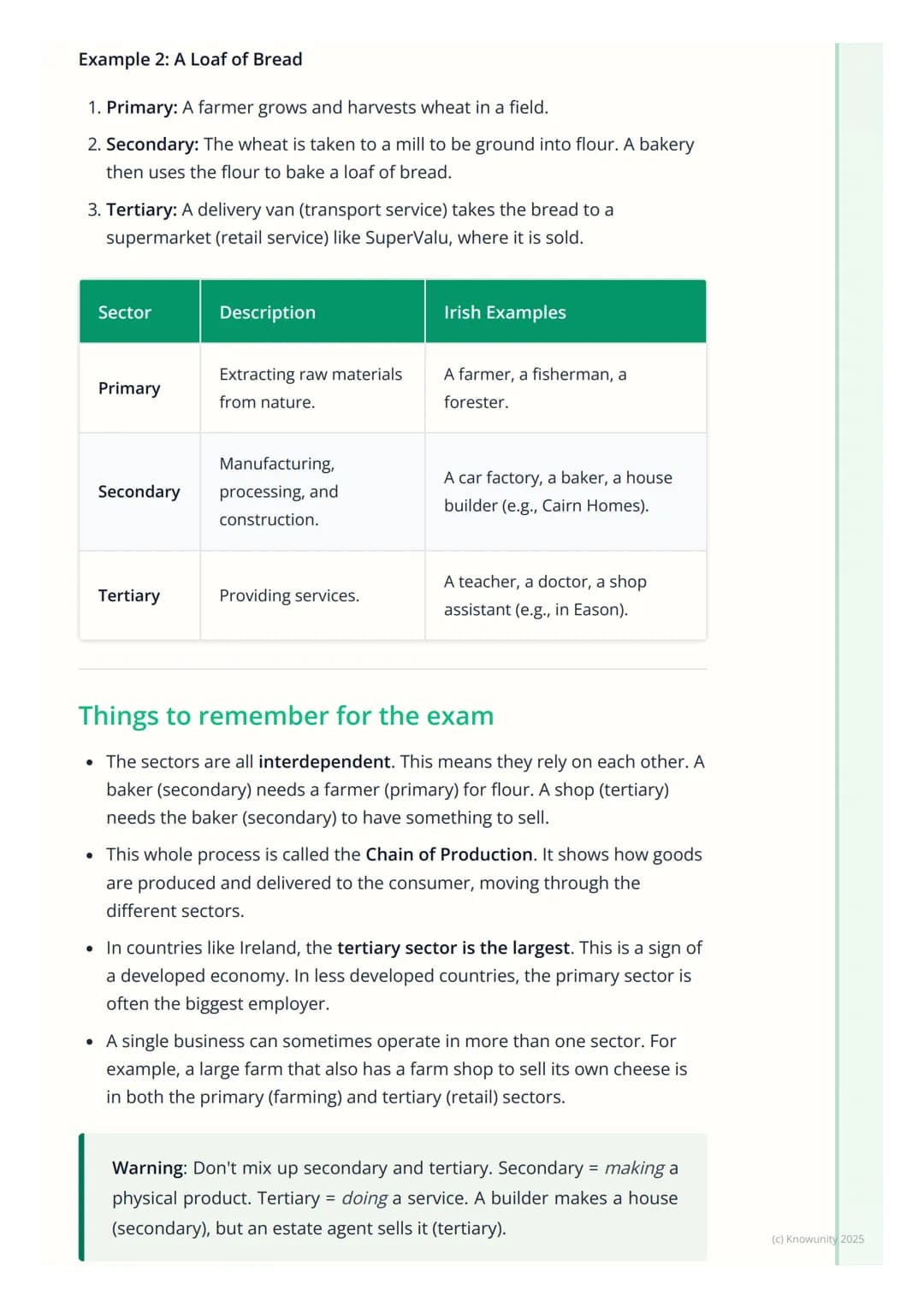
Tertiary Sector - Providing Services
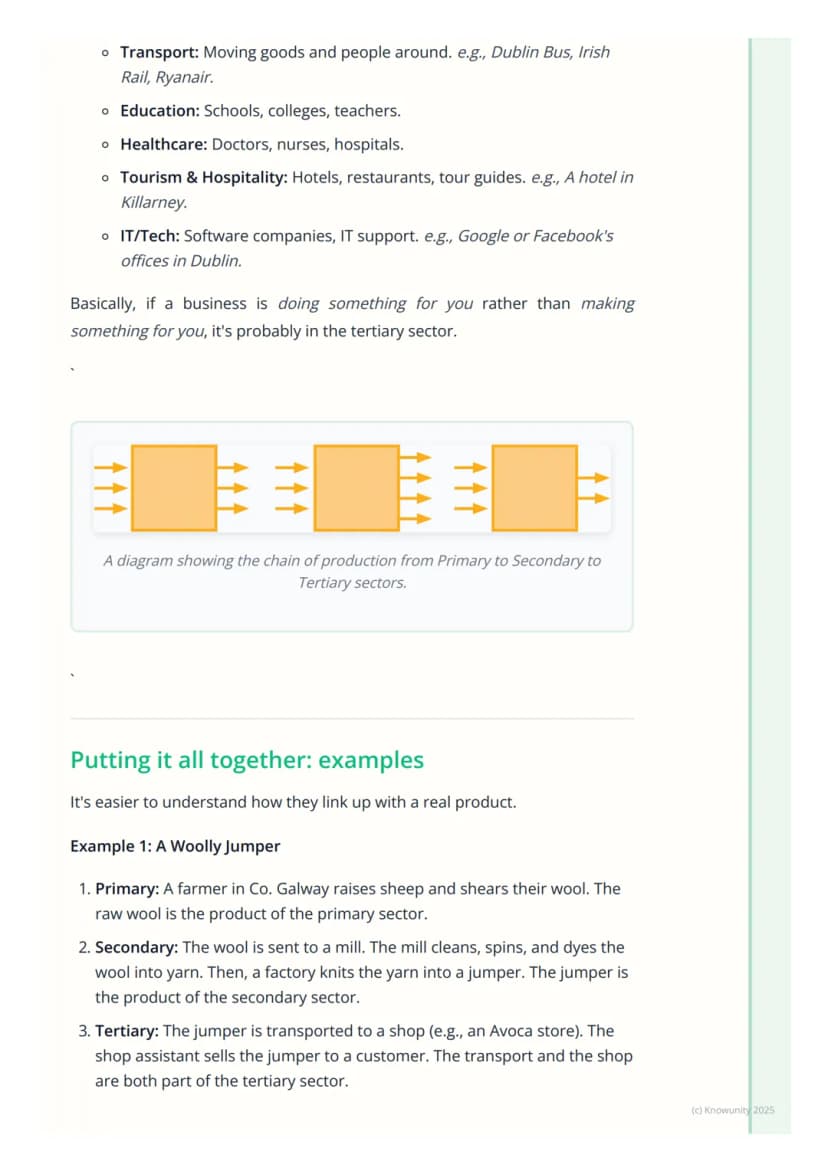
The Tertiary Sector doesn't make physical things - it provides services to people and businesses. This is actually Ireland's biggest sector, which shows we're a developed economy.
This includes retail (Dunnes Stores, Tesco), financial services (AIB, Bank of Ireland), transport (Dublin Bus, Ryanair), education (schools and teachers), healthcare (doctors and hospitals), and tourism (hotels in Killarney).
If a business is doing something for you rather than making something for you, it's probably tertiary sector. Ireland's economy massively depends on this sector.
Pro Tip: If you can't physically hold what the business produces, it's likely a tertiary sector service!
5
of 5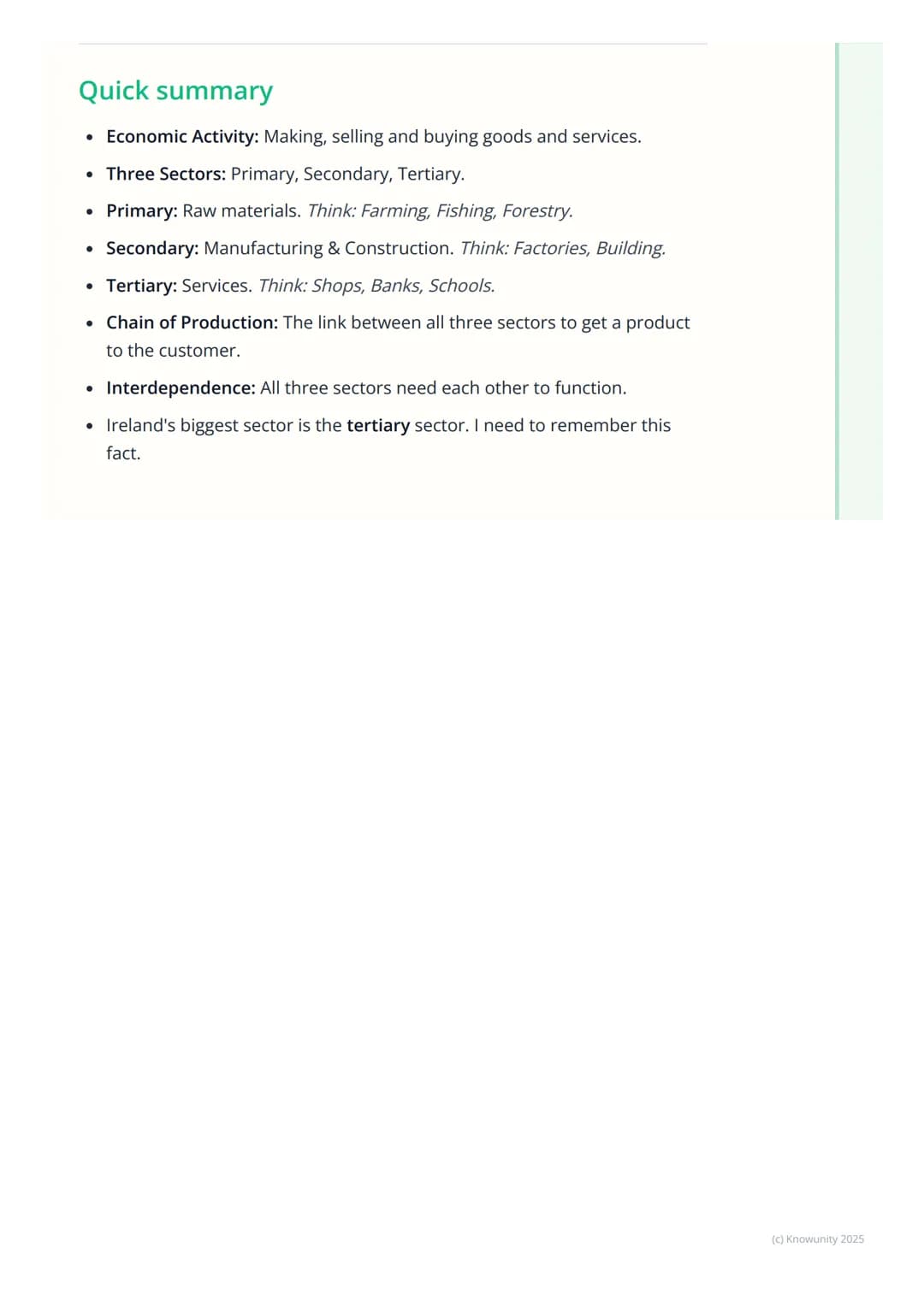
The Chain of Production
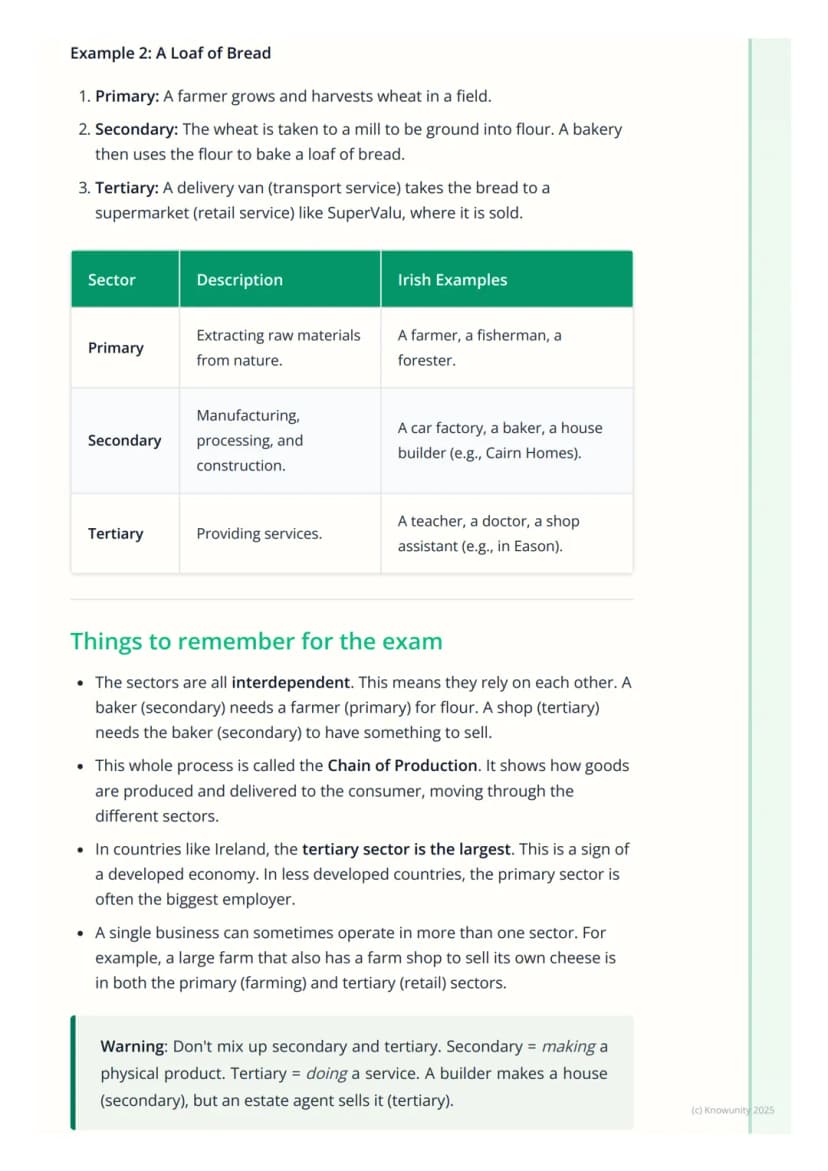
Here's how it all connects with real examples. Take a woolly jumper: farmers raise sheep (primary), mills turn wool into yarn and knit jumpers (secondary), then Avoca stores sell them to customers (tertiary).
Or a loaf of bread: farmers grow wheat (primary), mills grind flour and bakeries make bread (secondary), SuperValu sells it (tertiary). Each sector depends on the others - this is called interdependence.
The Chain of Production shows how products move through all three sectors to reach consumers. In Ireland, tertiary is biggest, but we still need primary and secondary to function.
Exam Alert: Remember that all sectors are interdependent - they absolutely cannot work without each other!
そんなこと聞いてくれるのを待ってたよ...
KnowunityのAIコンパニオンとは?
KnowunityのAIコンパニオンは学生向けに設計されたAIツールで、単なる答えを提供するだけではありません。数百万のKnowunityリソースを基に構築され、関連する情報、個別の学習プラン、クイズ、コンテンツをチャット内で直接提供し、あなたの個別の学習過程に適応します。
Knowunityアプリはどこでダウンロードできますか?
Google Play StoreとApple App Storeからアプリをダウンロードできます。
Knowunityは本当に無料ですか?
その通り!学習コンテンツへの無料アクセス、仲間の学生とのつながり、そして即座のサポートを手のひらで楽しもう。
Business Studiesの人気コンテンツ
1人気コンテンツ
9探しているものが見つからない?他の教科も見てみよう。
生徒たちが愛用中 — あなたもきっと気に入るはず。
4.6/5App Store
4.7/5Google Play
このアプリはとても使いやすくて、デザインも良いです。今のところ探していたものは全て見つかったし、プレゼン資料からもたくさん学べました!絶対に課題でも使いたいと思います!もちろん、アイデアを得るのにもすごく役立ちます。
Stefan SiOSユーザー
このアプリは本当に素晴らしいです。学習ノートやサポート資料がとても豊富で[...]。例えば、私の苦手科目はフランス語なんですが、このアプリにはサポートオプションがたくさんあります。このアプリのおかげでフランス語が上達しました。誰にでもおすすめしたいです。
Samantha KlichAndroidユーザー
すごい、本当に驚いた。広告で何度も見かけたからアプリを試してみたら、めちゃくちゃ感動した。このアプリは学校で欲しかった「まさにこれ!」って感じのサポートで、特に練習問題や要点まとめみたいな機能がたくさんあって、個人的にすごく助かってる。
AnnaiOSユーザー
Business Studies7 閲覧数·更新日 Jun 3, 2026·5 ページExploring the Sectors of Economic Activity
Ever wonder how your iPhone gets from raw materials to your pocket, or why some countries focus more on farming whilst others are all about services? Economic activity is basically all the making, buying, and selling that happens around us... もっと見る
1
of 5サインアップしてコンテンツを見よう。無料だよ!
- 全ドキュメントへのアクセス
- 成績アップ
- 数百万人の学生と一緒に学習
What is Economic Activity?
Think of economic activity as everything people and businesses do to create stuff we need and want - from growing food to building houses to running shops. It's basically how money moves around the economy and how we get all the things that make our lives work.
All this activity gets sorted into three main sectors: Primary, Secondary, and Tertiary. Here's the thing - they're all connected like links in a chain. You literally can't have one without the others.
Primary Sector deals with getting raw materials straight from nature. Secondary Sector takes those materials and turns them into finished products. Tertiary Sector provides services to people and businesses.
Key Point: Ireland's economy relies heavily on all three sectors working together - no single sector can survive on its own!
2
of 5サインアップしてコンテンツを見よう。無料だよ!
- 全ドキュメントへのアクセス
- 成績アップ
- 数百万人の学生と一緒に学習
Primary Sector - Getting the Raw Stuff
The Primary Sector is where it all begins - extracting natural resources directly from the land or sea. Think farmers, fishers, and anyone who digs stuff up from the ground.
This includes farming (like dairy farmers in Cork growing crops or raising cattle), fishing (trawlers off Donegal's coast), forestry (Coillte managing Ireland's forests), and mining/quarrying (stone quarries in Wicklow).
Without the primary sector, literally nothing else would exist. No food, no materials for clothes, no wood for furniture - you get the idea.
Remember: Primary = getting stuff straight from nature, no processing involved yet!
3
of 5サインアップしてコンテンツを見よう。無料だよ!
- 全ドキュメントへのアクセス
- 成績アップ
- 数百万人の学生と一緒に学習
Secondary Sector - Making Things
The Secondary Sector takes those raw materials and transforms them into actual products people can use. This is all about manufacturing and construction.
Manufacturing means factories turning milk into cheese, wood into furniture, or potatoes into Tayto crisps in Meath. Construction covers building houses, schools, and roads using materials like stone and timber.
Energy generation also fits here - power plants turning fuel into electricity for your home. Basically, if someone's making or building something physical, it's secondary sector.
Quick Check: Secondary = turning raw materials into finished products that people actually want to buy!
4
of 5サインアップしてコンテンツを見よう。無料だよ!
- 全ドキュメントへのアクセス
- 成績アップ
- 数百万人の学生と一緒に学習
Tertiary Sector - Providing Services
The Tertiary Sector doesn't make physical things - it provides services to people and businesses. This is actually Ireland's biggest sector, which shows we're a developed economy.
This includes retail (Dunnes Stores, Tesco), financial services (AIB, Bank of Ireland), transport (Dublin Bus, Ryanair), education (schools and teachers), healthcare (doctors and hospitals), and tourism (hotels in Killarney).
If a business is doing something for you rather than making something for you, it's probably tertiary sector. Ireland's economy massively depends on this sector.
Pro Tip: If you can't physically hold what the business produces, it's likely a tertiary sector service!
5
of 5サインアップしてコンテンツを見よう。無料だよ!
- 全ドキュメントへのアクセス
- 成績アップ
- 数百万人の学生と一緒に学習
The Chain of Production
Here's how it all connects with real examples. Take a woolly jumper: farmers raise sheep (primary), mills turn wool into yarn and knit jumpers (secondary), then Avoca stores sell them to customers (tertiary).
Or a loaf of bread: farmers grow wheat (primary), mills grind flour and bakeries make bread (secondary), SuperValu sells it (tertiary). Each sector depends on the others - this is called interdependence.
The Chain of Production shows how products move through all three sectors to reach consumers. In Ireland, tertiary is biggest, but we still need primary and secondary to function.
Exam Alert: Remember that all sectors are interdependent - they absolutely cannot work without each other!
そんなこと聞いてくれるのを待ってたよ...
KnowunityのAIコンパニオンとは?
KnowunityのAIコンパニオンは学生向けに設計されたAIツールで、単なる答えを提供するだけではありません。数百万のKnowunityリソースを基に構築され、関連する情報、個別の学習プラン、クイズ、コンテンツをチャット内で直接提供し、あなたの個別の学習過程に適応します。
Knowunityアプリはどこでダウンロードできますか?
Google Play StoreとApple App Storeからアプリをダウンロードできます。
Knowunityは本当に無料ですか?
その通り!学習コンテンツへの無料アクセス、仲間の学生とのつながり、そして即座のサポートを手のひらで楽しもう。
Business Studiesの人気コンテンツ
1人気コンテンツ
9探しているものが見つからない?他の教科も見てみよう。
生徒たちが愛用中 — あなたもきっと気に入るはず。
4.6/5App Store
4.7/5Google Play
このアプリはとても使いやすくて、デザインも良いです。今のところ探していたものは全て見つかったし、プレゼン資料からもたくさん学べました!絶対に課題でも使いたいと思います!もちろん、アイデアを得るのにもすごく役立ちます。
Stefan SiOSユーザー
このアプリは本当に素晴らしいです。学習ノートやサポート資料がとても豊富で[...]。例えば、私の苦手科目はフランス語なんですが、このアプリにはサポートオプションがたくさんあります。このアプリのおかげでフランス語が上達しました。誰にでもおすすめしたいです。
Samantha KlichAndroidユーザー
すごい、本当に驚いた。広告で何度も見かけたからアプリを試してみたら、めちゃくちゃ感動した。このアプリは学校で欲しかった「まさにこれ!」って感じのサポートで、特に練習問題や要点まとめみたいな機能がたくさんあって、個人的にすごく助かってる。
AnnaiOSユーザー