
Ever wondered what makes plants so different from animals? It...
 Biology8 閲覧数·更新日 Jun 3, 2026·6 ページ
Understanding Plant Cells: Key Structures and Differences
1 / 6
1
of 6
Introduction to Plant Cells
Plant cells are eukaryotic cells, which simply means they have a proper control centre called a nucleus. What makes them special is that they've got three unique parts that animal cells don't have.
These three special features are what allow plants to create their own food and stay upright without needing a skeleton. Think of them as the plant's superpowers!
Quick Tip: Remember the 3 C's for plant cells - Cell wall, Chloroplasts, and Central vacuole (the large one)!
2
of 6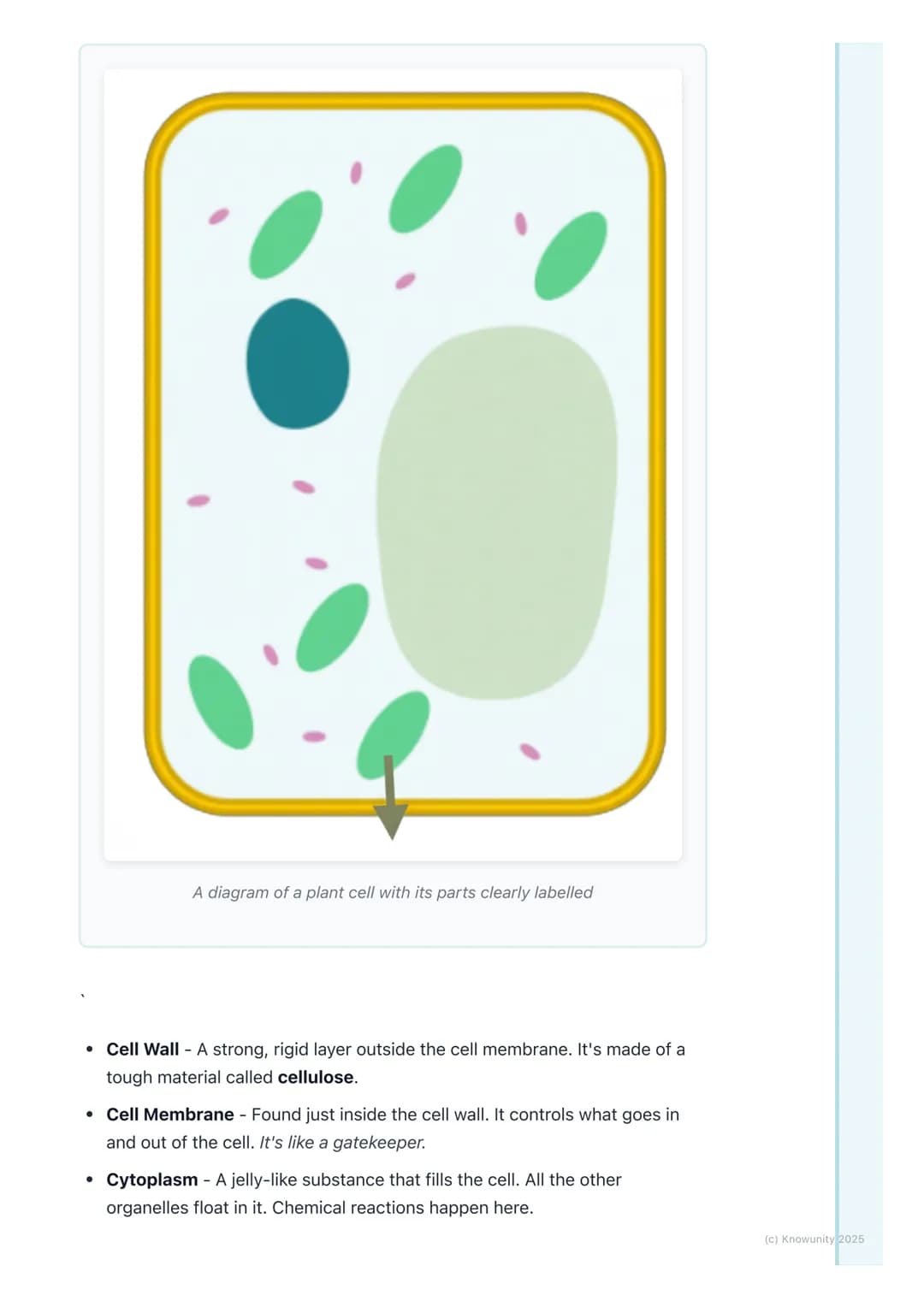
Key Parts of a Plant Cell
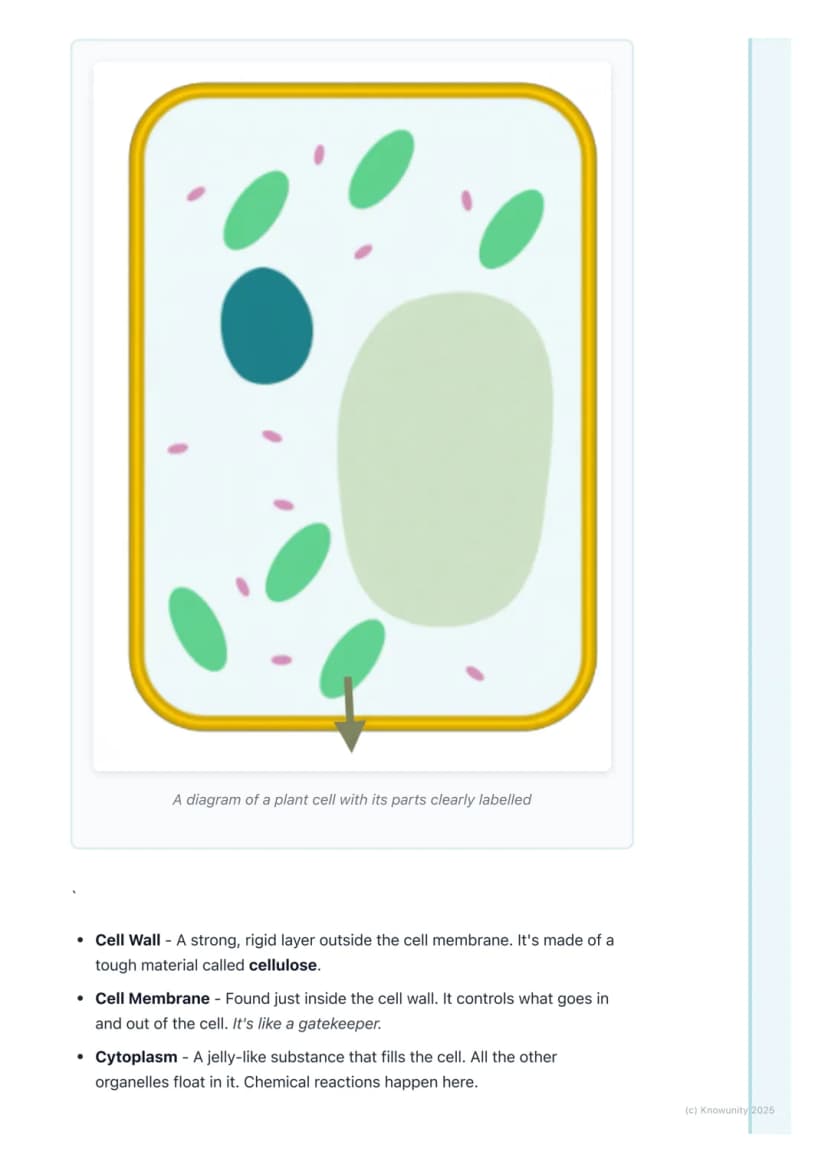
The cell wall is like a tough outer shell made of cellulose that sits outside the cell membrane. It's the plant's armour, providing structure and protection.
Inside, you'll find the cell membrane acting like a bouncer at a club - it decides what gets in and out of the cell. The cytoplasm is the jelly-like substance where all the cell's chemical reactions happen.
The nucleus is the boss of the cell, containing DNA with all the instructions. This is exactly the same job it does in your own cells!
Remember: Don't mix up the cell wall and cell membrane - the wall is on the very outside for structure, the membrane is inside for control!
3
of 6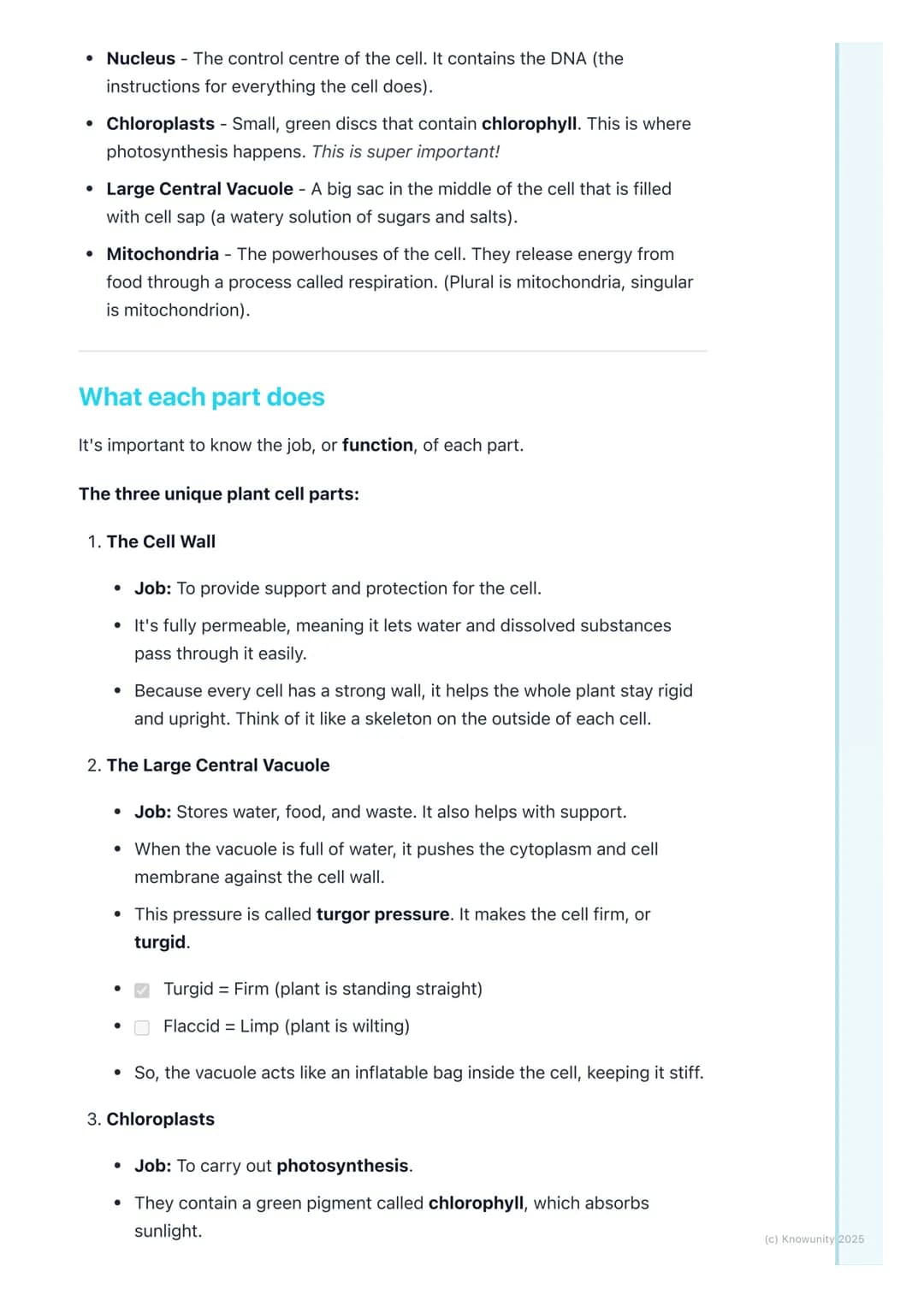
The Three Special Plant Parts
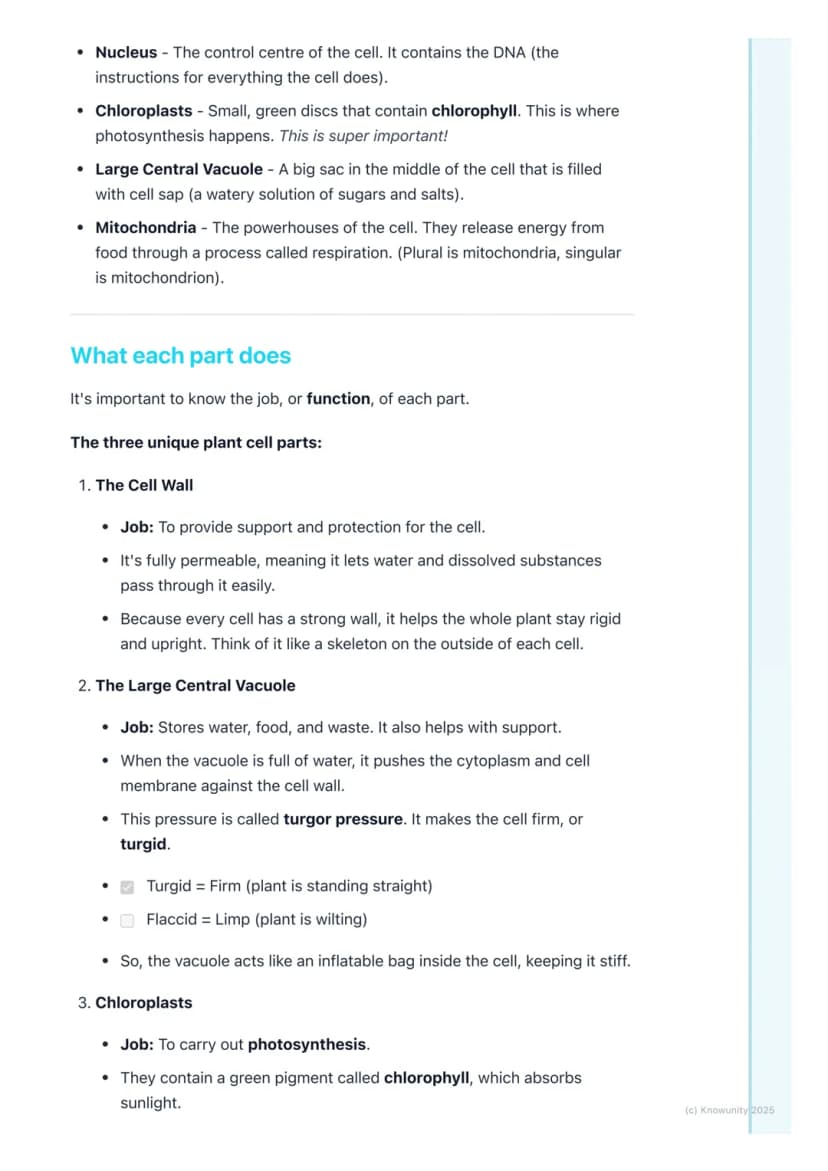
Chloroplasts are tiny green discs packed with chlorophyll that capture sunlight for photosynthesis. This is why plants are green and why they're called 'producers' in food chains.
The large central vacuole is like a water balloon inside the cell. When it's full, it creates turgor pressure that pushes against the cell wall, keeping the plant firm and upright.
Mitochondria are the powerhouses that release energy from food through respiration - just like in animal cells. Plants need energy too, even though they make their own food!
Key Concept: When plants wilt, it's because their vacuoles lose water and can't maintain turgor pressure anymore!
4
of 6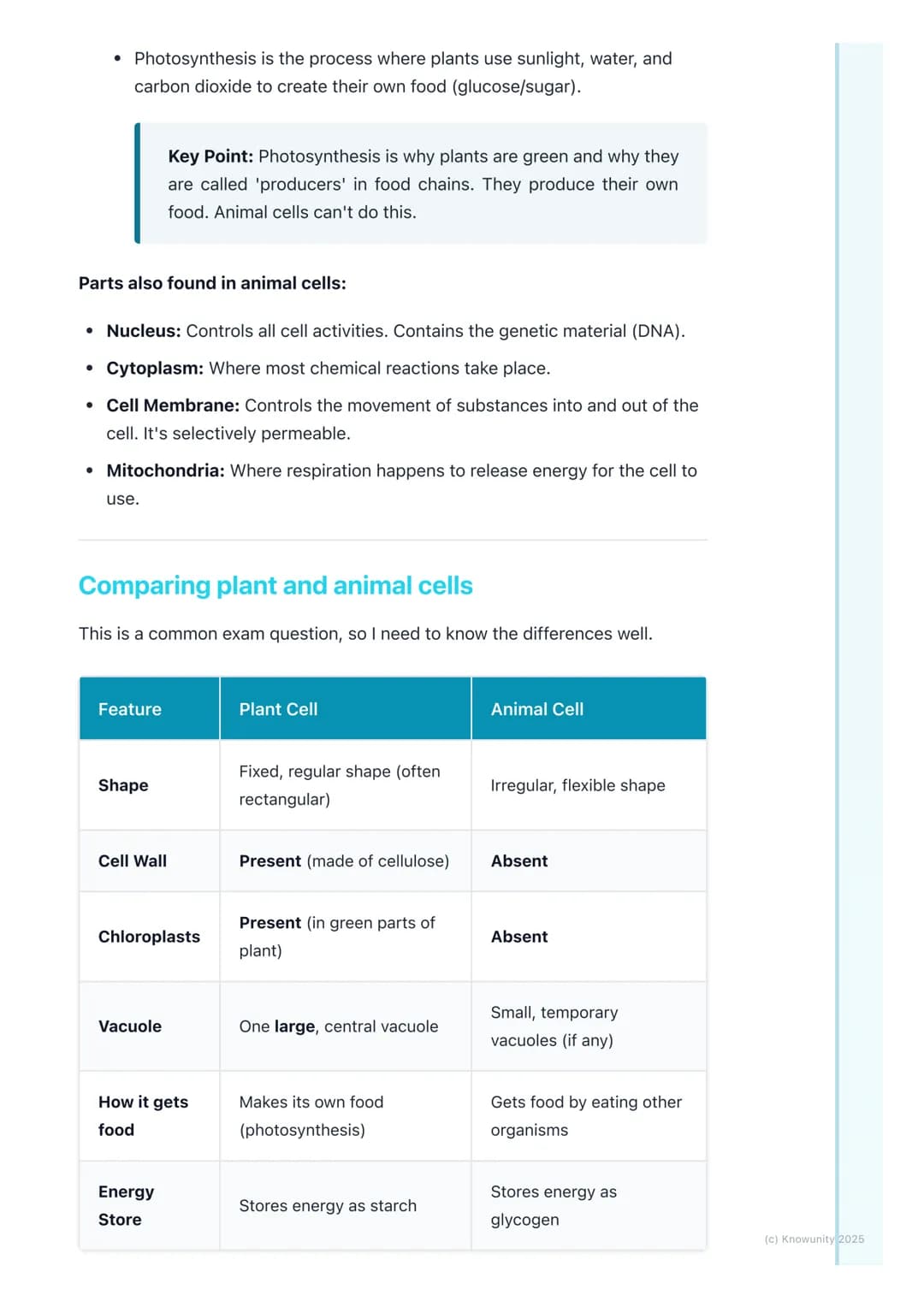
Comparing Plant and Animal Cells
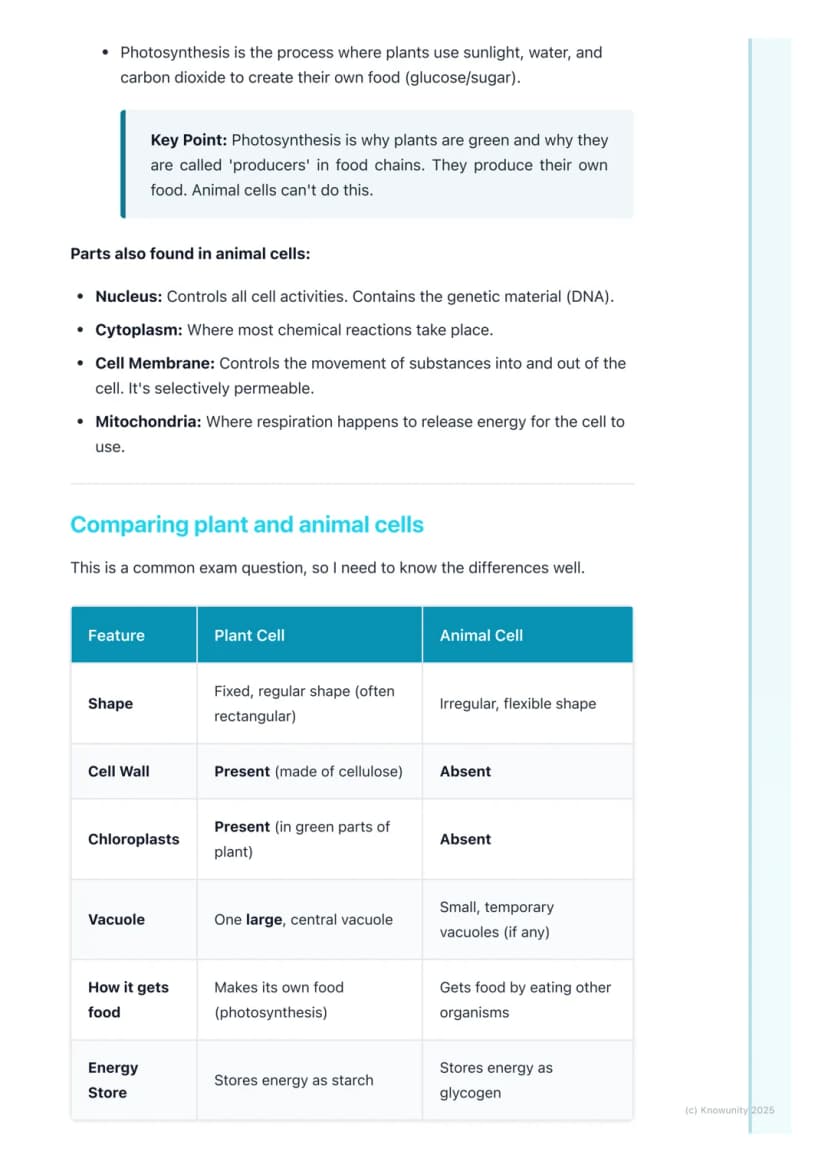
Plant cells have a fixed, rectangular shape thanks to their rigid cell wall, while animal cells are blobby and flexible. This structural difference is huge!
The biggest difference is how they get food. Plants perform photosynthesis in their chloroplasts to make glucose, whilst animals (like us) have to eat other organisms for energy.
Plants store energy as starch, but animals store it as glycogen. Plant cells also have one massive vacuole, whilst animal cells might have tiny temporary ones or none at all.
Exam Tip: A leaf cell will be packed with chloroplasts for maximum sunlight capture, but root cells won't have any since they're underground!
5
of 6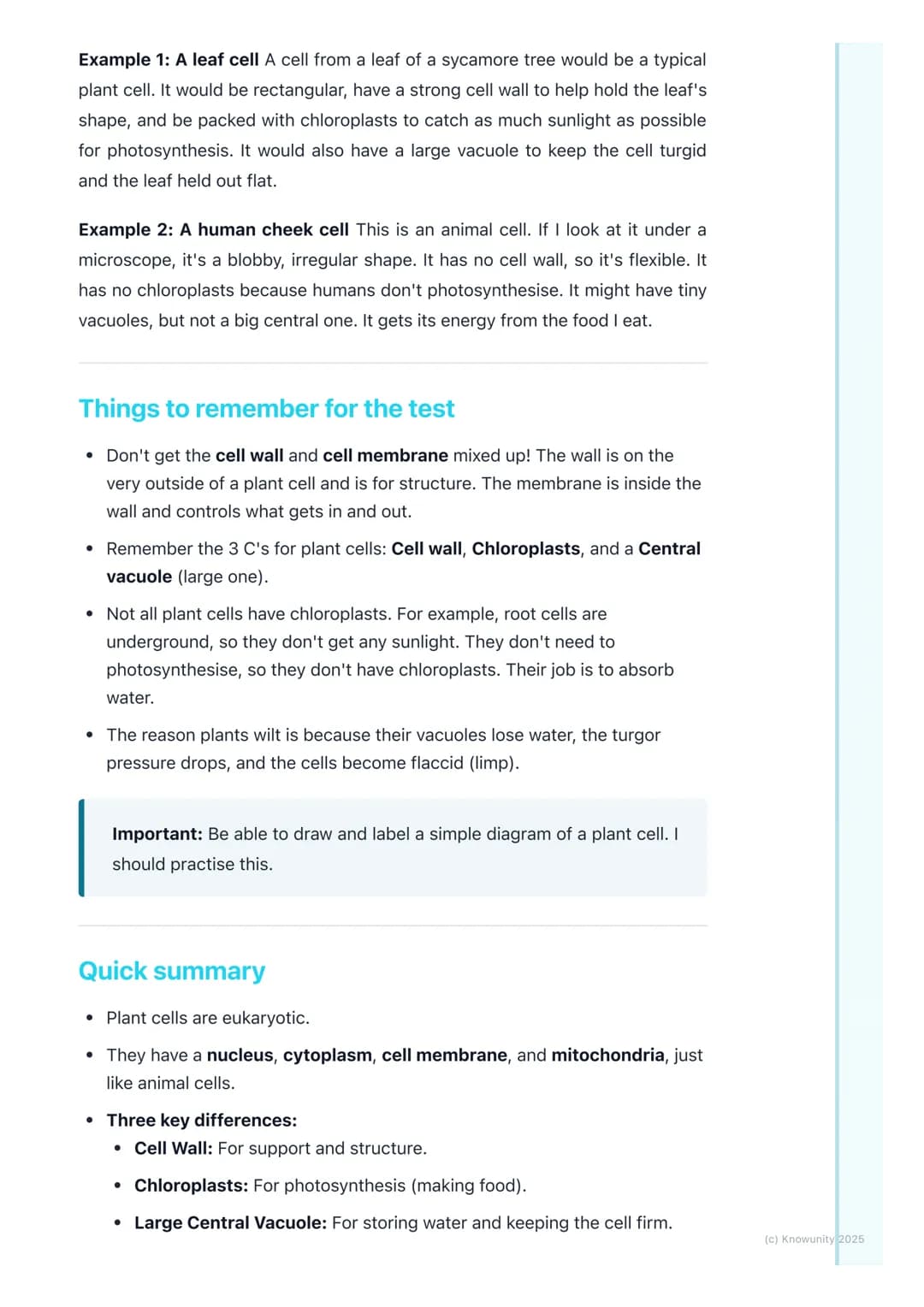
Functions and Examples
A leaf cell from a tree is the perfect example - rectangular, strong cell wall, loads of chloroplasts, and a big vacuole to keep the leaf flat and rigid for catching sunlight.
Compare this to a human cheek cell - irregular shape, no cell wall (so it's flexible), no chloroplasts (we can't photosynthesise!), and it gets energy from the food we eat.
The three unique plant features work together brilliantly: the cell wall provides structure, chloroplasts make food from sunlight, and the central vacuole maintains turgor pressure to prevent wilting.
Practice Point: Make sure you can draw and label a simple plant cell diagram - this often comes up in tests!
6
of 6
Quick Summary
Plant cells are eukaryotic with the same basic parts as animal cells - nucleus, cytoplasm, cell membrane, and mitochondria. The three key differences make all the difference though!
Cell walls give plants their fixed shape and structural support. Chloroplasts allow photosynthesis to happen, making plants the producers of ecosystems. The large central vacuole stores water and maintains turgor pressure.
When you see a plant standing tall and green, you're seeing these cellular superpowers in action. No wonder plants have been so successful on Earth!
Final Reminder: Not all plant cells have chloroplasts - root cells don't need them since they're underground and can't photosynthesise!
そんなこと聞いてくれるのを待ってたよ...
KnowunityのAIコンパニオンとは?
KnowunityのAIコンパニオンは学生向けに設計されたAIツールで、単なる答えを提供するだけではありません。数百万のKnowunityリソースを基に構築され、関連する情報、個別の学習プラン、クイズ、コンテンツをチャット内で直接提供し、あなたの個別の学習過程に適応します。
Knowunityアプリはどこでダウンロードできますか?
Google Play StoreとApple App Storeからアプリをダウンロードできます。
Knowunityは本当に無料ですか?
その通り!学習コンテンツへの無料アクセス、仲間の学生とのつながり、そして即座のサポートを手のひらで楽しもう。
Biologyの人気コンテンツ
7人気コンテンツ
9探しているものが見つからない?他の教科も見てみよう。
生徒たちが愛用中 — あなたもきっと気に入るはず。
4.6/5App Store
4.7/5Google Play
このアプリはとても使いやすくて、デザインも良いです。今のところ探していたものは全て見つかったし、プレゼン資料からもたくさん学べました!絶対に課題でも使いたいと思います!もちろん、アイデアを得るのにもすごく役立ちます。
Stefan SiOSユーザー
このアプリは本当に素晴らしいです。学習ノートやサポート資料がとても豊富で[...]。例えば、私の苦手科目はフランス語なんですが、このアプリにはサポートオプションがたくさんあります。このアプリのおかげでフランス語が上達しました。誰にでもおすすめしたいです。
Samantha KlichAndroidユーザー
すごい、本当に驚いた。広告で何度も見かけたからアプリを試してみたら、めちゃくちゃ感動した。このアプリは学校で欲しかった「まさにこれ!」って感じのサポートで、特に練習問題や要点まとめみたいな機能がたくさんあって、個人的にすごく助かってる。
AnnaiOSユーザー
Biology8 閲覧数·更新日 Jun 3, 2026·6 ページUnderstanding Plant Cells: Key Structures and Differences
Ever wondered what makes plants so different from animals? It all comes down to their cells! Plant cells are the tiny building blocks that help plants make their own food and stand tall without bones.
1
of 6
サインアップしてコンテンツを見よう。無料だよ!
- 全ドキュメントへのアクセス
- 成績アップ
- 数百万人の学生と一緒に学習
Introduction to Plant Cells
Plant cells are eukaryotic cells, which simply means they have a proper control centre called a nucleus. What makes them special is that they've got three unique parts that animal cells don't have.
These three special features are what allow plants to create their own food and stay upright without needing a skeleton. Think of them as the plant's superpowers!
Quick Tip: Remember the 3 C's for plant cells - Cell wall, Chloroplasts, and Central vacuole (the large one)!
2
of 6サインアップしてコンテンツを見よう。無料だよ!
- 全ドキュメントへのアクセス
- 成績アップ
- 数百万人の学生と一緒に学習
Key Parts of a Plant Cell
The cell wall is like a tough outer shell made of cellulose that sits outside the cell membrane. It's the plant's armour, providing structure and protection.
Inside, you'll find the cell membrane acting like a bouncer at a club - it decides what gets in and out of the cell. The cytoplasm is the jelly-like substance where all the cell's chemical reactions happen.
The nucleus is the boss of the cell, containing DNA with all the instructions. This is exactly the same job it does in your own cells!
Remember: Don't mix up the cell wall and cell membrane - the wall is on the very outside for structure, the membrane is inside for control!
3
of 6サインアップしてコンテンツを見よう。無料だよ!
- 全ドキュメントへのアクセス
- 成績アップ
- 数百万人の学生と一緒に学習
The Three Special Plant Parts
Chloroplasts are tiny green discs packed with chlorophyll that capture sunlight for photosynthesis. This is why plants are green and why they're called 'producers' in food chains.
The large central vacuole is like a water balloon inside the cell. When it's full, it creates turgor pressure that pushes against the cell wall, keeping the plant firm and upright.
Mitochondria are the powerhouses that release energy from food through respiration - just like in animal cells. Plants need energy too, even though they make their own food!
Key Concept: When plants wilt, it's because their vacuoles lose water and can't maintain turgor pressure anymore!
4
of 6サインアップしてコンテンツを見よう。無料だよ!
- 全ドキュメントへのアクセス
- 成績アップ
- 数百万人の学生と一緒に学習
Comparing Plant and Animal Cells
Plant cells have a fixed, rectangular shape thanks to their rigid cell wall, while animal cells are blobby and flexible. This structural difference is huge!
The biggest difference is how they get food. Plants perform photosynthesis in their chloroplasts to make glucose, whilst animals (like us) have to eat other organisms for energy.
Plants store energy as starch, but animals store it as glycogen. Plant cells also have one massive vacuole, whilst animal cells might have tiny temporary ones or none at all.
Exam Tip: A leaf cell will be packed with chloroplasts for maximum sunlight capture, but root cells won't have any since they're underground!
5
of 6サインアップしてコンテンツを見よう。無料だよ!
- 全ドキュメントへのアクセス
- 成績アップ
- 数百万人の学生と一緒に学習
Functions and Examples
A leaf cell from a tree is the perfect example - rectangular, strong cell wall, loads of chloroplasts, and a big vacuole to keep the leaf flat and rigid for catching sunlight.
Compare this to a human cheek cell - irregular shape, no cell wall (so it's flexible), no chloroplasts (we can't photosynthesise!), and it gets energy from the food we eat.
The three unique plant features work together brilliantly: the cell wall provides structure, chloroplasts make food from sunlight, and the central vacuole maintains turgor pressure to prevent wilting.
Practice Point: Make sure you can draw and label a simple plant cell diagram - this often comes up in tests!
6
of 6サインアップしてコンテンツを見よう。無料だよ!
- 全ドキュメントへのアクセス
- 成績アップ
- 数百万人の学生と一緒に学習
Quick Summary
Plant cells are eukaryotic with the same basic parts as animal cells - nucleus, cytoplasm, cell membrane, and mitochondria. The three key differences make all the difference though!
Cell walls give plants their fixed shape and structural support. Chloroplasts allow photosynthesis to happen, making plants the producers of ecosystems. The large central vacuole stores water and maintains turgor pressure.
When you see a plant standing tall and green, you're seeing these cellular superpowers in action. No wonder plants have been so successful on Earth!
Final Reminder: Not all plant cells have chloroplasts - root cells don't need them since they're underground and can't photosynthesise!
そんなこと聞いてくれるのを待ってたよ...
KnowunityのAIコンパニオンとは?
KnowunityのAIコンパニオンは学生向けに設計されたAIツールで、単なる答えを提供するだけではありません。数百万のKnowunityリソースを基に構築され、関連する情報、個別の学習プラン、クイズ、コンテンツをチャット内で直接提供し、あなたの個別の学習過程に適応します。
Knowunityアプリはどこでダウンロードできますか?
Google Play StoreとApple App Storeからアプリをダウンロードできます。
Knowunityは本当に無料ですか?
その通り!学習コンテンツへの無料アクセス、仲間の学生とのつながり、そして即座のサポートを手のひらで楽しもう。
Biologyの人気コンテンツ
7人気コンテンツ
9探しているものが見つからない?他の教科も見てみよう。
生徒たちが愛用中 — あなたもきっと気に入るはず。
4.6/5App Store
4.7/5Google Play
このアプリはとても使いやすくて、デザインも良いです。今のところ探していたものは全て見つかったし、プレゼン資料からもたくさん学べました!絶対に課題でも使いたいと思います!もちろん、アイデアを得るのにもすごく役立ちます。
Stefan SiOSユーザー
このアプリは本当に素晴らしいです。学習ノートやサポート資料がとても豊富で[...]。例えば、私の苦手科目はフランス語なんですが、このアプリにはサポートオプションがたくさんあります。このアプリのおかげでフランス語が上達しました。誰にでもおすすめしたいです。
Samantha KlichAndroidユーザー
すごい、本当に驚いた。広告で何度も見かけたからアプリを試してみたら、めちゃくちゃ感動した。このアプリは学校で欲しかった「まさにこれ!」って感じのサポートで、特に練習問題や要点まとめみたいな機能がたくさんあって、個人的にすごく助かってる。
AnnaiOSユーザー