
Les mots interrogatifs sont essentiels pour poser des questions en... もっと見る
 Anglais309 閲覧数·更新日 Jun 9, 2026·1 ページ
Apprends les Mots Interrogatifs: Quiz et Exercices Faciles en PDF
1
of 1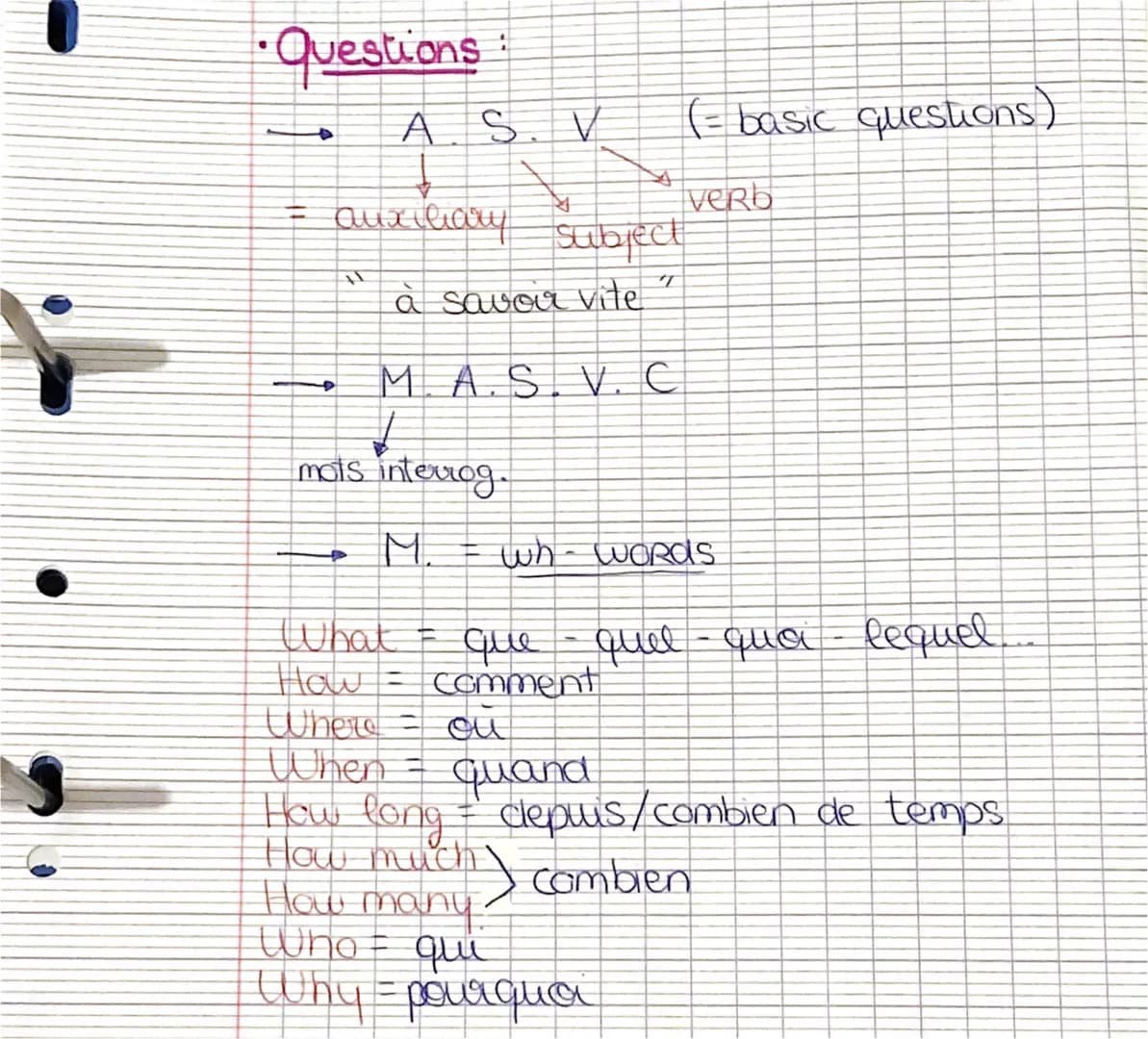
Mastering English Question Formation
This comprehensive guide delves into the intricacies of forming questions in English, providing students with a solid foundation for effective communication. The page presents a structured approach to understanding the components of questions and how to construct them properly.
The guide introduces the concept of M.A.S.V. (Mot interrogatif, Auxiliaire, Sujet, Verbe) as a fundamental framework for creating questions in English. This acronym helps students remember the essential elements and their order in question formation.
Vocabulary: M.A.S.V. stands for Mot interrogatif (interrogative word), Auxiliaire (auxiliary), Sujet (subject), and Verbe (verb).
The page outlines key interrogative words that students should familiarize themselves with:
- What (que, quel, quoi, lequel)
- How (comment)
- Where (où)
- When (quand)
- How long
- How much/How many (combien)
- Who (qui)
- Why (pourquoi)
Highlight: Understanding and mastering these interrogative words is crucial for posing questions in English effectively.
The guide emphasizes the importance of auxiliaries in question formation, which is a key aspect of English grammar that differs from many other languages. This focus helps students avoid common mistakes when transitioning from their native language to English.
Example: To illustrate the use of auxiliaries in questions, consider the difference between "You are happy?" (incorrect) and "Are you happy?" (correct).
Additionally, the page touches on the concept of basic questions, which likely refers to simple yes/no questions or those that don't require complex structures.
Definition: Basic questions are straightforward inquiries that typically use auxiliaries like "do," "does," or "did" along with the main verb in its base form.
This comprehensive overview provides students with a solid foundation for posing questions in English, covering both simple and more complex structures. By mastering these elements, learners can improve their ability to communicate effectively in various situations, from casual conversations to academic or professional settings.
Quote: "M.A.S.V.C" - This acronym serves as a mnemonic device for remembering the key components of English questions: Mot interrogatif, Auxiliaire, Sujet, Verbe, Complément.
そんなこと聞いてくれるのを待ってたよ...
KnowunityのAIコンパニオンとは?
KnowunityのAIコンパニオンは学生向けに設計されたAIツールで、単なる答えを提供するだけではありません。数百万のKnowunityリソースを基に構築され、関連する情報、個別の学習プラン、クイズ、コンテンツをチャット内で直接提供し、あなたの個別の学習過程に適応します。
Knowunityアプリはどこでダウンロードできますか?
Google Play StoreとApple App Storeからアプリをダウンロードできます。
Knowunityは本当に無料ですか?
その通り!学習コンテンツへの無料アクセス、仲間の学生とのつながり、そして即座のサポートを手のひらで楽しもう。
似たコンテンツ
人気コンテンツ:Question Words
7Anglaisの人気コンテンツ
9人気コンテンツ
9探しているものが見つからない?他の教科も見てみよう。
生徒たちが愛用中 — あなたもきっと気に入るはず。
4.6/5App Store
4.7/5Google Play
このアプリはとても使いやすくて、デザインも良いです。今のところ探していたものは全て見つかったし、プレゼン資料からもたくさん学べました!絶対に課題でも使いたいと思います!もちろん、アイデアを得るのにもすごく役立ちます。
Stefan SiOSユーザー
このアプリは本当に素晴らしいです。学習ノートやサポート資料がとても豊富で[...]。例えば、私の苦手科目はフランス語なんですが、このアプリにはサポートオプションがたくさんあります。このアプリのおかげでフランス語が上達しました。誰にでもおすすめしたいです。
Samantha KlichAndroidユーザー
すごい、本当に驚いた。広告で何度も見かけたからアプリを試してみたら、めちゃくちゃ感動した。このアプリは学校で欲しかった「まさにこれ!」って感じのサポートで、特に練習問題や要点まとめみたいな機能がたくさんあって、個人的にすごく助かってる。
AnnaiOSユーザー
Anglais309 閲覧数·更新日 Jun 9, 2026·1 ページApprends les Mots Interrogatifs: Quiz et Exercices Faciles en PDF
Les mots interrogatifs sont essentiels pour poser des questions en français. Ce guide présente les principaux mots interrogatifs et leur utilisation dans la construction de phrases interrogatives.
• Les mots interrogatifs les plus courants en français sont : que, quel,... もっと見る
1
of 1サインアップしてコンテンツを見よう。無料だよ!
- 全ドキュメントへのアクセス
- 成績アップ
- 数百万人の学生と一緒に学習
Mastering English Question Formation
This comprehensive guide delves into the intricacies of forming questions in English, providing students with a solid foundation for effective communication. The page presents a structured approach to understanding the components of questions and how to construct them properly.
The guide introduces the concept of M.A.S.V. (Mot interrogatif, Auxiliaire, Sujet, Verbe) as a fundamental framework for creating questions in English. This acronym helps students remember the essential elements and their order in question formation.
Vocabulary: M.A.S.V. stands for Mot interrogatif (interrogative word), Auxiliaire (auxiliary), Sujet (subject), and Verbe (verb).
The page outlines key interrogative words that students should familiarize themselves with:
- What (que, quel, quoi, lequel)
- How (comment)
- Where (où)
- When (quand)
- How long
- How much/How many (combien)
- Who (qui)
- Why (pourquoi)
Highlight: Understanding and mastering these interrogative words is crucial for posing questions in English effectively.
The guide emphasizes the importance of auxiliaries in question formation, which is a key aspect of English grammar that differs from many other languages. This focus helps students avoid common mistakes when transitioning from their native language to English.
Example: To illustrate the use of auxiliaries in questions, consider the difference between "You are happy?" (incorrect) and "Are you happy?" (correct).
Additionally, the page touches on the concept of basic questions, which likely refers to simple yes/no questions or those that don't require complex structures.
Definition: Basic questions are straightforward inquiries that typically use auxiliaries like "do," "does," or "did" along with the main verb in its base form.
This comprehensive overview provides students with a solid foundation for posing questions in English, covering both simple and more complex structures. By mastering these elements, learners can improve their ability to communicate effectively in various situations, from casual conversations to academic or professional settings.
Quote: "M.A.S.V.C" - This acronym serves as a mnemonic device for remembering the key components of English questions: Mot interrogatif, Auxiliaire, Sujet, Verbe, Complément.
そんなこと聞いてくれるのを待ってたよ...
KnowunityのAIコンパニオンとは?
KnowunityのAIコンパニオンは学生向けに設計されたAIツールで、単なる答えを提供するだけではありません。数百万のKnowunityリソースを基に構築され、関連する情報、個別の学習プラン、クイズ、コンテンツをチャット内で直接提供し、あなたの個別の学習過程に適応します。
Knowunityアプリはどこでダウンロードできますか?
Google Play StoreとApple App Storeからアプリをダウンロードできます。
Knowunityは本当に無料ですか?
その通り!学習コンテンツへの無料アクセス、仲間の学生とのつながり、そして即座のサポートを手のひらで楽しもう。
似たコンテンツ
人気コンテンツ:Question Words
7Anglaisの人気コンテンツ
9人気コンテンツ
9探しているものが見つからない?他の教科も見てみよう。
生徒たちが愛用中 — あなたもきっと気に入るはず。
4.6/5App Store
4.7/5Google Play
このアプリはとても使いやすくて、デザインも良いです。今のところ探していたものは全て見つかったし、プレゼン資料からもたくさん学べました!絶対に課題でも使いたいと思います!もちろん、アイデアを得るのにもすごく役立ちます。
Stefan SiOSユーザー
このアプリは本当に素晴らしいです。学習ノートやサポート資料がとても豊富で[...]。例えば、私の苦手科目はフランス語なんですが、このアプリにはサポートオプションがたくさんあります。このアプリのおかげでフランス語が上達しました。誰にでもおすすめしたいです。
Samantha KlichAndroidユーザー
すごい、本当に驚いた。広告で何度も見かけたからアプリを試してみたら、めちゃくちゃ感動した。このアプリは学校で欲しかった「まさにこれ!」って感じのサポートで、特に練習問題や要点まとめみたいな機能がたくさんあって、個人的にすごく助かってる。
AnnaiOSユーザー